
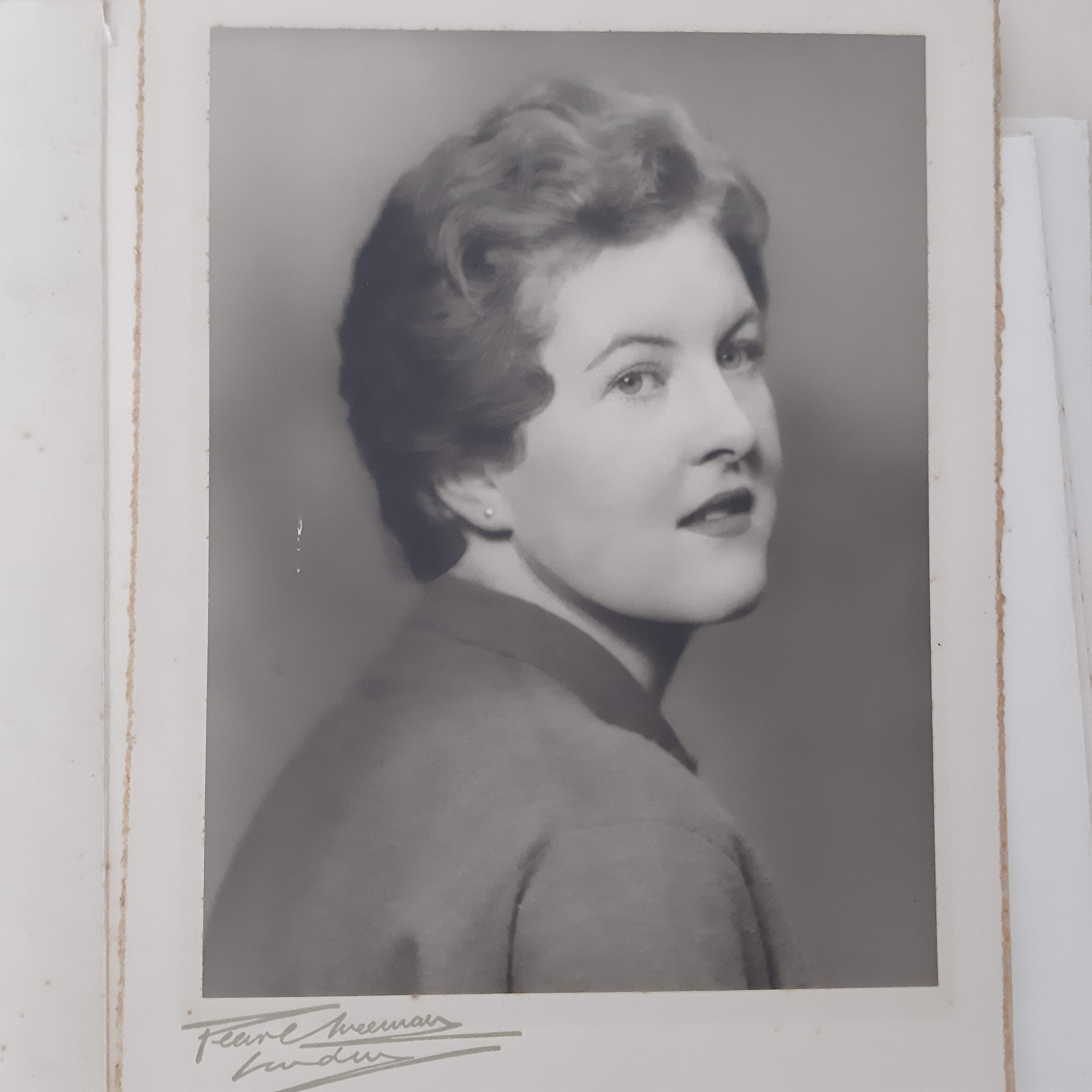
I have swithered about whether or not to share this post, which I drafted in January, a week or so before Mum died. I’m glad to have captured that moment, now over 6 months ago, when I felt certain that Mum was in her final days with us. I was with her as she took her final breath, and it could not have been more peaceful, more ordinary in many ways. As ever, Mum showed us how it could be done.
You expect anticipation to lead to something good, something exciting, something that might enrich your soul. Otherwise you’d call it dread wouldn’t you?
I’ve written before of anticipatory grief. Of how each and every day for a long time I felt I was already grieving for the mother who was still physically there, but there were bits of her that no-one had access to any more, least of all Mum herself. But layered on top of this chronic grief was the anticipation of the big one, the true grief if you like, the grief of her last breath, and the finality of never seeing her again, never hearing her voice, never feeling the touch of her hand.
For over four years now I have dreaded that moment. And I still do.
But in some ways I am already there. I have not heard Mum’s voice for some while. Most recently there have been no words, no flicker of recognition that someone has entered her room, no response when I thank her for inviting me, introducing myself and telling her how lovely it is to see her again. And no reaction when I lean forward and kiss her forehead, or stroke her hair gently. But for months before this version of Mum appeared, the words have been few and far between, like the last leaves on a tree in a mild winter, ready to be blown away but just hanging in there. When she has tried to speak, her words were always jumbled, often slightly slurred; I yearned to hear her strong, confident voice again.
And Mum has not touched me for a long time. Over the last year she has curled herself up, almost foetus-like, but with her arms decidedly crossed over her chest and a duvet tucked up to her chin. There has been no hand available to hold.
And as she has become less communicative, less aware of my presence, I have visited her less. I recall a time, in the first months of us realising she had a dementia when I could not conceive of a day when I would be able to visit Mum, but would actively choose not to do it. In those early months, Covid restrictions were still in full force, and weeks would go by when I didn’t see her at all, while my brother was with her. And then we would swap and I’d spend weeks with her (and no-one else). Those weeks with her were hard, but being away from her was much harder for me. And yet there have been many of those days now. I can’t explain it, except to say that moving on is part of this grief and that I needed to give some attention to my life, to my new life in our new home with the Captain by my side. I needed to focus a bit more on my own self care, not just to fit it in where I could, but really to prioritise it.
We have had Christmasses without Mum now, so perhaps it will be easier than I imagine when she actually dies. Perhaps after the first emotional upheaval, I will manage to move on relatively quickly and to live a life which doesn’t always ask ‘what would Mum say?’. Perhaps.
But then we move on to anticipatory drugs. Another euphemism, and one that I feel very uncomfortable using. I first heard of anticipatory drugs a couple of years ago, on an occasion when I was called into the Nurse’s office at Mum’s care home and told that she had stopped eating. We discussed what this meant for a frail bed-bound woman in her 90s with relatively advanced dementia, and it was made clear to me that we were looking at a steady decline, over a period of possibly 2 or 3 weeks, followed by her death. Anticipatory Drugs could be ordered now, in anticipation of her needing them. It transpires that the Anticipatory Drugs are ones that would make Mum’s transition from life to not-life more peaceful, and pain free. A day later Mum started eating again. The drugs were not required on this occasion.
I never have really understood if they are called Anticipatory Drugs, because they are brought in, in anticipation of them being needed. Or of they are anticipating the end of life.
There have been two other occasions when we have been called in to be told that it seems like the end is near for Mum.
On each occasion, I have been overwhelmed with sadness, with gut-wrenching, heart-breaking grief. The idea that Mum might no longer exist in any form has always seemed impossible. And given that she keeps defying these near-death experiences, I have been proved right so far. It is impossible for there to be a world without Mum in it.
And then on Saturday, when I was with Mum the nurse on duty came in and shut the door behind her, to have a word with me. There was concern that Mum’s condition had changed – and that she was in some pain. The carers had noticed this when they were moving her body in the bed just before I visited. And yes, I had been concerned that she was moaning a bit, and that she would screw up her face into a grimace every so often. She did not seem the peaceful, serene Mum that I had been used to visiting. Her eyes were flickering and rolling to the back of her head, and she had a bit of a cough.
We had a long discussion. I felt strongly that if Mum was in pain, that we should do something to relieve it. Anticipatory drugs were discussed. Mum is very weak and frail, and is unable to communicate with us any more. I am her Power of Attorney for Welfare matters, and having talked to the nurse as Lois, the daughter, thinking about what I wanted for my mother, I came to the realisation that actually what I wanted was less important than being able to relay what I believe Mum would want.
This gave me utter clarity.
Mum has a high pain threshold, but this may have been short circuited with her dementia (we will never know). However, after years of living relatively pain free (and certainly over the last 2 years this has been the case) she would not wish to be in pain as she leaves this world. She also would not wish for her life to be prolonged in any way. She has had morphine in the past in hospital, and said she loved it – it gave her such good dreams. So I feel very confident that if Mum could communicate to the Nurse, she would say, “Give me the morphine. Give me the Anticipatory Drugs.”.
The plan was to call the out of hours GP to move this forward.
I got a call at around 7pm to say the out of hours GP had confirmed that Mum could get the anticipatory drugs, and that they would be delivered by the District Nurse some time during the night. I was reassured that if Mum needed them more urgently, they had an alternative way forward, but I didn’t ask the details.
I visited Mum the next afternoon, hoping that she would be less agitated. But Mum had had ‘a good night’ and had eaten all her porridge for breakfast so no drugs had been administered. They had arrived at 2.30am though, so were now available should Mum need them.
Mum was clearly still in some pain. Perhaps not constant, and not acute, but in some pain. It was distressing to see her like this; so I had another discussion with the nurse. She came and assessed mum, and agreed with me that Mum was in some pain, which could be relieved with morphine. She checked in with me several times to make sure this was what I wanted as Mum’s Power of Attorney, but also as Mum’s daughter – and that my brothers were also happy with this decision. We were all in agreement.
Mum was given the lowest dose of morphine, sub cutaneously. I popped back to see her a couple of hours later and she was sleeping so peacefully, she looked so blissful.
That was Sunday evening. After a good nights’ sleep Mum had rallied a bit – her pallor had changed again, looked slightly more healthy, and she had eaten 200g of porridge for breakfast. When I visited I was told that because she was eating, there was no more morphine for her. A GP arrived. Perhaps the pain over the weekend had been trapped wind? (I do not believe that this was the cause). After some discussion, and further assessment, it was clear that Mum was calm, and not displaying that she was in pain. So the GP did not recommend further use of the anticipatory drugs – but if Mum needed pain relief she should be given liquid paracetamol 3 times a day with her food. Mum does not always eat, and often stores her morsels of food in her cheeks, forgetting to swallow it down.
On Tuesday I visited again and found Mum mostly peaceful, but screwing up her face in a grimace every 3 or 4 minutes – in my opinion she was experiencing pain again. The same nurse listened to me (again) and agreed with me and also agreed what could and probably should be done, but while Mum is eating it seems unlikely that they will allow her to have the anticipatory drugs. Once morphine is administered, the appetite decreases. Mum is frail, she would not last long. But she would be pain free. And released from this life which she no longer enjoys, she just endures.
Tomorrow I will go and talk to the home again and try to establish what is going on, and why Mum is now expected to endure pain in what must surely be her final days or weeks of life.
***
Thank you for reading this.
Mostly I blog about my relationship with Mum and her dementia, so if that might be your thing, then you could start here at Taking smock of the Situation. Or just dip in. After all, if I’ve learned anything this last few years it’s that chronology and time are less important than we might believe.
Do get in touch if you have any questions or comments – I love to hear from you my lovely readers.


















 Shewolfinthevalley