Traybake-tastic

15 Nov

I do love a traybake. You may have noticed that I have more recipes for chocolate brownies on this blog than perhaps is strictly necessary. But I haven’t really indulged my love of a traybake with other recipes. That is about to change. You can look forward to such joys as the Malteser Traybake, various variations on a flapjack and a frangipane bakewell style thing. But for today you have the utter delight that is Sue Lawrence’s Lemony Fridge Cake. Checking her book I see that she calls it Lemon Fudge Cake. Whatever you call it, its a great and super easy recipe; and the perfect go-to recipe if you have a spare packet of digestives and a can of condensed milk in the cupboard, and a lemon or two to use up.

For those who don’t know Sue Lawrence, do yourself a favour and seek her out, or at least her writing. Her books are very readable – both well researched and well-written. And I’ve tried many of her recipes over the years and not one has ever failed. That’s some good cookery writing. This recipe is taken from her Book of Baking (although for some reason I’ve re-written the instructions).

If you’re looking for instant results, this isn’t the recipe for you – but it needs no actual baking, and is simplicity itself.

Lemony Fudge Cake

  • 150g / 5 1/2 oz / 1 1/2 sticks unsalted butter
  • 200g / 7 oz condensed milk (half a regular can)
  • 400g / 14 oz digestive biscuits
  • 100g / 3 1/2 oz / 2/3 cup desiccated coconut
  • 300g / 10 1/2 oz / 2 1/3 cups icing sugar
  • juice of 1 large juicy lemon
  1. Line a 23cm x 33cm / 9 x 13in Swiss roll tin
  2. If you have a microwave, put the butter in a large bowl and melt it in the microwave. If you don’t do it in a large pan over a gentle heat
  3. While the butter is melting, smash the digestives till they are mostly breadcrumb-like. A few larger lumps are fine. I do this by putting the biscuits into a high-sided bowl and bashing it with the rounded end of a basic rolling pin.
  4. Pour the condensed milk in with the melted butter and mix them together.
  5. Add the crushed biscuits and coconut and mix well together
  6. Pour into the prepared tin and press down. Chill in a fridge for a couple of hours
  7. Mix the sifted icing sugar with the lemon juice and carefully spread this over the biscuit base. Use a palette knife to spread it so it covers the whole base. Chill again.
  8. Cut into bars. You should be able to get 24 bars in total.

If you want to see other recipes you’ll find them all listed here.


Memories, remembering, remembrance

9 Nov
The War Memorial
Gatehouse of Fleet

It is nearly 11am, on Remembrance Sunday, a time for reflection.

In my childhood I took part in the Remembrance parade at Gatehouse, the small town where I was brought up. Most of the town took part in some way – I consider standing watching this parade as participating. Some years we had bright shiny sun and a blue sky, other years were less kind, and there were years of grey clouds, of smirry rain and one or two of proper big rain. But still the town turned out to remember. Mum nearly always wore her Astrakhan coat. I never really knew what an Astrakhan coat was, except that it was an inherited, enormously heavy black fur, with a curly coat, like a big black lamb. We all wrapped up warm. We were all freezing cold by lunchtime.

We would march up the town, past the clock tower to the War Memorial, a simple granite cross. The traffic through the town was stopped, and this, perhaps more than anything was what first told me that this was important. Mum told me about her Uncle Bobby who had died in the war, but when I was young I don’t think I really understood. I felt I should think of real people during that 2 minute silence, but I didn’t feel emotionally connected to anyone who had died in a war. I didn’t actually know any of them. I am lucky in that I still have no direct connection to anyone who has died in any war. But I do feel a real connection with this act of remembrance. I feel it is an honour and a duty for me to recognise it in some way each year.

When I first lived in London in the early 1980s I attended the ceremony at the Cenotaph each year, probably for about 8 – 10 years. It felt like the right thing to do, to show my respect, my thanks for those who had given their lives so that we could live in freedom. I thank them. And thank them again. I suspect that attending the Cenotaph is a different experience these days; there will be more security, and just more people there. The crowds were much smaller in the 80s and early 90s, despite the recent war in the Falklands. Most years, I had a direct line of sight to the Queen, who was only 30 or 40 feet away from me.

Since then I have mostly listened to it on Radio 4, or watched the BBC coverage of the ceremony. I don’t remember in what year it was that a silent tear first fell down my cheek, but now it never fails. So, here I sit considering those familiar words:

They shall grow not old, as we that are left grow old:

Age shall not weary them, nor the years condemn.

At the going down of the sun and in the morning,

We will remember them

In my mind I feel the weight of the flag, as I lowered it, that one year. The determination not to let it wobble as it lowered, or as I raised it again. It may only have been the Girl Guide flag, but it mattered. It still does.

Memories are important.

Remembering matters.

Remembrance shows we care.

St Paul’s Cathedral
London
The Garden of Remembrance
Edinburgh

Apple chutney

5 Nov

Several years ago a friend off-loaded bags of apples on me. I put them in everything, but the favourite by far was the Apple Chutney from Judith Wills’ brilliant New Home Larder. It’s now my go-to chutney recipe and I think I’ve made it every year since. It’s a long long time since I had Branston Pickle, but I think this chutney might be similar to it, with a deep, dark colour and prefect balance of sharp and sweet.

20180923_104056

Apple Chutney

  • 1.5kg apples
  • 750g onions
  • 1l malt vinegar
  • 500g sultanas
  • 1kg soft brown sugar
  • 1 dsp salt
  • 1 tsp cinnamon
  • 1 tsp ground ginger
  •  1/4 tsp ground cloves
  • 1 tsp dry English mustard
  1. Pour the vinegar into a large heavy based pan
  2. Peel and core the apples, cut them into chunks and pop them into the pan with the vinegar.
  3. Peel and chop the onions and add them into the pan too.
  4. Bring the apple, onion, vinegar mix to the boil and simmer for an hour.
  5. Add the remaining ingredients and stir thoroughly to dissolve the sugar – it will go runny and glossy.
  6. Bring back to the boil and simmer again for around 30 mins, stirring from time to time to prevent it burning and sticking tot he bottom of the pan.
  7. Pour into sterilised jars and cover with wax discs, then the lids when cool.
  8. Store in a cool, dark place. Eat with cheese. Or cold meat.

You can adapt this recipe by adding some fresh or crystallised ginger, using different spices, or adding some chilli, but I think it’s pretty near perfect and doesn’t need any messing about.

Edited to add…. It’s now early January 2020, and although we’re technically still in the darkest days of winter, those days are getting longer and it’s unseasonally warm in Scotland this year. Mum gave me a couple of apple trees several years ago: a Cambusnethan Pippin and a Galloway Pippin and this last autumn we had the biggest crop ever from the two wee over laden trees. I made jar upon jar of this chutney, but also LOTS of the crazily good spiced apple jelly. Many jars have been gifted as Christmas presents and many jars have already been consumed in cheese sandwiches, or under the cheese in toasted cheese on toast. Perfect.

If you want to see more of my recipes you’ll find them all listed here.


Buttery butteries

26 Oct

I was away on business for 10 days, and when I got back the Captain had re-discovered butteries. They weren’t quite as he remembered them, not as flaky. Or buttery I suspect. But then they had been bought from one of the cheaper supermarkets, you know one of the ones with an i, an l and a d in its name.

We pondered how they might be made, and I thought it would probably involve a yeast dough, and some butter and/or lard and a lot of folding and rolling. And it turns out I was right. So, making butteries is the perfect Sunday activity. There’s not much to do, but you have to do it in short bursts of activity over a long period of time. To put it another way, you can read your Sunday papers, and every three quarters of an hour or so you have to go into the kitchen for 5 minutes. Easy peasy.

But not really a recommended activity if you are trying to stick to a low carb diet.

Butteries

  • 500g strong white flour
  • 1Tbsp sugar (I used golden caster, because it’s what’s in the cupboard)
  • 1 TBsp salt
  • 1 1/2 tsp dried yeast
  • 400ml tepid water
  • 250g butter, at room temperature
  • 125g lard, at room temperature

Yup, you read that right, there is 375g of fat to the 500g of flour. This is NOT a healthy product.

  1. First of all, make the yeasted dough, by mixing the first 5 ingredients in a bowl, and then kneading the soft dough for about 10 minutes. It’s a squishy, wet dough, so I kneaded it with both hands, pulling the dough upwards from the work surface and then slapping it back down again. You’re aiming to stretch the dough, helping the gluten do its funky thing.
  2. Once you’ve done your 10 minute dough-y workout, pop the dough into a lightly greased bowl, cover it with some clingfilm, or a hotel showercap if you have one, and leave it in a warm place to prove for about an hour – you want it to double in size.
  3. While the dough is doing its doubling thing, you need to get back into the kitchen and pop the lard and butter into a bowl. If your kitchen is freezy cold, then chuck it into the microwave for a minute or two at 30% power to soften it, otherwise the next stage will be nearly impossible.
  4. Using electric beaters, beat the butter and lard together till it’s combined and soft and feels a bit like Mr Whippy ice cream.
  5. The next stage is to combine the buttery mixture and the dough – but you want to create layers, so you’re not going to just whack it all in together, you need to roll and spread and fold and chill. And repeat. But let me explain in better detail.
  6. Take the dough out of the bowl and give it a very quick knead, just to bring it all together in a soft doughy ball. Place it on a floured surface and roll it, as best you can, into a rectangle. You’ll find it keeps springing back and it’s tricky to get a rectangle of much size, but try as best you can. Then spread about a third of the buttery mix onto two thirds of the rectangle
  7. Fold the unbutterd third of the dough over onto the middle third, and then fold the buttered third over on top. Press the short edges together lightly, wrap the dough in greaseproof paper and pop it into the fridge.
  8. Go read the papers for about 45 minutes
  9. Take the dough out of the fridge, and pop it back on a floured surface. Use a rolling pin and press it sequentially along the block of dough, in one direction and then the other. (this is so that you don’t end up smooshing all the butter towards one end of the block) Then roll it lightly in the traditional manner to create a rectangle again. Spread it with the second third of the buttery mix again; again just covering two thirds of the rectangle. Fold in the same way as before. Squish the edges together again and, yes, you guessed it, wrap it in greaseproof and pop it in the fridge.
  10. Read more of the paper.
  11. Do more of the pressing, rolling, spreading, folding routine.
  12. There, have you done with all the butter?
  13. Feel free to cool in the fridge again, especially if your kitchen is toasty warm.
  14. Roll out the dough, and cut into 16 pieces. Roll each individual piece out a wee bit
  15. Leave the uncooked butteries in a warm place for about 45 minutes, and read the paper again
  16. Turn your oven on to 200C or GM6
  17. Put your butteries in the oven for around 15 – 20 minutes, until they are golden brown and cooked through
  18. Cool on a wire rack, with some kitchen paper on it, to absorb some of the excessive buttery goodness.

If you’re lucky, your butteries won’t be sitting in a pool of fat when you take them out of the oven. I wasn’t so lucky, but that’s why I’m telling you to pinch the edges after each fold. I didn’t do that. Also, I hadn’t spread the first layer thinly enough. But anyway, despite not having brilliant lamination and having lots of butter melting out of the butteries, they are quite scrumptious.  And very easy, just time consuming, to make.

More delicious things to do with blackcurrants

14 Aug

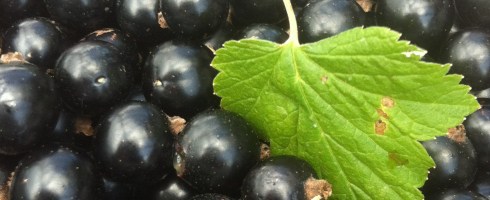
Blackcurrants.

When you have a glut of them you REALLY have a glut of them.

I have a couple of wee blackcurrant bushes which are ignored for most of the year and this year were surrounded by chest high grass, nettles and dock leaves. I was sure there would be nothing to harvest. But of course I was wrong. Deliciously wrong.

I cropped the whole branches, placed them in my wicker trug and carried them upstairs to our terrace one evening, and spent a gentle hour picking the fruit, topping and tailing it ready for cooking. The swallows were swooping and swooshing around our heads, sometimes below us, sometimes so close we could feel the rush of air as they changed course just before their wings brushed our faces. It’s a glorious way to spend a summer evening, and the memory of it keeps me warm through the winter.

The blackcurrants this year were destined to be drinks, one alcoholic and one not.

My Mum has made blackcurrant cordial for years and I feel that in my late 40s perhaps it is time for me to give it a go. I have no children to turn their noses up at it, as it isn’t their usual brand (I always wished we had REAL Ribena when I was a child, not this wannabe pretender. Little did I know how lucky I was).

So, I searched for the perfect blackcurrant cordial recipe and settled for one by Henry Dimbleby, who started the Leon chain of fabulous eateries. I have four Leon books, but of course found this recipe online on the Guardian website. You can read the original here if you want to.  The recipe is pretty simple, but does include the addition of citric acid, which is a natural preservative, but also adds a zesty acidic zing to the juice. Citric acid is a natural compound, found in citrus fruit (of course!) but these days it is mass-produced as a chemical compound, and is more commonly known as E330 on food labels.

Blackcurrant cordial

  • 500g blackcurrants, topped and tailed
  • 275g sugar
  • 250ml water
  • 1/2 tsp citric acid
  1. Put the blackcurrants, sugar and water into a heavy-based pan, and bring to a simmer. Simmer for about 5 minutes
  2. Get your potato masher out and bash the fruity smoosh, breaking up as much of the fruit as you can
  3. Add the citric acid and boil for another 2 minutes
  4. Place a muslin cloth in a sieve (preferably a plastic one) and pour the fruity mixture into the sieve and leave to drip through .Don’t bother squishing it with a spoon or anything. Just leave it. Go pour yourself a gin and tonic, you probably deserve one
  5. Once it’s stopped dripping (I left mine overnight) throw out the detritus in the muslin cloth; keep the muslin and wash it, ready for another day.
  6. Decant the thick silky juice into a clean bottle and label it up, so you know this is the BC cordial and not the hooch. You don’t want to get that wrong, trust me!
  7. Dilute with water or sparkling water fora  refreshing summery drink. Or with prosecco if it’s cocktail hour already, which it must be somewhere.

But I also wanted to make a blackcurrant liqueur. And wouldn’t you know, there was a handy recipe in this month’s Good Food magazine.  Well, the recipe was for a Bramble liqueur, but it can be adapted for blackcurrants when I have a glut of blackcurrants and the brambles aren’t ripe yet.

So here you go:

Blackcurrant hooch (or boozy ‘bena)

  • 600g blackcurrants, topped and tailed (you could use frozen if that is all you can get hold of)
  • a bottle of good red wine
  • 500g sugar
  • some vodka or gin (the original recipe I now notice only asked for a large glass of vodka/gin but I poured in ahem a whole bottle)
  1. Put the currants into a large plastic or glass bowl and pour over the wine. Get that trusty potato masher out again and crush the fruit as much as you can. Cover the bowl with a tea towel (this keeps it dark-ish and keeps out all the flies we are plagued with this summer) and leave for a few days. Give it another smoosh with the potato masher every 24 hours or so.
  2. Pour the mixture through a plastic sieve lined with a piece of muslin.
  3. Tip the juice into a heavy-based pan and add the sugar. Actually it probably doesn’t really matter if your pan isn’t a heavy-based one – don’t avoid making this hooch just for the sake of an expensive pan.
  4. Heat up slowly, stirring occasionally. Once the sugar has dissolved bring toa boil and simmer for 5 minutes.
  5. Leave to cool and then pour in the vodka or gin. As much as you think is appropriate. I suspect my version with the large volume of vodka is not entirely appropriate, but we’ll see.
  6. Use a small jug, or a funnel and pour into clean dry bottles.
  7. Seal and label.
  8. It’s ready for drinking straight away, or you can put a ribbon round it and feel proud that you’ve made some Christmas presents already.

My blackcurrant ripple ice-cream recipe is here if this isn’t what tickles your sweet fancy today.

Delicious and easy marmalade-y sausages

20 Jul

I like sausages. And I now like marmalade. For most of my life only one of those sentences has been true. I’m glad that they both are now.

So, since I like marmalade, it seems sensible to start using it in recipes. And I’ve started easy peasy. What could be easier than sausages?

My local butcher is worth visiting. He is a good old-fashioned Scottish butcher, with lots of bacon and steak pies and haggis and black pudding. And all other lovely meaty things. I’d intended to make Scotch Eggs this weekend with our glut of lovely fresh eggs from my ladies. But somehow that didn’t happen. So, this evening there were sausages to be eaten. We dug up some potatoes from the veg bed, to go with the sausages.

Marmalade sausages

Oven: Gas Mark 6

  • half a dozen small-ish pork sausages (or a couple of big ones)
  • 2 big spoonfuls of marmalade
  • 1 spoonful of tomato ketchup
  • 1 spoonful, or a big slug, of sunflower oil, or rapeseed, or vegetable oil, whatever you have to hand
  1. Mix together all the ingredients, apart from the sausages.
  2. Roll the sausages in the marmaladey mixture to entirely cover them up
  3. Pop each smothered sausage onto an oven tray, preferably one of those ones which has a ‘well’ for all the juices to run into
  4. Put them in the pre-heated oven, and leave for about 25 mins

Serve with new potatoes, savoy cabbage and onion gravy. There, how easy was that?

Oh, and if you feel like making your own marmalade too, try this: Tasty orange ginger marmalade.

Perfect salad for when you have the best tomatoes

28 May

You already know that I love buying and cooking and eating local food. So when Clyde Valley Tomatoes were back at my local farmer’s market earlier this month, I knew we’d be eating tomatoes all week!

I wanted to make a salad which would showcase the varieties of tomatoes.

Spring haul from farmer's market

Spring haul from farmer’s market

On the drive home I thought of a salad I used to make many years ago: fattoush. And then another tomato and stale bread salad: panzanella. I hadn’t made either for years, and started hankering for that melding of flavours and textures. Yes, these tomatoes were destined to become one big dish of delicious salad. Served with cold meats for lunch.

Panzanella

  • 1 small onion, thinly sliced and left in a bowl of ice cold salted water for an hour
  • 1 red pepper
  • 1 yellow pepper
  • a punnet or two of ripe tomatoes from Clyde Valley Tomatoes. Or perhaps about 8 medium tomatoes – if you’re using wee ones, feel free to double the quantities
  • 200g stale(ish) sourdough bread
  • 4 TBsp white wine vinegar
  • 1 TBsp capers
  • 2 anchovies, finely chopped
  • 6 TBsp extra virgin olive oil
  • small bunch of fresh basil
  1. Cut the peppers into big flattish pieces and pop them under a grill skin side up so the skin blackens. Alternatively use a toasting fork (who has such a thing these days?) and burn the skin over a gas hob, or chuck them in a hot oven. Or use a blow torch. You’ll know how you like to do it. Once the skin is black, put the pieces of pepper into a bowl and cover with cling film for 20 minutes or so.
  2. Cut the tomatoes into large chunks and place in a colander over a bowl. Sprinkle some salt over them and leave to drain while you prepare everything else
  3. Cut (or tear) the bread into chunks, about the same size as your tomato chunks and put them into a salad bowl and drizzle with vinegar
  4. Drain the onion and add it to the salad bowl
  5. Add the capers
  6. By now your peppers might be ready for peeling, so peel off the black skin, or as much of it as you can and cut the pieces of naked pepper into strips. Put them in the bowl
  7. Press down on the tomatoes and squeeze out lots of juice, then put the tomato flesh into the salad bowl
  8. Add the chopped anchovies and olive oil to the tomato juice and whisk
  9. Add salt and pepper to taste
  10. Pour the dressing over the salad and toss. Pick off some basil leaves and tear them onto the salad
  11. Leave for 15 minutes or so at room temperature – or outside in the sunshine
  12. Serve as one of those lunches where the table is covered with bowls and plates and ashets of this and that tasty treats.

Of course you could skimp some of the steps or tweak the recipe as you go:

  • If you don’t soak the onion right at the beginning, it will taste too harsh (for my taste buds). You might prefer to use red onion, or spring onions
  • Don’t bother pouring the vinegar over the bread. I think you’ll regret missing out that step though!
  • Add garlic. In fact most recipes include garlic. I just forgot to add is when I made it and enjoyed the garlic-free breath, and how the other flavours all sung out at me
  • Add cucumber, celery, chilli, crisp lettuce
  • Omit the anchovies if you’re feeding vegetarians. Obviously!

Basically make this your own panzanella – so long as you have the very best tomatoes and some good quality bread, you’ll make something delicious.

No pictures though, we ate it too quickly!


Rhubarb marmalade

30 Apr

Rhubarb marmalade

Rhubarb marmalade

I love my local farm shop. Let me give it a shout out.. it’s at Overton Farm in the Clyde Valley. Given the choice between spending a wee bit more per item at the farm shop, or spending a whole lot more in total (because I go off-list and end up buying things I don’t really need at the supermarket) I now always choose the farm shop. This means I more regularly run out of stuff like dry cat food, or domestos, but that’s ok. We have a car, and most things can wait till the weekend.

The farmshop isn’t exclusively local, so year round it’s possible to get those things that were seasonal treats in my childhood – peppers, mangoes, and even pears. But I like seasonal, and I have an urge to put things in jars when they are in season. Some time soon I am going to write a list of all the things I have in jars, so that I’m more likely to use them… they live in a drawer in a filing cabinet in a cupboard under the stairs. Yup, not really in an obvious place so I see a jar of, say spiced damsons, and think ‘that will go perfectly with the smoked mackerel I’ve just bought impulsively at the supermarket because we needed dishwasher tabs’. In fact I might just do that later this afternoon – I have the day off, and had planned to garden, but it’s grizzly grey weather and I’m something of a fairweather gardener, shaming though it is to admit that.

Anyway, back to seasonal and local and all that jazz. My seasonal treat at the farmshop on Saturday was a big bunch of rhubarb. I LOVE rhubarb; it’s that tart sharpness that just zings for me.

Thane Prince is one of my go to writers for any sort of a preserve. She currently can be seen in the BBC’s Great Allotment Challenge programme, but honestly I wouldn’t recommend that as your first experience of her. Watching someone, anyone, spooning out 10 globs of chutney from a jar and then tasting it, and diluting ten lots of cordial in water and sipping it is not my idea of good TV, no matter how lovely she may be, or how erudite her comments and criticisms are. Please BBC, try harder.

But of course she has a lovely recipe for Rhubarb Marmalade, with or without ginger. And that is what I settled on. Fortuitously I had just the right quantities of everything: rhubarb, sugar, oranges, pectin. And ginger. Why would I make it without ginger?

Rhubarb marmalade

From Thane Prince’s Jellies, Jams and Chutneys.

  • 1kg rhubarb, washed and cut into even 1cm wee chunks
  • 800g sugar
  • 2 large oranges
  • 125g liquid pectin
  • about 3cm fresh root ginger, grated. You do have a ginger grater don’t you?
  1. Get prepared. Put a large plate into the fridge, so you can check for a set when the time comes
  2. Clean your jars in hot water, and pop them in a low oven to sterilise them
  3. Zest your oranges, and then juice them
  4. Put the rhubarb, sugar, orange zest and juice into a heavy non-reactive pot. Bring the mixture slowly to the boil and then simmer over a low heat for 5-8 minutes. The rhubarb should be soft and the sugar dissolved.
  5. Turn off the heat for a minute. Add the pectin. Stir gently so it’s all mixed in and then turn the heat back up. Bring to a good boil and cook for a further 2 minutes before testing if it’s set. At this stage my marmalade was still incredibly runny and it took a further 25 minutes before it started looking properly jammy and was anything near a set. And then of course it went just too far and my marmalade is just slightly more solid than I would like – I like it still squelchy.
  6. Once the marmalade has reached setting point, ladle it into the hot sterilised jars, seal and label.

You do know how to test for a set don’t you? I wouldn’t recommend using a sugar thermometer for this recipe – when my marmalade had reached setting point it was still far off the ‘jam’ stage on my thermometer, which is no doubt to do with the levels of pectin in the mix. Anyway, I test for a set by dropping a wee gob of the hot marmalade onto a cold plate (yes, that one you put in the fridge right at the beginning); leave it a wee second or two, and then push it with your finger. If it wrinkles it’s ready (or even over-ready); if it is just liquid and runs back into a puddle it needs more boiling.

So, why would anyone spend their Sunday afternoon making Rhubarb Marmalade? Easy… just try it, still warm on hot buttered toast. You will forget that anything else exists, and you’ll wish that you could do this every afternoon, and if you’re feeling special match it with a wee glass of fizz. My accompaniment was a perfect cup of Earl Grey tea, out of a fine china tea cup. Deliciousness.


An Easter Chicken

21 Apr

Easter chookie chook

Easter chookie chook


I’ve always rather liked Easter. I’m not religious, although I flirted with some happy clappy Christianity in my teens. I think I was more interested in the group of people who were mostly stranger than me than I was in the actual theology. But somehow, I’ve always liked the Easter break. I suspect it’s Spring that I like. And an unexpected long weekend. With Easter zipping about the year, depending what the moon is up to, it always seems to catch me unawares, so suddenly I’m faced with a long weekend. And the prospect of going to Galloway to see my parents. And sunshine. And lambs, and bright lime green leaves shining in the sun, proving that nature rocks.

Last year my chickens laid lots of eggs for Easter. Good chickens. This year the haul wasn’t so good. First of all one of my chickens died a couple of weeks ago. Thankfully it was while I was away so I didn’t have to deal with her wee dead body myself – I’m not very good with dead things. And then two of my reliable wee broon hens started moulting so they aren’t doing much in the way of laying. And then Mabel, big blousy Mabel, got broody again. So all she does is sit fatly in her stall, thinking (presumably) that if she stays there for a long enough an egg will miraculously appear, closely followed by a scritch and a scratch and the arrival out of said egg of a cute wee chicken. This seems highly unlikely given Mabel’s form (and more importantly the fact we have no cockerel).

So, the eggs we have are big and yolky and delicious, but there aren’t so many of them these days.

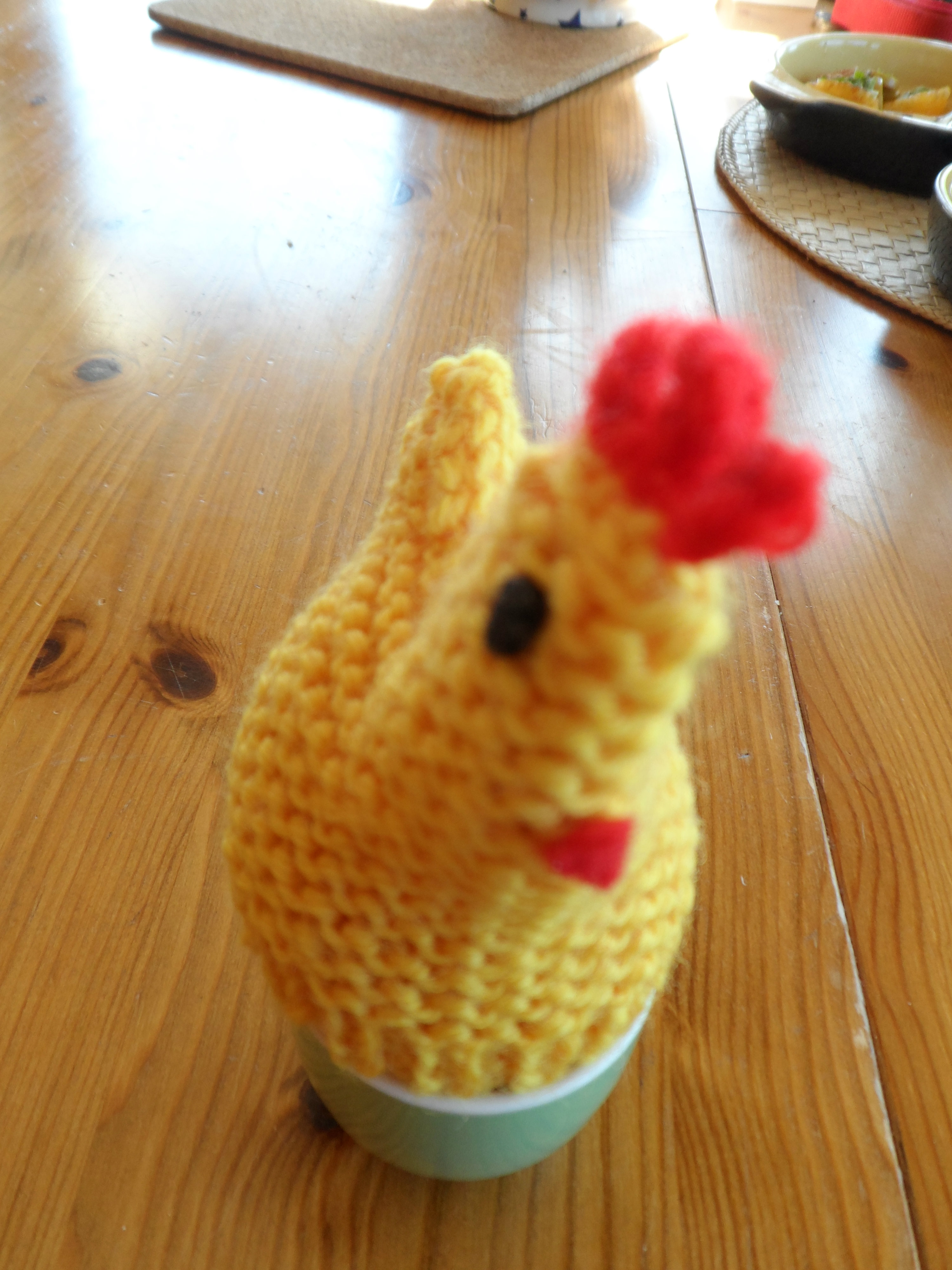
Never mind. When you give eggs to your father at Easter time it seems appropriate that they come with their own hand-knitted egg cosy. You know, just in case they get cold on the journey. So, I knitted Dad a chicken. I rather like her and may make some more. I also might tell you all how if you’re really interested (so do leave a message if you want to know how easy peasy this is to do… or even if you want me to make one for you one day… but you don’t get to choose which day, it would have to be a surprise, when the chookie muse takes me).


2013 in review

5 Jan

The WordPress.com stats helper monkeys prepared a 2013 annual report for this blog and I thought I’d share it with you… read on, if you’re interested.

Here’s an excerpt:

A New York City subway train holds 1,200 people. This blog was viewed about 4,200 times in 2013. If it were a NYC subway train, it would take about 4 trips to carry that many people.

Click here to see the complete report.