You should always trust your mother; she knows best.
I know this to be true. It’s always been thus.
So why did I ignore her advice a couple of weeks ago?
We had gone home for a day at the end of August – it was a couple of days after my birthday, and I always want to see my parents around then. As a bonus it was the Gatehouse Flower Show. We used to enter flowers, and plants, and vegetables, and preserves and homebaking, and in the old kitchen at 29 Fleet Street we had a large display of winners tickets pinned to the wooden beam, proof of our successes. I haven’t even attended the Flower Show for too many years, most recently because working at Edinburgh summer Festivals meant I didn’t have the time off, and before that I was living in London and had too much of a London-head on me to make the effort. Shame on me!
And this year although we were attending, we didn’t enter anything. As Mum says, “That means we can confidently go around and say, Oh I could have won a prize in that category, without the contrary evidence of the judges’ decisions”.
I’m confident I would have won a prize in the wholemeal bread category (there were only 2 entries) and also the cheese scone category (my scones are exceptionally good). But I’m not allowed to enter all the categories – only people living locally are allowed to enter most categories, except for some random things like lemon curd (which I’m quite good at) and three hen’s eggs. Or it might be three hens’ eggs, who knows? And I suspect the judges would never know either.
Anyway, while I was home I was telling Mum about the great apple harvest we were looking forward to this year. Mum bought me two apple trees three years ago: a Galloway Pippin and a Cambusnethan Pippin. The first year they didn’t really fruit, of course. Last year we had a couple off each tree. And this year we have an enormous harvest – the poor wee trees are quite laden down with the weight of the crop.
And here comes the advice bit.
Mum recommended I pick some of the fruit off the heaviest branches straight away, or the branches may break with the weight of fruit.
I didn’t.
The next day a wind whipped up, after weeks of relatively balmy and calm weather. The inevitable happened and the wind ripped a branch from the tree. A branch with over 30 apples on it.
We now have many jars of apple chutney, and there will be cinnamon apple jelly by the end of the weekend. They are also deliciously good with a chunk of mature cheddar.
I’m not sure that in normal circumstances I would have picked up Maggie and Me by Damian Barr.
But what do I mean ‘normal circumstances’? I think I mean ‘of my own volition’. I have to confess that much of my book buying I now done online (yes, I own a kindle, and I LOVE it). There is less of that happy bookshop browsing time in my life, although I must confess to an impulse purchase of Jackie Kay‘s ‘Fiere’ when I took the scenic route via Looking Glass Books back to my office the other week.
So, what I am saying is that if I’d happened upon Maggie and Me in a bookshop I probably wouldn’t have given it a second glance.
But luck is on my side. I worked for several years at the Edinburgh International Book Festival (@edbookfest) which wasn’t just the loveliest team in the world, it was also a brilliant provider and recommender of good reading material. Of course. And, although I no longer work there, their Associate Director (@RolandGulliver) is my daily commuting buddy. And one of his many talents is his skill in recommending books. It helps that we both adore Niccolo Amaniti (and are both disappointed in his latest novel).
So, Roland recommended I read Maggie and Me. In fact he issued it as homework when I took week off.
Reading is a slightly different experience with a kindle, as opposed to a physical book with papery pages. For a start you probably won’t have turned it over and read the back, or the inside back cover about the author. You won’t see a picture of the cover every time you pick up the book to read it. So, in effect, all you can go on are the words on the ‘page’. This should be a good thing. And often it is. But it also means that I regularly can’t remember the name of the book or the author I am currently reading.
I remembered Maggie and Me. And Damian Barr. Probably because the book references Margaret Thatcher (the Maggie of Maggie and Me) so regularly, and vividly (opening with the writer’s memory of the night of the Brighton Grand Hotel bombing by the IRA, and Maggie walking out un-harmed, apparently un-fazed). And Damian? Why do I remember his name? Perhaps because he is called names at school, or perhaps just because I tried to remember his name so that I could lookout for more of his writing. Yes, it’s that good.
In Maggie and Me, Damian recreates Scotland in the 80s; it is the era of Thatcher, of her power, but also of the very real hatred of her in many homes in Scotland. Damian’s father works at ‘the Craig’ (Ravenscraig) which is threatened with closure. Wee Damian is convinced that Maggie won’t allow this to happen, but we all know the outcome – there would be no more second sunsets. His parents have separated by this time and Damian is living in the roughest and most violent flat in a rough and violent estate. He finds solace at the Carfin grotto, which says it all about the writer’s ability to find humour in what was an appallingly difficult childhood.
I laughed out loud. I cried. But I didn’t want this book to end. Go buy it. Go buy tickets to see Damian Barr at a Book Festival, or just follow him on twitter – he deserves your attention.
Maggie and Me will certainly make it onto the ‘favourite books of the year’ list for 2013.
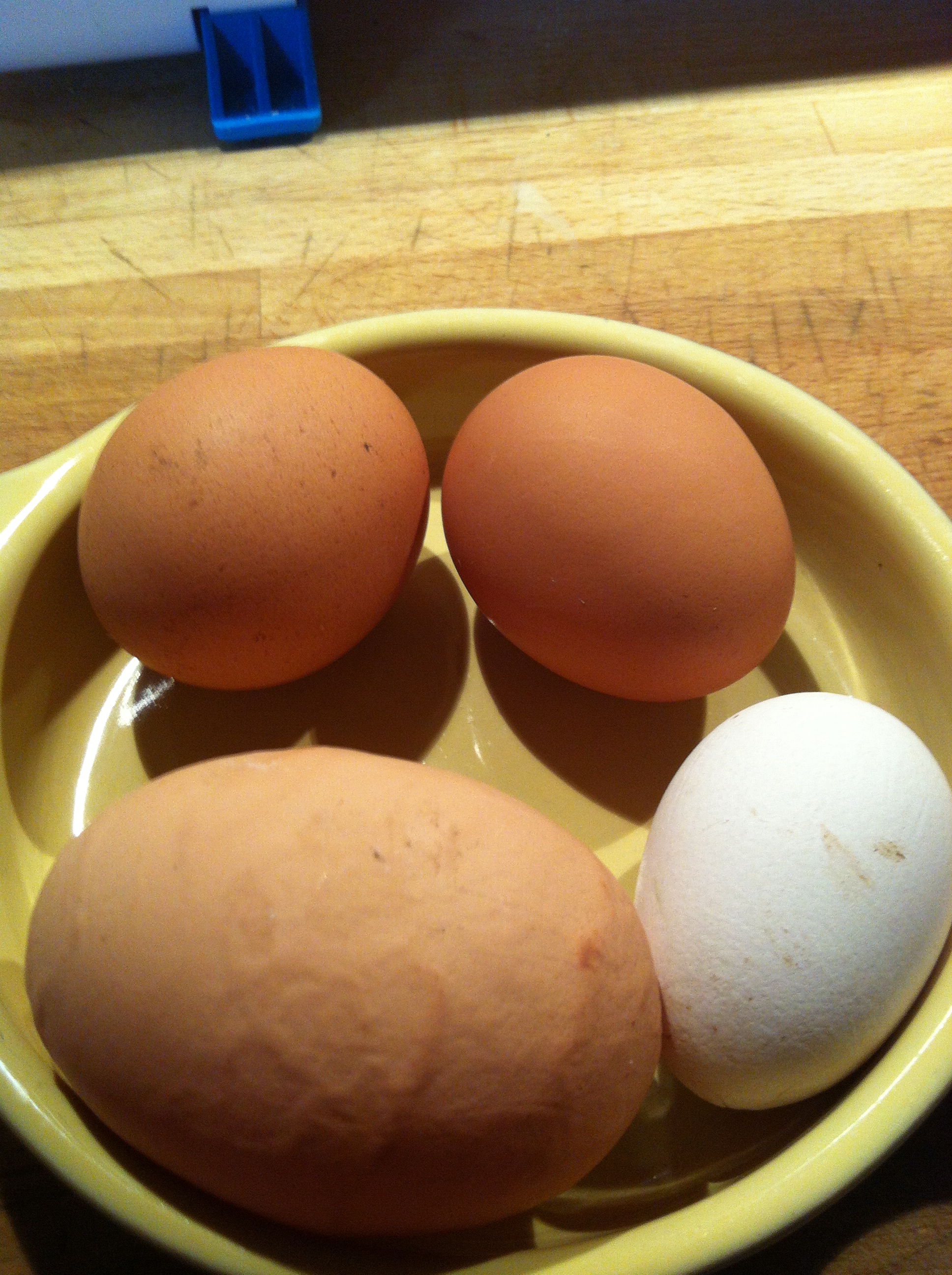
Not all eggs are equal. Mabel can lay an occasional Frankenegg, while Betty’s are always small and white
I keep hens. So I have a plentiful supply of fresh eggs.
I am Scottish and live in Scotland.
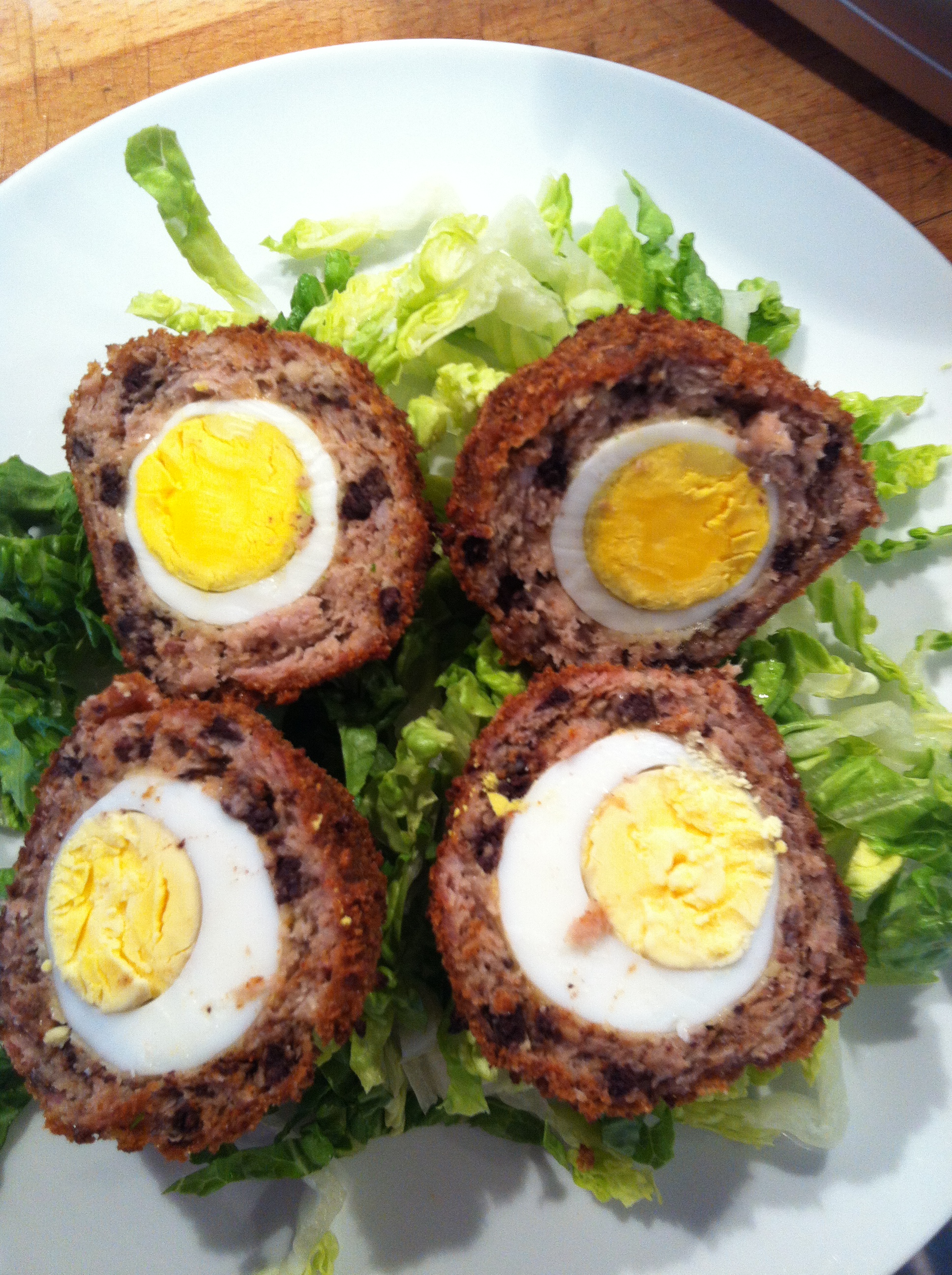
So the only surprise is that it’s taken this long to write about Scotch Eggs.
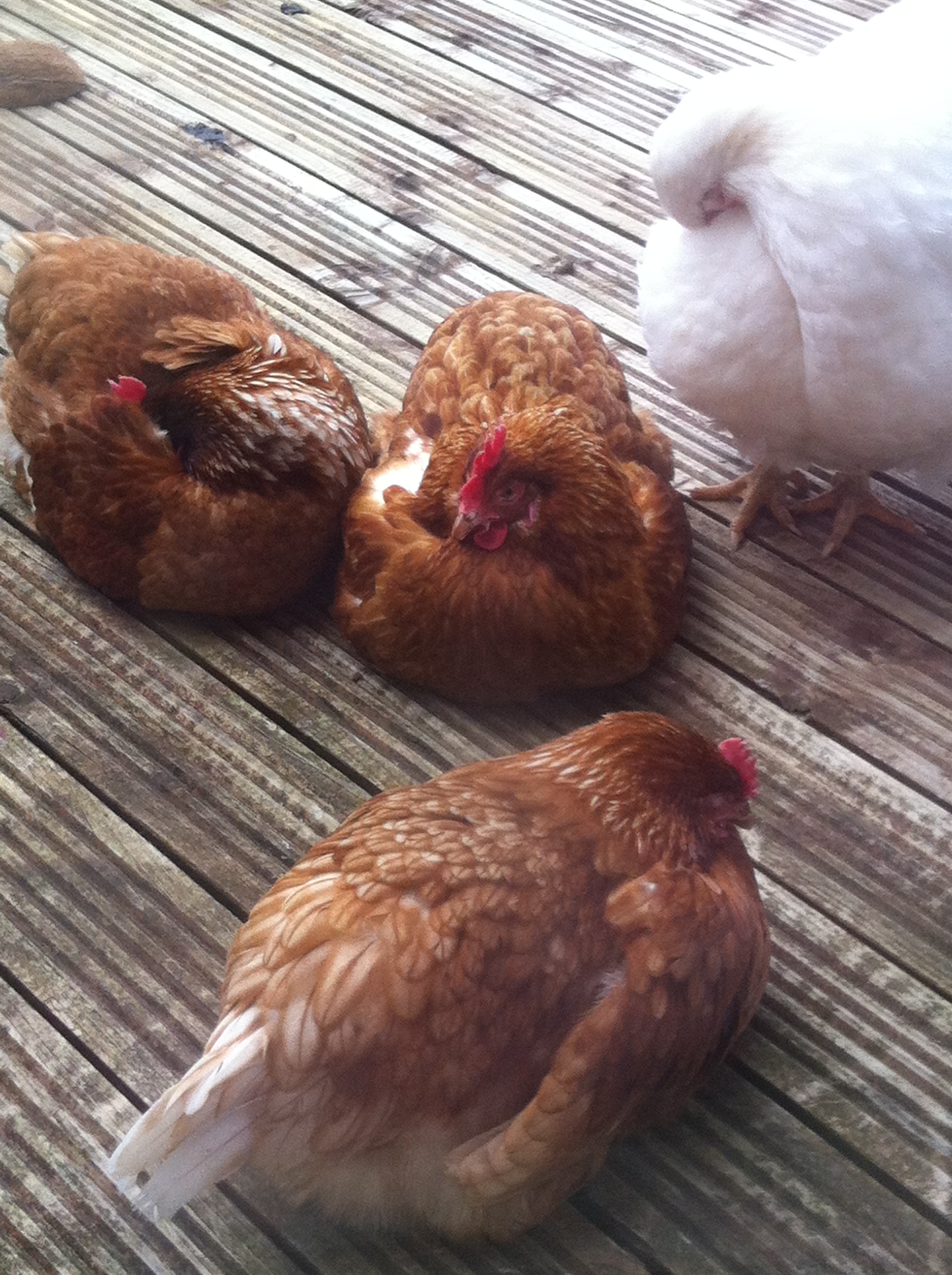
Chooks having an afternoon nap
Firstly a word or two about fresh eggs. The very freshest of fresh eggs are not the eggs you want to hard boil. When eggs are straight out of the hen, the membrane between the egg white and the shell is tight up next to the shell, making them difficult to peel. As the days go by, air will permeate through the egg shell, creating a teeny tiny space between shell and membrane and the bubble space you will sometimes find when you have hard boiled an egg.
Do yourself a favour, poach or fry those extra fresh eggs, they’ll be much nicer.
But back to the Scotch Eggs. I haven’t identified precise quantities here. Eggs are different sizes and some will need more sausage to cover them than others. Oh, and you might want a really thick coating of sausage. Or not.
eggs
some flour
some getting on for stale bread (or use up those posh japanese panko breadcrumbs you were persuaded to buy and still have hanging around in your cupboard)
sausage meat (about 1 1/2 sausages per egg)
black pudding (about a quarter of a slice per egg)
herbs, spices, salt and pepper
Hard boil your eggs – ideally so they have a slightly squishy bit in the middle of the yolk. You may have your own fool proof method, but if not, try my method at the bottom of this blog.
While the eggs are boiling, make your crunchy breadcrumbs. Cut some bread into wee cubes, about 1cm across. Place the cubes onto a baking tray and put them in a low oven to dry out and crisp up a bit. Once they are dried, smash them up – I do this by putting them in a high sided bowl and bashing them with the end of a rolling pin. You might prefer to put them in a plastic bag and pretend they are a disliked work colleague.
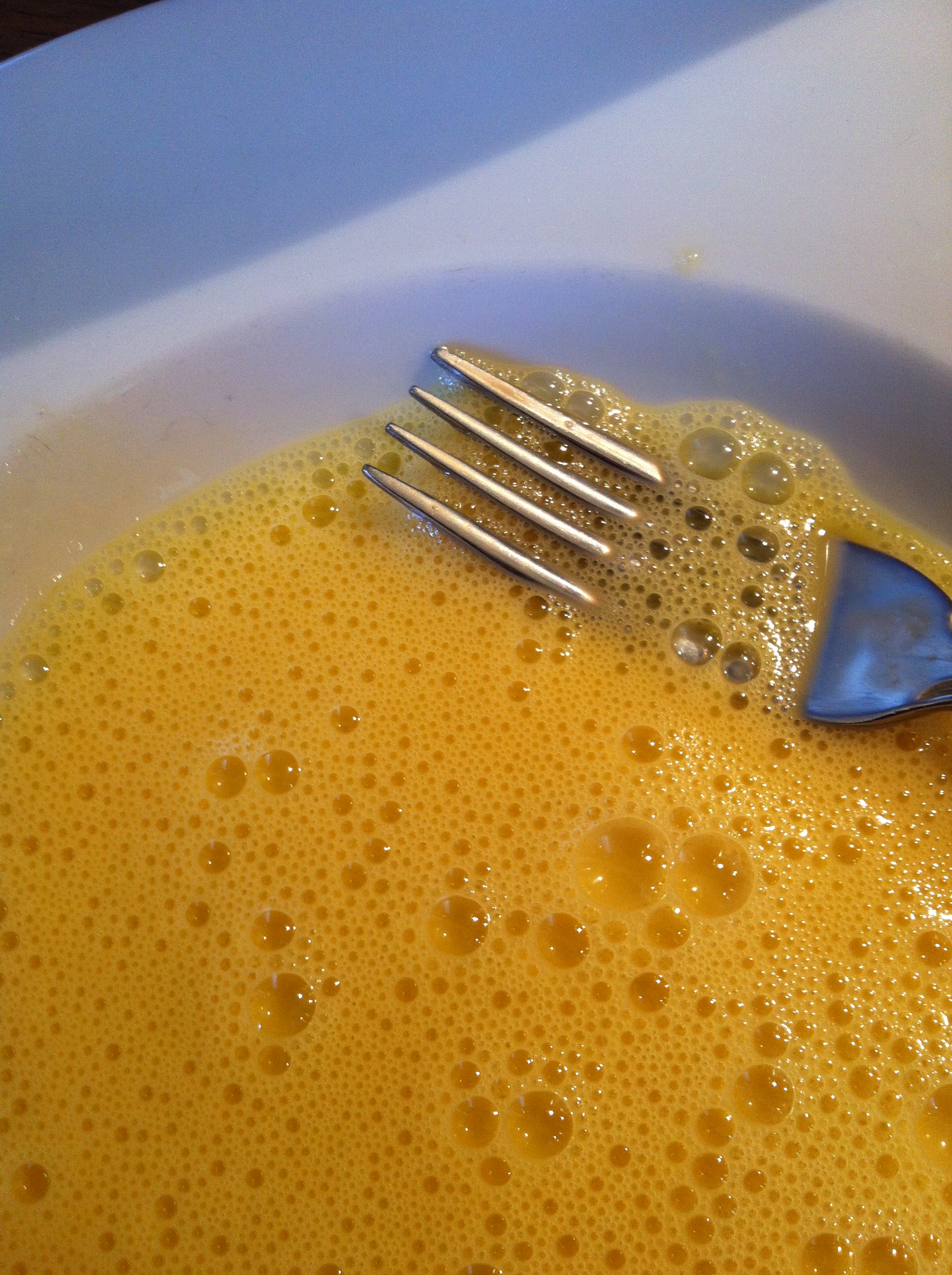
Break an extra egg into a soup bowl and lightly beat it with a fork. Leave the beaten egg in this bowl
Pour some flour into another soup bowl
Place the breadcrumbs into a soup bowl too. you don’t have to use soup bowls of course, but I find a wide based bowl is easier than anything else.
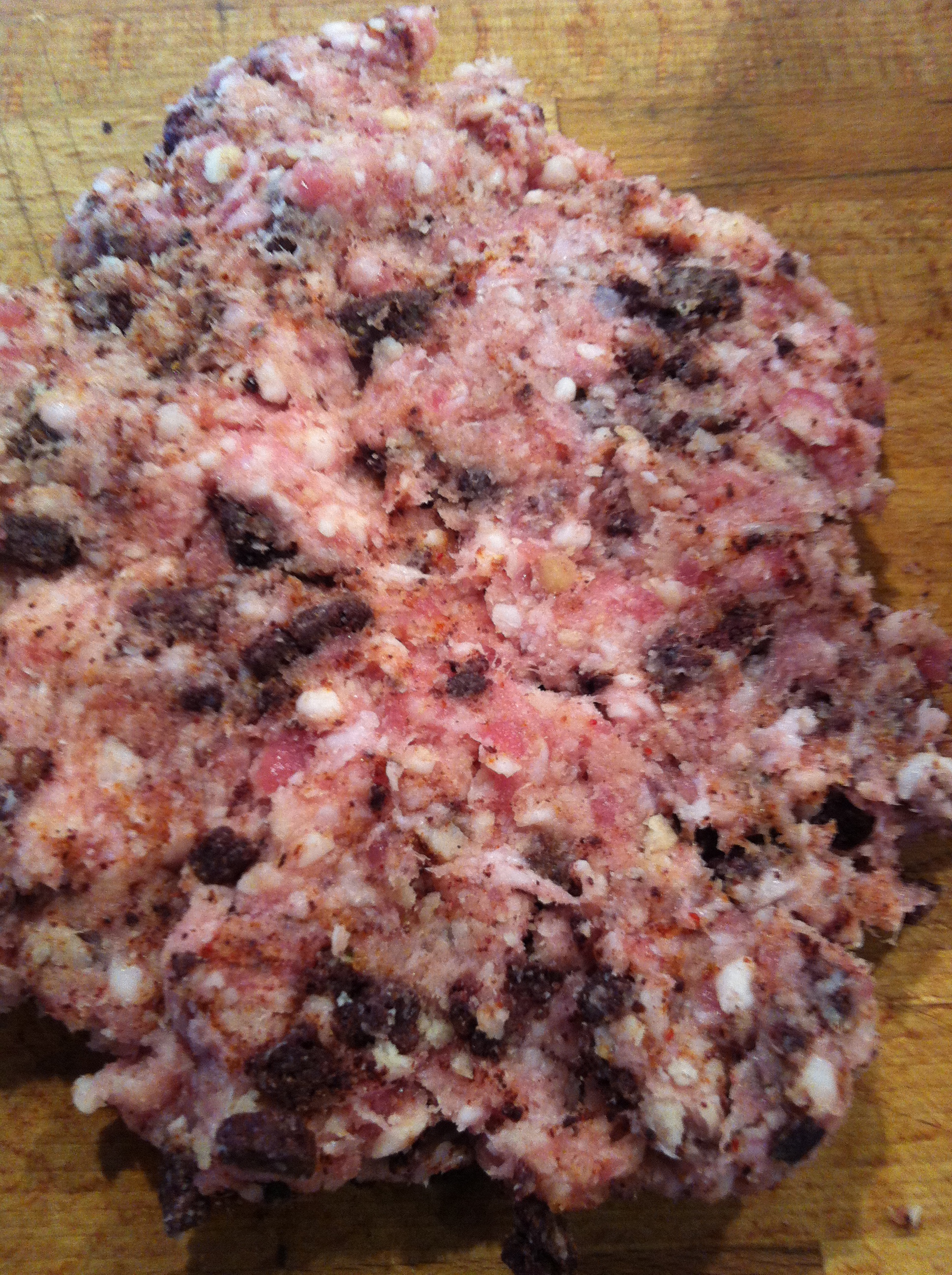
If you are using sausages, unpeel them into a bowl and add whatever herbs and spices you want to use (I added some smoked paprika and ground black pepper). Then chop up the black pudding nice and fine and using your hands, smoosh the black pudding and the sausage meat together
Take big chunks of the sausagey mixture and pat it out till it forms a sausage meat blanket, about 1/2cm thick
Now peel your eggs, then one by one make your scotch eggs
Dip the egg in the beaten egg
Roll the egg in flour
Place the egg on a sausage blanket and wrap it up in, squooshing it together so there are no gaps
Dip the sausage eggy ball in more beaten egg
Roll the egg in breadcrumbs
Place the breadcrumb coated sausagey eggy ball on a baking tray
Repeat till you’ve run out eggs or sausage or the will to live
Bake in a medium – hot oven (about GM5 or 6) for about 20 – 30 mins, or until they look and sound cooked
Serve warm, or cold, with salad. Yes, salad. Don’t be a salad dodger!
You need hard boiled eggs
Make your own scrunchy breadcrumbs
Beaten up eggy for dipping to make the flour and breadcrumbs stick
Make blankets of sausage meat mixture to wrap your eggs
Scotch eggs, ready for the oven
I’m so proud of my ladies, laying me such tasty treats!
How to boil an egg
Keep your eggs at room temperature (I don’t think they need to be kept in a fridge, unless you have an outrageously warm kitchen)
Put enough water in a pan so that the eggs you want to boil will be covered with water (and about 1cm more). The water should be about room temperature too.
Place the eggs into the pan of water
Put the water and eggs onto a hotplate, and bring to the boil
Once the water is boiling, turn the heat down slightly so that it continues to boil, but doesn’t splutter everywhere
Set the timer to 4 minutes
Use your 4 minutes wisely – put ice and water into a bowl, big enough that your eggs will fit in it
When the timer goes off, lift each egg out and pop it into the cold icy water
I make bread 2 or 3 times a week, but it’s usually in a breadmaker. I’m pretty good at making bread maker bread into something very tasty. The trick is (as ever) to start with the best ingredients. And when your ingredients are just flour, oil and water (ok and some yeast, milk powder, sugar and salt) you want to make sure you have the best flour you can find.
Stoneground flour with added seeds is my flour of choice, from Bacheldre Mill. I know, it seems ridiculous to buy flour from Wales, and cause it to be shipped up to the Clyde Valley. But it’s delicious. And I don’t necessarily like to promote amazon, but you can subscribe to Bacheldre Mill flour on amazon and get it automatically delivered to you as often as you want, and for about the same price as you’d pay at your local supermarket for an inferior mass-produced product.
One of the things I discovered early on is that you need about 20% more water than you expect when you are using stoneground flour. I don’t know why. You just do. Trust me on this.
Anyway, as I said, today I made bread. By hand, not in the breadmaker. And not a sourdough. I’ll come back to sourdough, perhaps in the summer, but for now I’m afraid I’ve killed my starter, so more sourdough will just have to wait till I can be bothered nurturing a jar of gloop again.
This morning I was inspired by that lovely Mr Hollywood. You know, him with the gorgeous twinkly blue eyes, and the assertive kneading hands. And the knowledge, held within his hands as much as his brain, on how to bake. As someone who has loved baking all my life, I appreciate what that lovely Mr Hollywood has to offer. OK, as a warm blooded woman I appreciate what that Mr Hollywood has to offer!
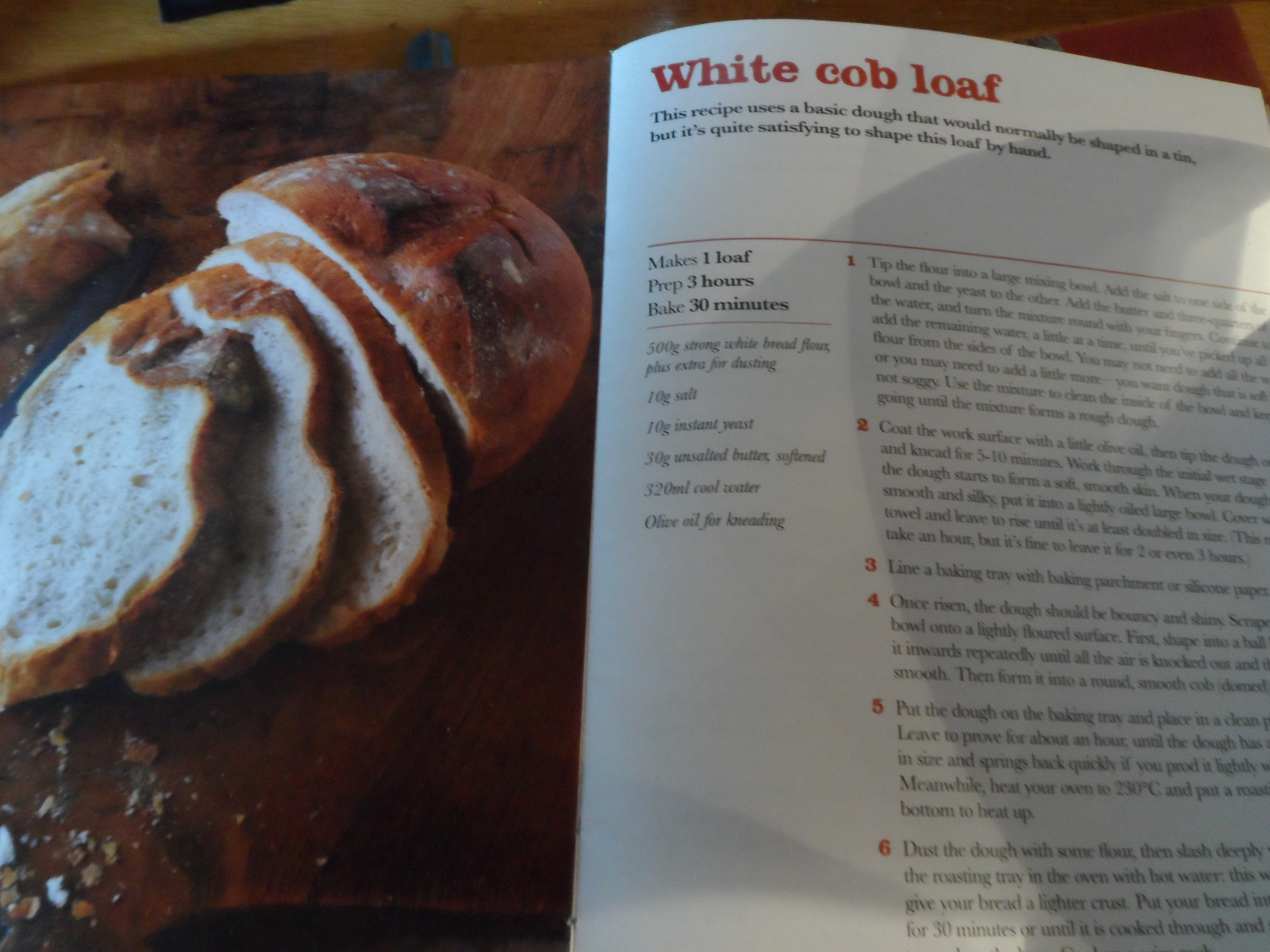
My mother sent me the free Hollywood Bakes booklets she’d got in the weekend Telegraph, and it seemed sensible to start at the beginning, with a white cob loaf. But I’m not very good at following recipes to the letter, and I don’t have weighing scales which enable me to weigh 10g of yeast, so my white cob loaf is I guess a Valley Variation of Mr Hollywood’s recipe.
But it works.
It works brilliantly.
I will be making this bread again. And again. So should you.
White cob loaf
500g strong white flour, preferably stoneground
2tsp instant yeast, plus a wee bit more
1 lge tsp Maldon sea salt
about 30g softened butter
350ml tepid water
Tip the flour into a very large mixing bowl. If you have one of those really big wide mixing bowls, that is what you should use
Add the salt to one side of the bowl and the yeast to the other
Add the butter and 3/4 water in the middle and start mixing it around with your fingers, using them like a paddle
You’re aiming to incorporate all of the flour into the doughy mixture around your fingers – you may need to add all of the water, but perhaps not, depending on your flour. Or the where the moon is in its cycle. Or the equinox. Or if you live next door to a witch. Bread is fickle like that.
When the dough has come together and is soft (not too stiff, and not too soggy, although soggy is better than stiff in this instance) clean the inside of the bowl with the dough.
Coat your work surface with a little olive oil (or whatever unflavoured oil) and tip the dough onto it.
Knead for around 5-10 minutes until the dough seems to form a soft smooth skin, and it all feels softer and silky to the touch
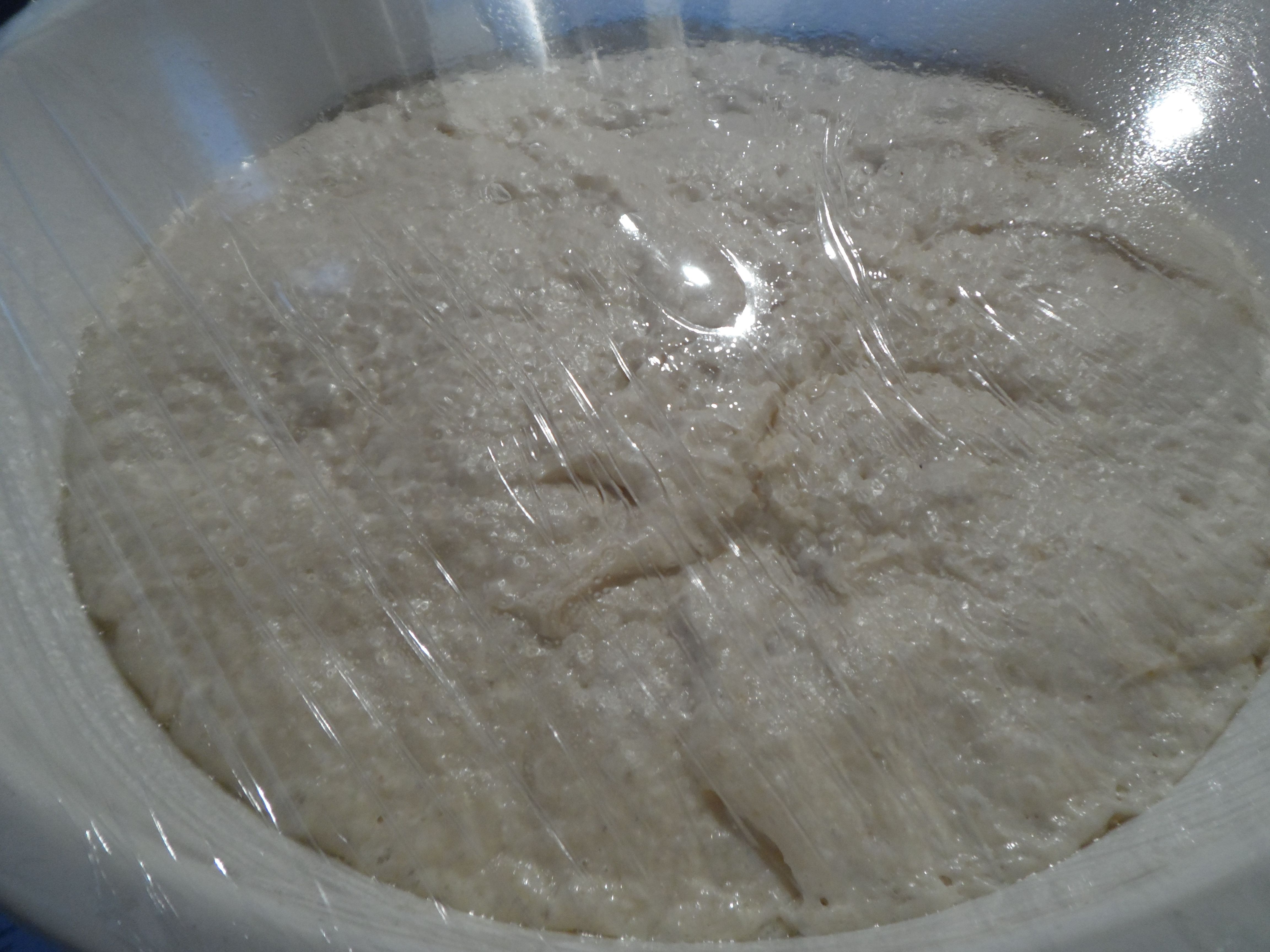
Oil a large bowl and place the dough in there, cover with cling film. Or a shower cap if you’ve been away in a hotel recently and have taken the free shower cap with you
Leave to rise in a warm place, if you have one.
Wait
Go and do other things
Do some more
Once it has doubled in size you can get going again.
Line a baking tray with parchment, or butter it with a leftover butter paper
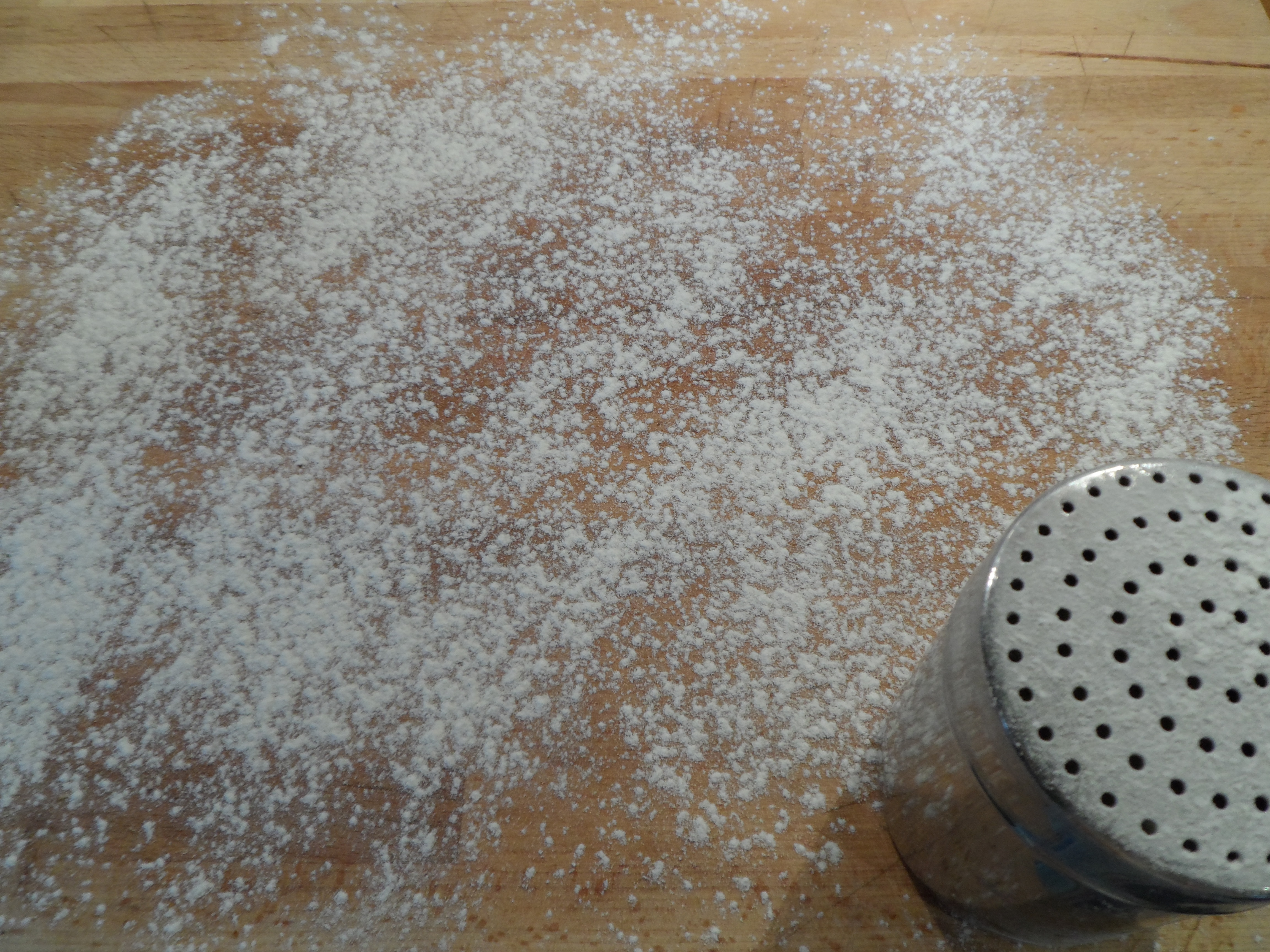
Scrape the dough out of the bowl onto a lightly floured surface and shape it into a ball by repeatedly folding it inwards with your hand. Once all the air is knocked out of it and the dough is smooth, form it into a round, smooth cob (dome) shape
Put the dough on the prepared baking sheet and leave to prove for about an hour. If you can, cover it, but you don’t want anything that will touch the surface of the dough or it might rip the skin off the dough when you remove it
When it’s nearly ready, pre-heat your oven to 450F / 230C / GM8.
Once the dough has doubled in size again test to see if it springs back quickly if you prod it gently with a finger. If it does, you’re ready. If not, leave it a bit longer. Or cry.
Fill a roasting tray half full with water and place it in the bottom of your hot hot hot oven
Dust the dough with some flour and the slash its top deeply with a knife. Don’t be scared, just do it.
Pop your bread in the oven and bake for 30 mins, or until it’s cooked through and sounds hollow when tapped on the base.
Cool on a wire rack
Eat with unsalted butter. Or cheese and pickle. Or ham. Or really with anything you want. It will be delicious.
Mr Hollywood’s white cob loaf
The dough, ready to rise for a few hours
A lightly floured surface, ready for the dough
A perfect pillow of dough
After 30mins in a hot hot hot oven it should look a bit like this
I woke at 6.30 this morning. The Captain was awake and had brought me a cup of Earl Grey. Generally on a Sunday I don’t drink Earl Grey at 6.30am, but the thought was kind.
It was a dull spring day, nothing special.
I didn’t drink the tea, but fell back into a deep sleep till after 9am, when the quality of the light in the room had changed dramatically – there was an inch of snow on the ground and it was still falling.
Spring flowers poking through the snow
An hour later, after a breakfast of local bacon in a home-made roll, it had cleared up enough for me to venture outside. The plan today was to sort out the greenhouse – perfect snowy weather activity you’d think. Except that the trouble with clearing a greenhouse is that you need somewhere to clear it to, and that somewhere is down the bottom of the garden. And by this time it was blowing a blizzard again.
So, what’s a girl to do but revert to type, retreat indoors and bake?
We had some spare apples and I have some of the loveliest cinnamon ever, which I suspect won’t be so lovely for evermore. Apple spice muffins were the answer.
Apple spice muffins
Prepare muffin tins and preheat oven to 400F / 375C / GM6.
2oz porridge oats
7oz plain flour
3tsp baking powder
a pinch of salt
1.5 tsp cinnamon
a shake each of ground cloves and ground ginger
3oz caster sugar
1 egg
a large apple, peeled, cored and chopped finely
6fl oz milk
2fl oz veg oil
And for the topping
3TBsp soft brown sugar
2oz walnuts, chopped
Mix the topping ingredients together and put to one side
Mix together the porridge oats, flour, baking powder, spices and salt
In another bowl whisk together the egg, milk and oil and then add the chopped apple
Pour all the wet mixture into the dry and stir it till it’s all just combined
Spoon into the prepared muffin tin (that probably means muffin cases in a muffin tin).
Sprinkle a spoonful of topping on each muffin.
Bake for about 20-25 minutes, until the tops are light brown and the muffins spring back when you gently press them.
Cool for a wee minute, then EAT.
Dry ingredients in a bowl
Add an egg, without the feather
Remember to sprinkle the scrumbly topping on your muffins
They’re ready when they are golden brown – so about 1 minute before these ones came out slightly burnt!
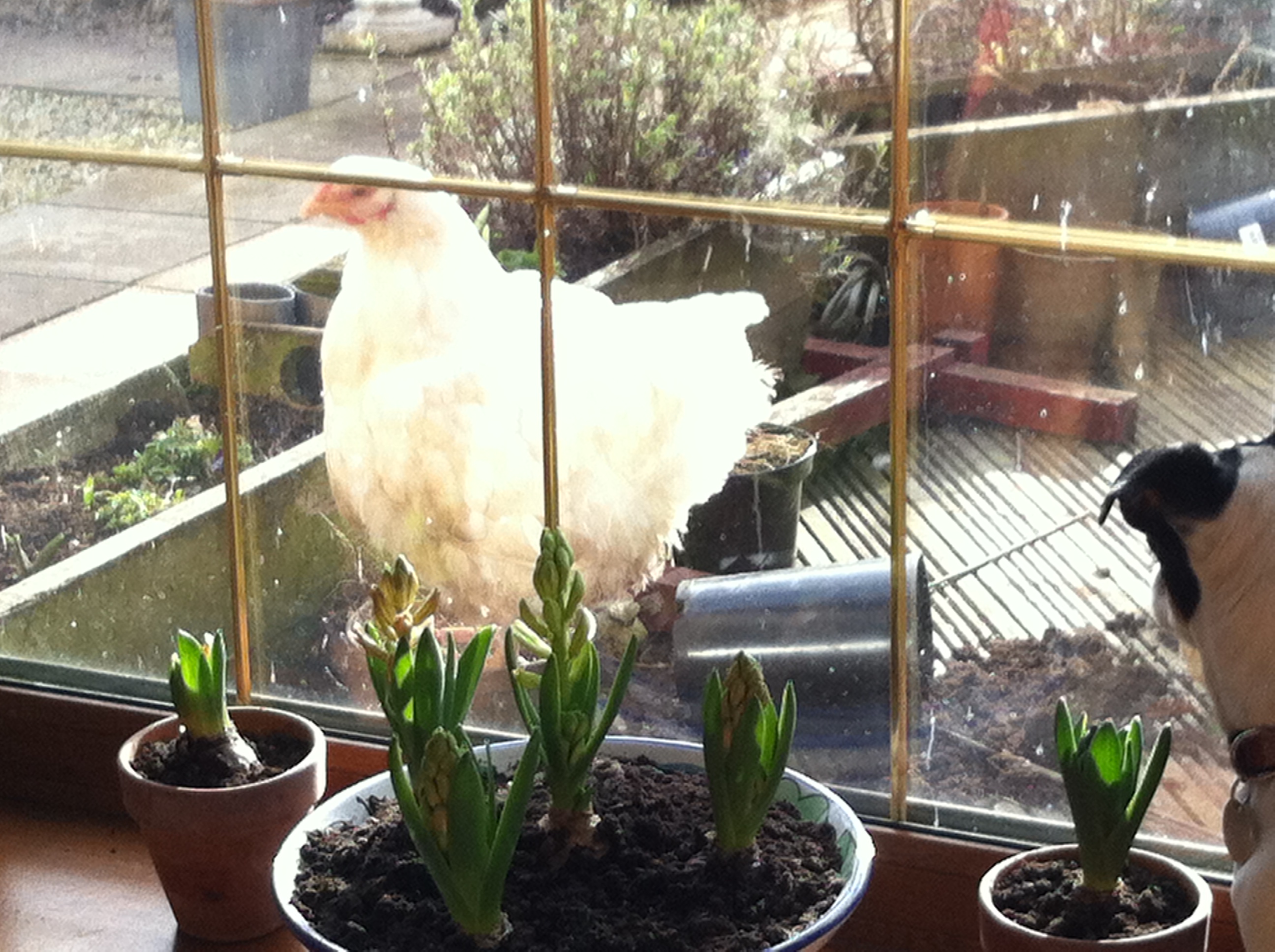
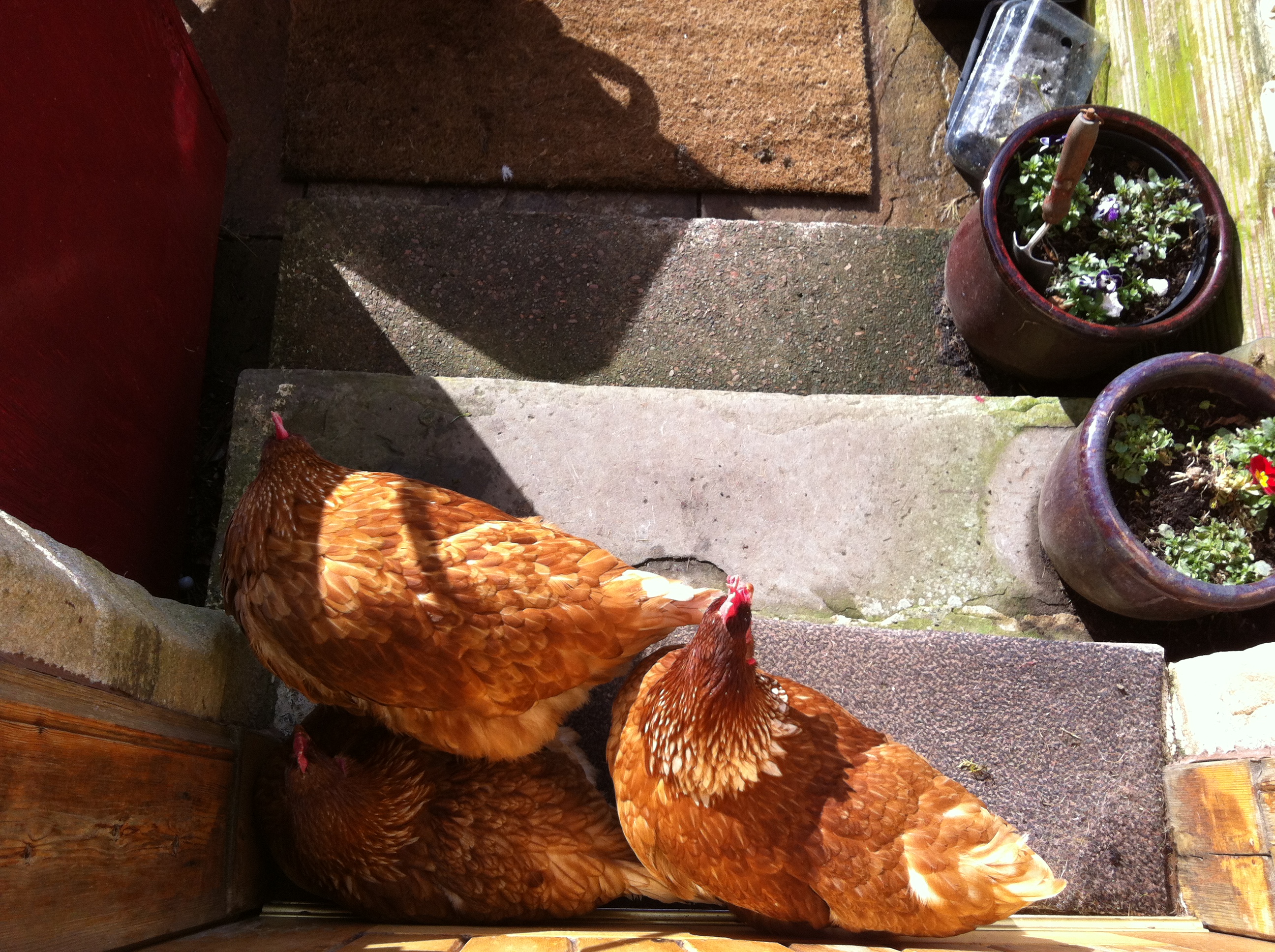
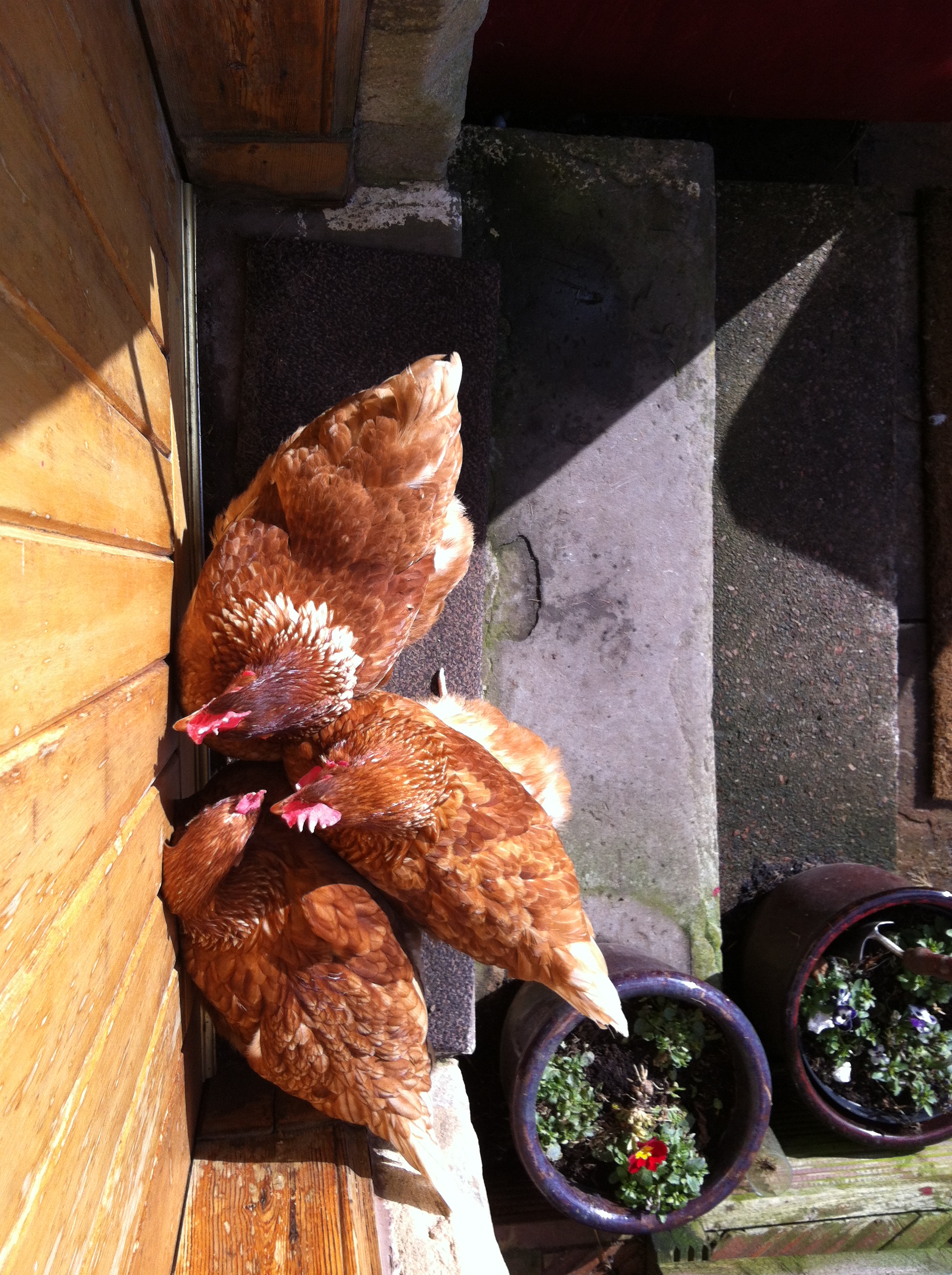
So, we now have five hens: Achilles, Hector and Wee Tommy are hybrids (Lohmann Browns) who have been with us since the Autumn. They give us an egg each pretty much every day. We also now have Betty and Mabel, a white and a blue Wyandotte. They came to live with our girls a few weeks ago and have stubbornly refused to lay. Until now. This week we had FOUR eggs one day. I suspect it’s Big Mabel who is laying, not wee Betty. I can’t imagine that Betty can produce a full sized egg, and all four eggs were bigger than your average, with lovely deep yellow yolks.
Anyway, as you can imagine, we’re eating a lot of eggy dishes these days, and this afternoon will see the production of a souffle for the first time, probably a cheese souffle.
But for now, it’s time for pics of my girls, so here you go, a selection from the last few weeks.
Last weekend we went to pick up two new chickens. Hens. Chooks. Girls. Whatever you want to call them.
And for the last week they have just been known as the new girls or the blue one and the white one. Or the new two.
But this morning they got names, over breakfast, as I was eating really delicious scrambled eggs on toast, watching them outside doing their chooky thing.
Mabel making herself at home in a nesting box
Moby tries to play Wacky Races with Betty
Mabel is being bullied by the three original girls. Whenever she gets close to them, especially when there’s food about, one of them will peck at her to chase her away. She runs pretty fast though so she’s not being harmed. And Betty, who is very petite and possibly a bantam, just hides behind Mabel so she’s ok.
Mabel and Betty haven’t started laying again yet after their winter break, but as the days get longer and spring starts to show, I’m sure they’ll be laying soon. At the moment we’re very happy with three eggs a day from Achilles, Hector and Tommy – and the eggs have got much bigger than when they first started laying, with rich dark yellow yolks – perfect for poached eggs, which is a regular quick supper these days.
Both Mabel and Betty are Wyandottes – a white and a blue – but they are so different from one another to look at. Personality wise, they are both much shyer and less talkative than the hybrids, with Mabel being protective of wee Betty. They are canny wee girls though – they’ve nabbed the nesting box for themselves, and they’ve worked out when to nip in and grab a treat without being pecked by the bullies.
Hector and Achilles are bullies. I should have known. Give the girls names which make them think they will be immortalised for their battles and of course they were going to pick on the new beautiful girl.
I may have to call my bumptious big white girl Helen if those Greek/Trojan heroes are going to fight over her.
This afternoon I went to give them all a wee treat of some bread (cut up into dinky wee cubes so they all get some) and Achilles, Hector and Tommy were outside doing their chookie thing, while the two new girls were indoors and keeping out of the way. That’s ok, the new girls might be feeling a little lost and want to get their bearings before they venture out too much.
But of course when there was no food left outside, the old girls started to wander in to see what I might be offering indoors. And then they went for the white chicken to try to prevent her from getting any treats. It was Hector, he was the ring leader. Achilles kinda joined in, and Tommy was too busy scrabbling around for food to really get involved.
I’ve read about bullying when new chickens join an established group, about how it takes them some time to establish the new pecking order. But it’s brutal! I told Hector off, but I suspect she doesn’t understand like a dog would, and so she’ll continue to pick on ‘Helen’ pecking feathers out of her neck.
Meanwhile the wee blue girl was hiding in the shadows, keeping out of the way and then darting out to peck at some bread when the others were too busy fighting to notice. I think I like her already.
I went through these two statements in my head the other day, and then I thought to myself, ‘But perhaps I do’. You see, because I have known all my life that I don’t like marmalade, I’ve never tried it again since I was about 7 years old.
So then I started thinking about children not liking food, and how you should get the kids involved in cooking using the ingredients they think they don’t like. And then voila! They will at least try them. And quite possibly like them, as they are so proud of what they have made.
You know where I’m going with this, don’t you? The farm shop had lovely looking seville oranges, and I decided to test my hatred of marmalade, by making a big vat of the stuff.
I LOVE making preserves, and have several cookbooks devoted just to that, in addition to various back to basics cookbooks and family cookbooks which I was certain would have good recipes. I consulted my go-to website for finding recipes eatyourbooks. I’m sure I’ve mentioned it before, but if you haven’t read that post, then I’ll tell you about it again – if, like me, you have many cookbooks and no longer have an encyclopaedic knowledgeable of exactly what recipes are in which. Register them on the website, and you’ll be able to search for recipes, or on particular ingredients, and it will tell you which books or magazines will have the recipes you are seeking.
So, I narrowed my choice down to Hugh Fearnley-Whittingstall, or Thane Prince. And Thane won (and not only because I follow her on twitter, but because I love her no-nonsense recipes with her explanations of WHY you do certain things).
But of course, being me, I didn’t exactly follow the recipe word for word – I didn’t have enough granulated sugar in the cupboard and was determined not to go back out to the shops again, so I substituted with a mix of caster and dark brown muscovado sugar.
Orange and ginger marmalade
From Jams and Chutneys by Thane Prince. If you are even vaguely interested in preserving, buy this book – it covers the basic techniques and then delicious recipes for everything from an every day raspberry jam, through frozen cranberry vodka to smoky barbecue sauce.
1.25kg Seville oranges, scrubbed in warm water
115g fresh ginger, cut into 1″ nubs and then crushed
1.5kg unrefined sugar (I used 3/4 caster sugar; 1/4 muscovado)
200g jar stem ginger preserved in syrup, drained and chopped into slivers (keep the syrup – you’ll need it later)
You will also need a large muslin square, a big heavy based pan and preferably a jam thermometer (although this is not necessary)
After scrubbing the oranges pop them whole into a large heavy-based pan, with the smashed lumps of ginger and 8 cups of water
Bring to the boil, cover with a lid and simmer for about 45mins till the fruit is soft and squishy
Using a holey willie (this is what we call a slotted spoon in my family!) remove the ginger and the fruit from the pan – put it in a big bowl
Pour the liquid into a jug to see how much you have – if you need to, add more water to make up to 6 cups and put it back in the pot.
Add the sugar to the pot, and let it start to dissolve (off the heat) while you are processing the oranges
Before you do anything else, pop a side plate into the freezer, or the icebox of your fridge (this will make sense later)
Now, sit yourself down, put on the radio and get to work on the oranges. You’ll need a bowl lined with the muslin square, a wee sharp knife, a soup spoon, a chopping board and the bowl of oranges
Cut the oranges in half, and scoop out all the pith and the seeds and the orangey goodness into the muslin lined bowl. Once all the oranginess is in the muslin square, tie it up securely and pop it in the pot of water
Thinly slice the peel. This will take a bit of time to do properly, so relax and enjoy, it’s a lovely mindless task, almost meditative once you get going
Add all the sliced peel to the pot. Pop your sugar thermometer into the pot if you have one, if not, don’t worry – you’ll still get good marmalade
Bring the mixture up to the boil and simmer for 10 minutes
Add the ginger syrup and the slivers of preserved ginger
Cook on a fairly quick boil for a further 30 minutes, or until the marmalade has reached setting point. I didn’t boil it hard enough so it took FAR longer than 30 mins. If you’re using the thermometer, just keep boiling till it reaches ‘jam’ but do the cold plate test to make sure it will set.
The cold plate test – take the plate out of the freezer and drip a blob of marmalade onto it. Leave a few seconds till it’s properly cold and then push it with your finger. If it’s runny, keep boiling. If it sort of wrinkles at the edges, it’s ready. Voila!
Remove and discard the bag of oranginess.
Ladle into sterilised jars, seal and label
A note about sterilising jars. You must do this! If you don’t your marmalade could go nasty really quite soon after putting it in the jars. And what would be the point of that?
You can sterilise them by running them through the dishwasher and using them immediately (without putting your icky fingers inside the jar before filling them). Or wash them in hot soapy water, and place them upright in a baking tray, and pop them in the oven for 20 minutes or so. Again, fill them with marmalade before you fill them with ickiness from your fingers.
And another note for you – about soft peel. That’s what marmalade is all about, yeah? How would I know, I never liked the stuff! Anyway, if you want your peel super soft and lovely, then you have to go through the process of cooking the oranges in water BEFORE you add the sugar. If you add the sugar before the skin has softened it will just go tough and your marmalade won’t be so unctuous and delicious.
So, I guess you want to know if it worked, if I now like marmalade? Well what do you think? Would I be able to resist this unctuous bittersweetness in a jar? It’s DELICIOUS! I still don’t know if I like ALL marmalade, but I certainly love this one.
And you do want the recipe for marmalade and apricot muffins don’t you?
Next time, next time. I’m too busy on my Easy Peasy Cheese Scones right now. And must make some lemon curd, to use up some of those eggs (and those lemons looking a wee bit sad in the fruit bowl).
Ages ago I promised to tell you how to make the perfect poached egg.
Well, it looks like I’ll be having a few more poached eggs soon, as we have just got another two chickens. I thought they might be called Charles Darwin and Jane Austen (after significant authors in our collections at the National Library of Scotland where I work)… but now that they’re home, I’m not so sure. Pictures will of course follow but it’s such a dreich dull day that I can’t bear to take pics yet. They are both Wyandottes: one white and the other blue. The white girl is big and bumptious, and blue is petite and very shy. And neither can be seduced by food – I gave them a scattering of warm sweetcorn, which my other girls would hoover up in the space of seconds.. and the new girls weren’t really interested.
Anyway, there will no doubt be further news of my family of chooks, but for now, let me tell you how I make the perfect poached egg.
Poached egg
Get the freshest eggs you can get.
You do know how to tell if they are fresh or not? You pop them in water and see if they float or not. If they sink to the bottom then they are oh so fresh; if they float to the top I’m not sure I’d eat them. Somewhere in the middle is probably ok.
And the reason this happens is that there is a membrane inside the egg, and over time the gap between the membrane and the eggshell fills with air to make a wee air pocket, hence the egg floats.
OK, so now you’ve got your eggs, you’re ready to make the poached eggs.
Boil a kettle full of water
Pour the hot water into a wide pan (possibly a deep sided frying pan type thing)
Add a pinch of salt and about 1/2 tsp white wine vinegar (don’t add more, you don’t want your eggs to taste of the vinegar – it’s just added to help the egg whites stay together and not stray all over the pan)
Put the pan on a REALLY low heat – you hardly want the water to bubble at all
Break your egg into a tea cup
Lower the tea cup with the egg in it towards the water, at a 45 degree angle, then slowly and gently tip the tea cup and slip the egg into the water
Repeat for as many eggs as you have (but don’t overcrowd the pan)
Now, let them just sit there in the almost boiling water for about 3-5 minutes, depending how fresh the eggs were and how soft you like them
Remove them from the water with a slotted spoon (which was always called a holey willie when I was a child and I still find it hard to resist calling it that!)
Serve on fresh buttered toast. Of course. Preferably with a sprinkling of freshly ground black pepper.
Other things to have with a poached egg on toast
Black pudding – classic and delicious, needs nothing else
But if you’re being fancy, add some scallops (and perhaps swap the toast for some spinach)














 Shewolfinthevalley