Elderflowers

27 Jun

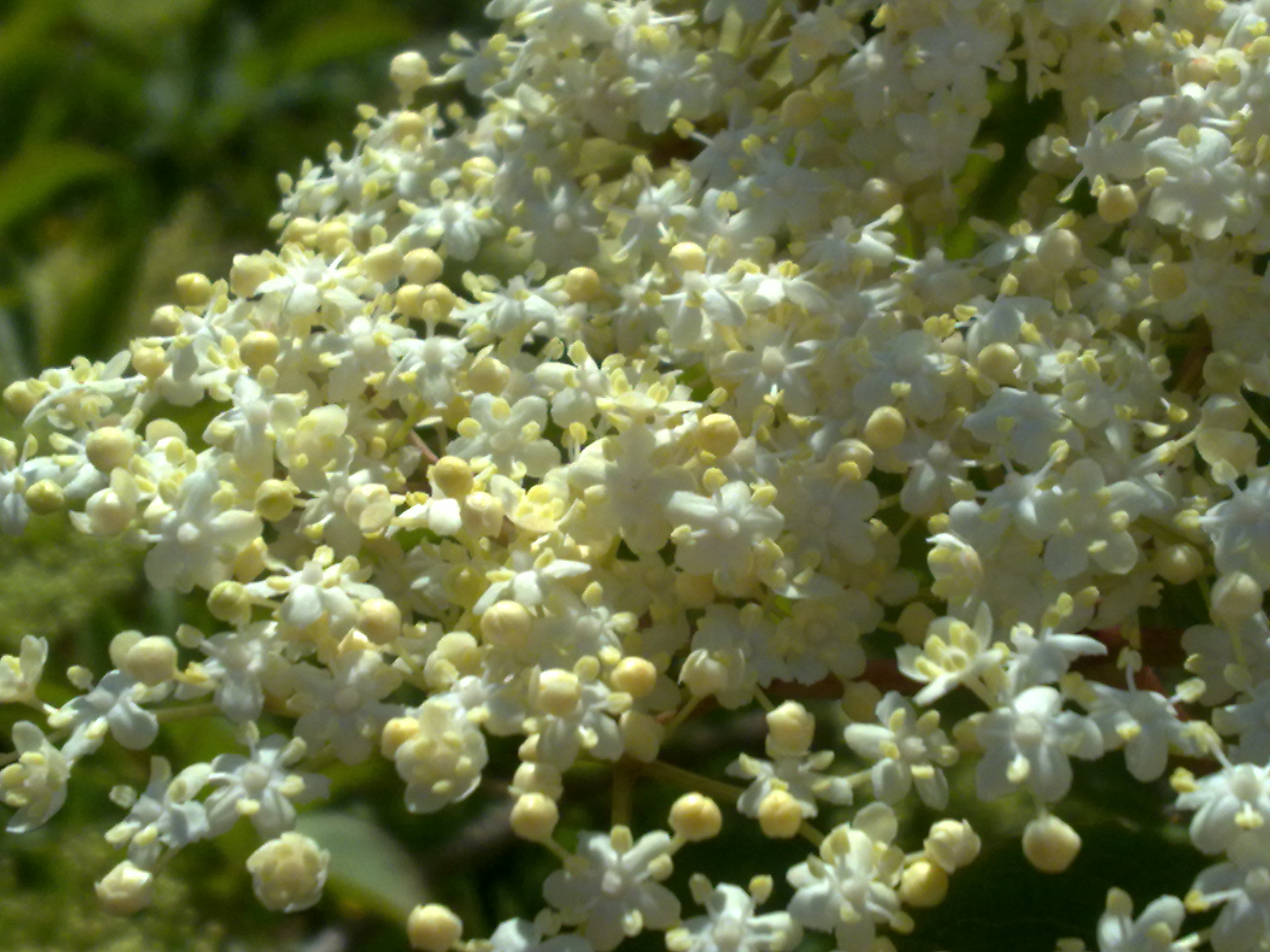
I love elderflowers.

I love their mop headed look.

I love their sweet, heady scent.

And I love the gentle flavour, which can be captured so easily in a bottle.  A bottle of elderflower cordial or elderflower fizz is a perfect reminder of midsummer. Elderflower vinegar makes a delicious salad dressing.  And gooseberry and elderflower sorbet is a perfect ending to a dinner party.  Or a delicious amuse bouche.

More on the other recipes later.  This last weekend was all about the elderflower vinegar (if only because I had very little time, as I was working most of the weekend).

Elderflower vinegar

First go pick your elderflowers – try to pick them on a sunny morning, but certainly not in the rain.  You’ll need about 5 elderflower heads for every 300ml of white wine vinegar.  So, pick as many as you need, but no more – you want the elders to produce elderberries later in the year for other treats.

So, this is the easiest recipe in the world.  Pour the vinegar into a heavy bottomed pan.  Add the elderflowers (after you’ve picked them over to make sure there are no bugs or nasties).

Warm the vinegar.  Don’t let it actually boil, but get it steamyhot.  Use a wooden spoon to press the flowers down into the vinegar from time to time as it’ heating up.

Leave the vinegar and flowers in the pan till it’s all cooled down.

Strain through muslin. And bottle (the easiest is to put it back in the vinegar bottles it came out of).  Make pretty labels if you’re giving it away.

This is wonderful made into a dressing with olive oil, honey and mustard.  And garlic, black pepper, herbs, lemon juice and whatever else you fancy (or have in the cupboard).

I used the lovely Aspall’s organic white wine, but it would also be lovely made with cider vinegar.

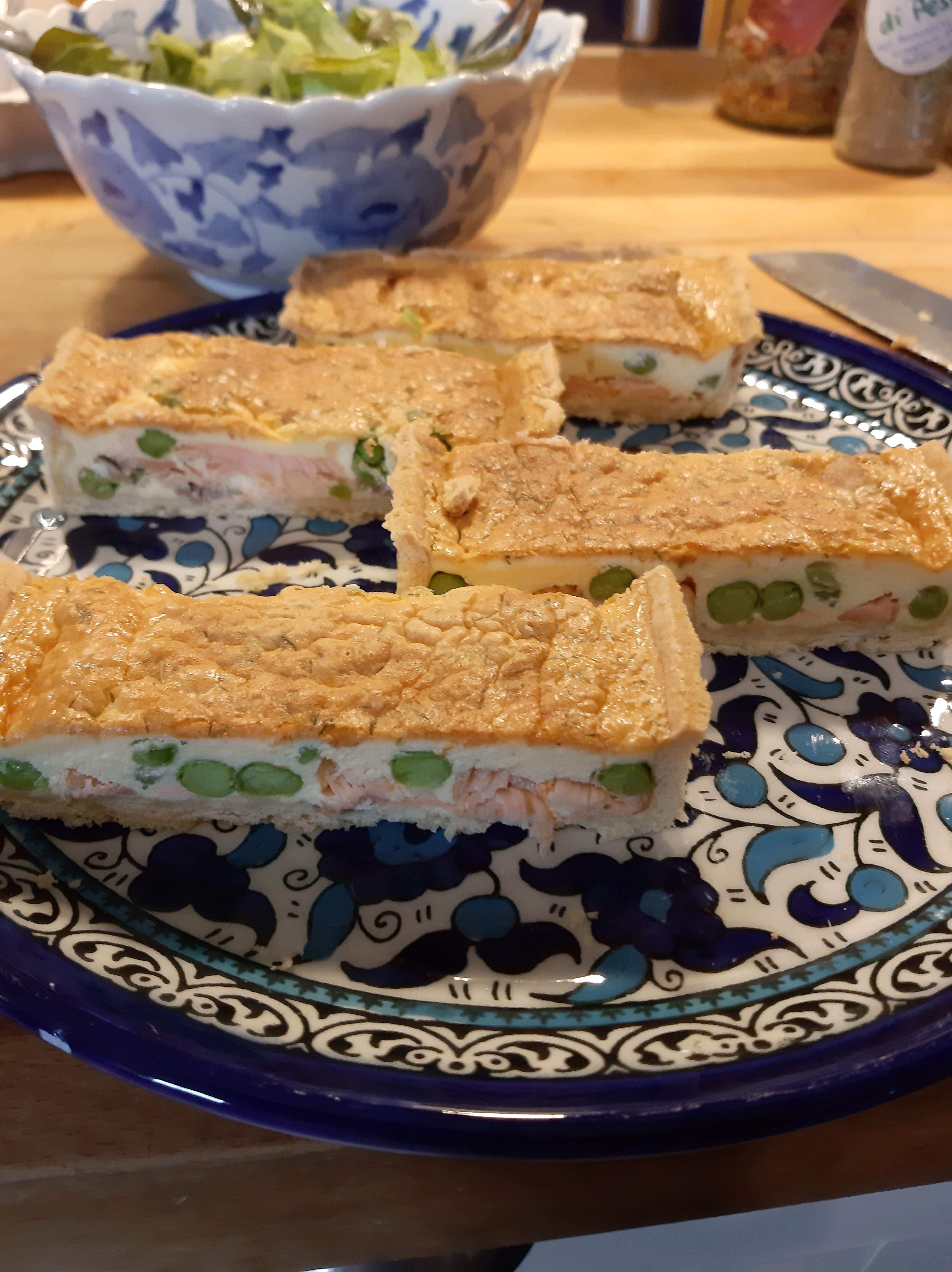
Real men eat quiche (when I make it)

19 Jun

So. Yesterday morning I decided quiche and salad would make the perfect lunch.  I’d intended to have boiled new potatoes too, but completely forgot them at the last minute.  Ah well.

The quiche was going to be one of those fridge leftover scooper uppers, taking in full fat milk; some rashers of bacon, a red onion, frozen broad beans, and a chunk of Coolea cheese left over from G’s birthday.  Oh, and lots and lots of eggs.  And some parsley picked from the doorstep.

Spring quiche

Shortcrust pastry

8oz plain flour

2oz butter, cold from the fridge

2oz lard (cookeen), also cold from the fridge

Some grated parmesan

Salt and pepper, and some harissa style spice mix

  1. Sift the flour into a large bowl
  2. Chop the butter and lard in chunks into the flour
  3. Using your fingertips, rub everything together, lifting it high over the bowl as you go to incorporate air into the mix
  4. When it resembles breadcrumbs (ish) add the seasoning and flavourings if you want them – here I used some leftover parmesan in the fridge and some spicy herb mix
  5. Using a knife mix in enough cold water to form a stiff dough
  6. Squash down a bit (so it’s easier to roll out later) and wrap in clingfilm and leave in the fridge for at least 30 mins.
Quiche filling
3 rashers bacon
1 red onion
knob of butter
a bowl of frozen broad beans
a few spears of asparagus
5 eggs
about 1/2 cup milk
While the pastry is chilling in the fridge grease a tart tin (I used a loose bottomed non-stick tin which must be about 12″ across) and then start preparing the filling ingredients.
  1. Snip the bacon rashers with a pair of scissors into a frying pan (you could of course use a sharp knife, but I find it much easier to use scissors)
  2. Finely chop the red onion and add to the pan with the bacon
  3. Add a knob of butter and cook gently over a medium heat
  4. Meanwhile, if your broad beans need to be peeled again (the grey skin isn’t the nicest flavour, and it doesn’t look too good) then quickly boil them up in a pan with a little water. Boil for a couple of minutes, then rinse in cold water. They are easy to peel – nick the grey skin with your finger nails, then squeeze the bright green beans out of the grey pocket. Yum.  You’ll be surprised how small a bowl you need for the actual beans!
  5. Break the asparagus into roughly inch long sections.  Start by holding the asparagus at both ends and bend it till it breaks.  The end you are holding with the tip is the good stuff.  The other end may be too woody and can be thrown away.  To be honest, in this recipe I ended up using a bit of the woody end too.
  6. By now you can probably take the pastry out of the fridge, roll it out to about 3-4mm and line your well greased tart tin.   Or lots of wee ones if you are making individual quiches.
  7. Prick the base with a fork, leave the pastry draped over the edges while you bake it.  If you don’t the pastry is likely to shrink from the edges and it will be neater if you cook it like this and then cut off the draped edges later.
  8. Roughly cut a piece of greaseproof paper so it is slightly bigger than the tart. Lay this on top of the pastry and cover with baking beans, or ordinary dry beans or rice.
  9. Cook in a hot oven for about 10-15 mins, then remove the paper and the baking beans and cook for a further 3-4 minutes
  10. While it’s in the oven you can crack your eggs into a big bowl and start whisking them – I just use a hand whisk.  Add some milk, or cream if you have any. Or creme fraiche.  You could also add mascarpone cheese or other cream cheese if you have some.
  11. Season with freshly ground black pepper.
  12. Now, neaten the edges of the pastry case, and then start adding the filing.
  13. First, make a layer of bacon and onion.  Then add the broad beans and the then the asparagus.  Grate over some cheese and if you have any herbs add them – I’ve got a couple of pots of parsley by the front door and snipped off a good handful and sprinkled this over the other filling.
  14. You might want to put the tart tin onto another baking tray at this stage, just in case of leakage.
  15. Finally, pour in the eggy mixture and put straight into a hot oven.
  16. It’ll be ready in oh, about 20 – 30 minutes.
You may notice I haven’t got very precise weights, or timings.  I remember when I was still at school and my elder brother had phoned from his university digs to ask mum how long to boil tatties.  She had said ’till they are done’ which has always stuck me as the most sensible answer.
To be fair to my mother, we had an oil-fired rayburn which was on constantly and this forgiving way of cooking meant you never had to focus so carefully on timings.
This quiche is probably enough to feed 8 if you have various other salads and so on with it, if you only have a green salad, then it might only be enough for 6.  Of course, we shared it between two of us, but over several meals.
I think it tastes best still warm rather than hot hot from the oven, or cold from the fridge.

Triple chocolate ginger brownies

6 Jun

This recipe is a bit of an amalgam of several other recipes.  I had decided it was a chocolate brownie weekend.  That was after it had already been a garlic bread, asparagus & parma ham pizza, carrot soup and granary bread weekend.  More on the savoury stuff later, this is all about the chocolate.

So, the amalgam.  I looked at a few recipe books, and the recipe in Leon is the only one which stood out.  It was very particular about the order in which things were added, and also that the melted chocolate and butter should be allowed to cool slightly before mixing with other ingredients, to prevent it seizing up – this makes perfect sense to me now that it’s been mentioned.  They also whipped together the eggs and sugar to make a frothy loveliness before combining with flour/chocolate/butter/whatever else (I seem to recall a lot of orangey stuff, but I’m not a great fan of orange and chocolate).

So, I had some technique to think about from Leon.  And I had an old favourite recipe written out in my old cloth-covered Liberty recipe book.  I wrote it out years ago, and didn’t note where the original recipe came from, I suspect a Good Food magazine.

And on the opposite page from my old tried and tested brownie recipe I have scribbled in the ingredients for Triple Chocolate Brownies.  I made these for the first time when I was looking after my nephews about 2 years ago, and the recipe was either in a book (possibly Delia’s latest?) or ripped out and pinned up on the wall next to the rayburn.  Anyway, I made it, loved it and kept the recipe.

So, I wanted ginger chunks, and found an opened bag of crystallised ginger, you know the stuff all covered in granulated sugar that looks like a cross between a mis-shapen sugar lump and a pineapple chunk.  And I wanted deep chocolatey-ness.  And not too much squelch, more lightness than you might normally associate with a brownie.  And I didn’t want too much sweetness – my original recipe has LOTS of sugar and I felt sure I could lose some of the sugary sweetness without losing any of the nomminess.  I think I succeeded.  But you decide.

Triple chocolate ginger brownies

Grease a 20cm square tin and line with greaseproof paper.  Oven: Gas Mark 4 ish.

150g butter

200g dark chocolate

175g light muscovado sugar

3 eggs

75g plain flour (or use wholewheat if you have it in the cupboard, for a pretendie health improvement, with no associated loss of loveliness)

75g white chocolate

75g milk chocolate

75g crystallised ginger – use ginger in syrup if you can’t find the crystallised stuff, but I think the crystallised is less likely to sink.

  1. Melt butter and dark chocolate over a double boiler.  Use a microwave if you have to, but I prefer being able to heat it gently over water.
  2. You can take it off the heat before it is all melted, especially if you chopped it into smallish chunks before you started.  The residual heat will melt the remaining lumps.
  3. Leave to cool for a wee while, while you get all your other ingredients prepped.
  4. In another bowl, beat the eggs and the sugar together (Using electric beaters) until light in colour and creamy.  It won’t fluff up like egg whites, but it will hold quite a good heavy frothiness.
  5. Chop the remaining chocolate and the ginger into chunks about the half the size of your pinky finger nail.
  6. Now, keep the electric beaters running and gradually add about half of the not-quite-so-hot-now chocolate-butter mixture.  Then mix in the flour, and finally the remaining chocolate-butter mixture. You should have a batter thick enough to fall off a spoon, but not so thin that it just runs off in a liquid stream.
  7. Now stir in the chocolate and ginger chunklets.
  8. Pour into the prepared tin and bake for around 45 minutes.
  9. Cut into teeny squares – I can generally get 16 -20 squares out of the tin.  It’s extremely rich and you only need a wee square to get that chocolatey hit.
For further gingeriness, you could replace some of the sugar with some syrup from a jar of ginger, and even add some ground ginger.  Or grate some fresh ginger and add the juice to the mixture.  Although I possibly only suggest that last one as I recently acquired my mother’s old ginger grater (it is a glass implement, slightly reminiscent of a lemon squeezer gone wrong).
And you could adapt this in many other ways such as:
  • omit all ginger and replace with vanilla paste
  • or omit all ginger and replace with the zest of an orange; use a terry’s chocolate orange cut into chunklets for further orangey-ness
  • add chopped nuts – I think pecans would work well
  • or hazelnuts, and you could replace some of the flour with ground hazelnuts – perhaps a couple of TBsps
  • omit the ginger and instead of adding ordinary chocolate, break in some mint chocolate matchsticks, or whatever they are called – you know the chocolate sticks that look a bit like a chocolate twiglet
  • wee nubbins of marzipan instead of ginger – and replace a couple of TBsps of flour with ground almonds, and add a few drops of almond essence

Tablet

5 Jun

My brother wants a tablet recipe to bag up and sell at a fair… and so I have been tasked with giving him the best tablet recipe I know.

Hmmmmm… I used to have a good plain tablet recipe, but not sure where it is right now, possibly in the flat in Edinburgh.  But never mind, I have an array of Sue Lawrence cook books here, and she is the most reliable recipe writer I know.

So, I give you White chocolate and cardamom tablet

Sue Lawrence instructs you to follow these instructions to the letter.  I would urge you to do the same.  There’s nothing worse than attempting to make tablet and ending up with soft goo.  Or something that sets too hard and too quick and is impossible to cut into cute wee squares.  OK, there are actually some things worse, but you know what I mean.

125g / 4 1/2 oz unsalted butter

1kg / 2 1/4 lb golden granulated sugar

300ml / 1/2 pint full fat milk

a pinch of salt

200ml / 7fl oz condensed milk (this is half a regular can)

100g/ 3 1/2 oz  quality white chocolate, grated

7-8 cardamom pods, snipped open and seeds crushed (about 1tsp)

Butter a 23cm x 33cm Swiss-roll tin

  1. Place the butter in a large heavy based saucepan and melt slowly.
  2. Add the sugar, milk and salt and stir until the sugar is dissolved, still over a low-ish heat. Don’t be tempted to turn the heat too high, you don’t want it to boil before the sugar is dissolved.
  3. Bring to the boil and simmer over a fairly high heat for 8-10 minutes, stirring often, getting into all the corners.
  4. Add the condensed milk, chocolate and cardamom and simmer for 8-10 minutes over a medium high heat, stirring constantly.  Turn off your phone, or if you don’t , ignore it if it rings.
  5. After 8 minutes, remove the pan from the heat and test the contents for readiness: it should be at the ‘soft ball’ stage which means that when you drop a little of the mixture into a cup of very cold water, it will form a soft ball that you can pick up between your fingers.  If you are using a sugar thermometer, it should register 115C / 240F.
  6. Remove the mixture from the heat at once and beat with an electric beater (set at medium speed) for 4-5 minutes (or by hand for 10 minutes) until the mixture begins to stiffen a little and become ever so slightly grainy.
  7. Immediately pour it into the prepared tin and leave to cool.
  8. Mark the tablet into wee squares when it is almost cold.
  9. When it is completely cold, remove it from the tin and store in an airtight container or wrap in waxed paper.

I haven’t made this for years, but I love it.  The white chocolate and cardamom isn’t overwhelming but adds a slight sophistication to this ultimate Scottish home made treat.  Whoever saw a bag of tablet for sale that wasn’t ‘Homemade’?


Baking obsession

31 Mar

Well, I should be frantically packing boxes and sorting things out for moving flat.
And I’m in the kitchen, about to tape a box together and fill it with baking trays, pots, crockery, and all that jazz. But I want to bake instead. I’m in the mood for making Tollhouse Cookies. I used to make them as a child – delicious cookies with nuts and chocolate, either chewy or crispy (or both if you were clever) depending how long you cooked them for. Or how hot the rayburn was.
But no, let me at those boxes, and as a reward I will head to the valley tomorrow evening and have a relaxing weekend, ahead of the move on Monday.

Daring kitchen challenge

29 Mar

Do you know the Daring Kitchen website?  If you like a challenge, and you love cooking, then this is the site for you.  Go google it. (i’d put in a linky thing, but I seem to have lost the ability to do that).

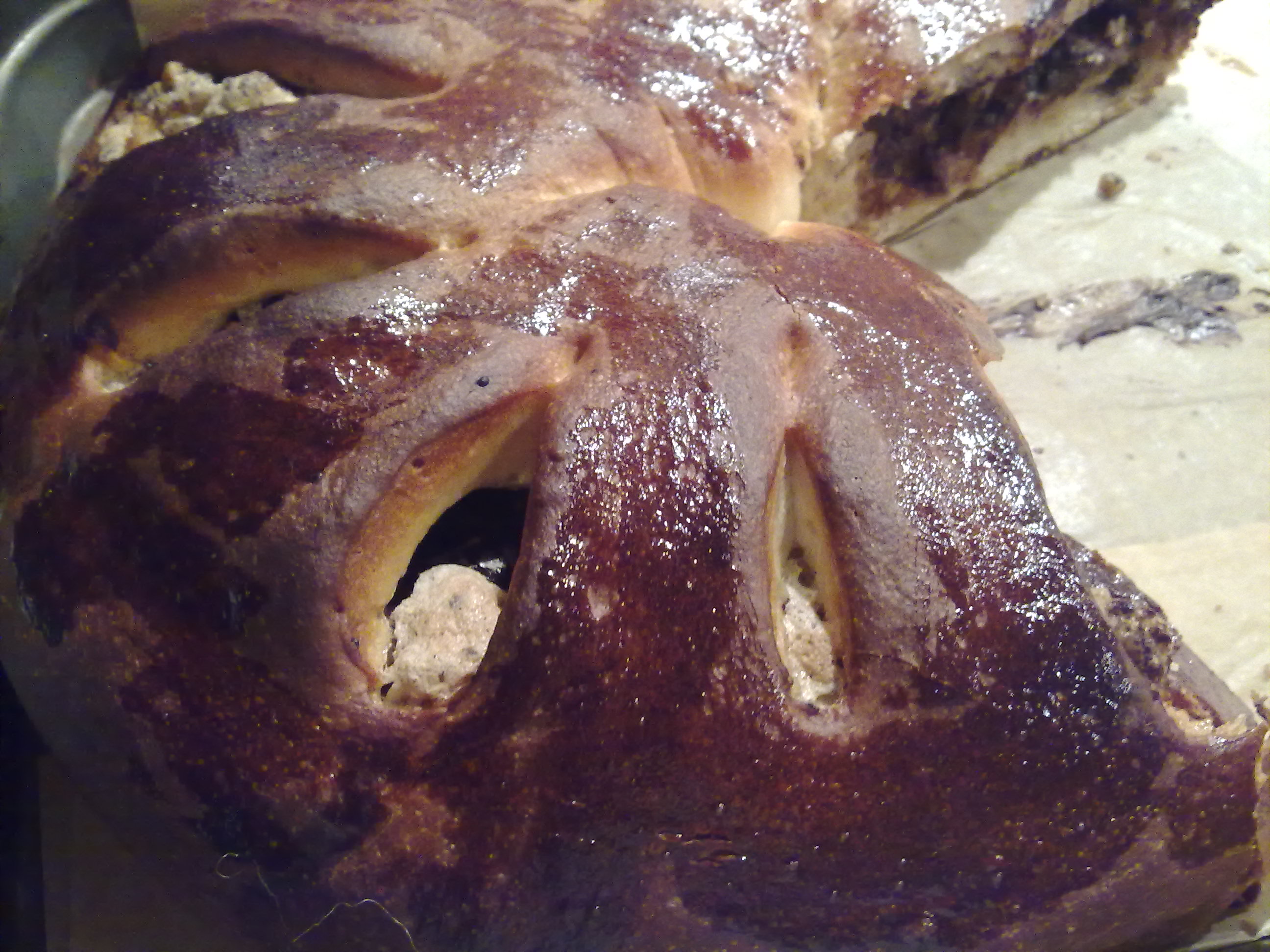
Anyway, the March 2011 Daring Baker’s Challenge was hosted by Ria of Ria’s Collection and Jamie of Life’s a Feast. Ria and Jamie challenged The Daring Bakers to bake a yeasted Meringue Coffee Cake.

It was awesome.  It was something I would NEVER have attempted, but in reality it was actually pretty straightforward to make. So, thank you Daring Kitchen for encouraging me to make this scrumptious cakey thing.

My instruction was to make two cakes, but I just made the one.  This is the recipe for making the one cake, approx 10” in diameter.   I have included the alternative filling ingredients at the end… and I think I might try this alternative version in the next couple of weeks.  After I’ve moved flat.


The Daring Baker's finished product


FILLED MERINGUE COFFEE CAKE

Not sure why it’s called a coffee cake, there is no coffee in it. Perhaps it’s a technical term for a cake made with yeast?  Any thoughts anyone?

Ingredients

For the yeast cake dough:

2 cups (300 g / 12oz) flour
1/8 cup (25 g / 1 oz.) sugar
½ teaspoon salt
½  sachet (1 tsp) active dried yeast
3/8 cup (90 ml / 3 fl. oz.) whole milk
1/8 cup (30 ml / 1 fl. oz. water (doesn’t matter what temperature)
¼ cup (65 g / 2.5oz.) unsalted butter at room temperature
1 large egg at room temperature

For the meringue:

2 egg whites at room temperature
pinch of salt
½ teaspoon vanilla
¼ cup (55 g / 2 oz.) sugar

For the filling:

½ cup (55 g / 2 oz.) chopped pecans or walnuts
1 Tbsp (15 g / ½ oz.) granulated sugar
¼ teaspoon ground cinnamon
½ cup (85 g / 3 oz.) dark chocolate, chopped roughly

Egg wash: 1 beaten egg
Cocoa powder (optional) and confectioner’s sugar (powdered/icing sugar) for dusting cakes

Directions:

Prepare the dough:

  • In a large mixing bowl, combine 1 1/3 cups of the flour with the sugar, salt and yeast.
  • In a saucepan, combine the milk, water and butter and heat over medium heat until warm and the butter is just melted. Ria’s version: add the 10 saffron threads to the warmed liquid and allow to steep off of the heat for 10 minutes. This will give the mixture a distinct aroma and flavor and a yellowish-orange hue.
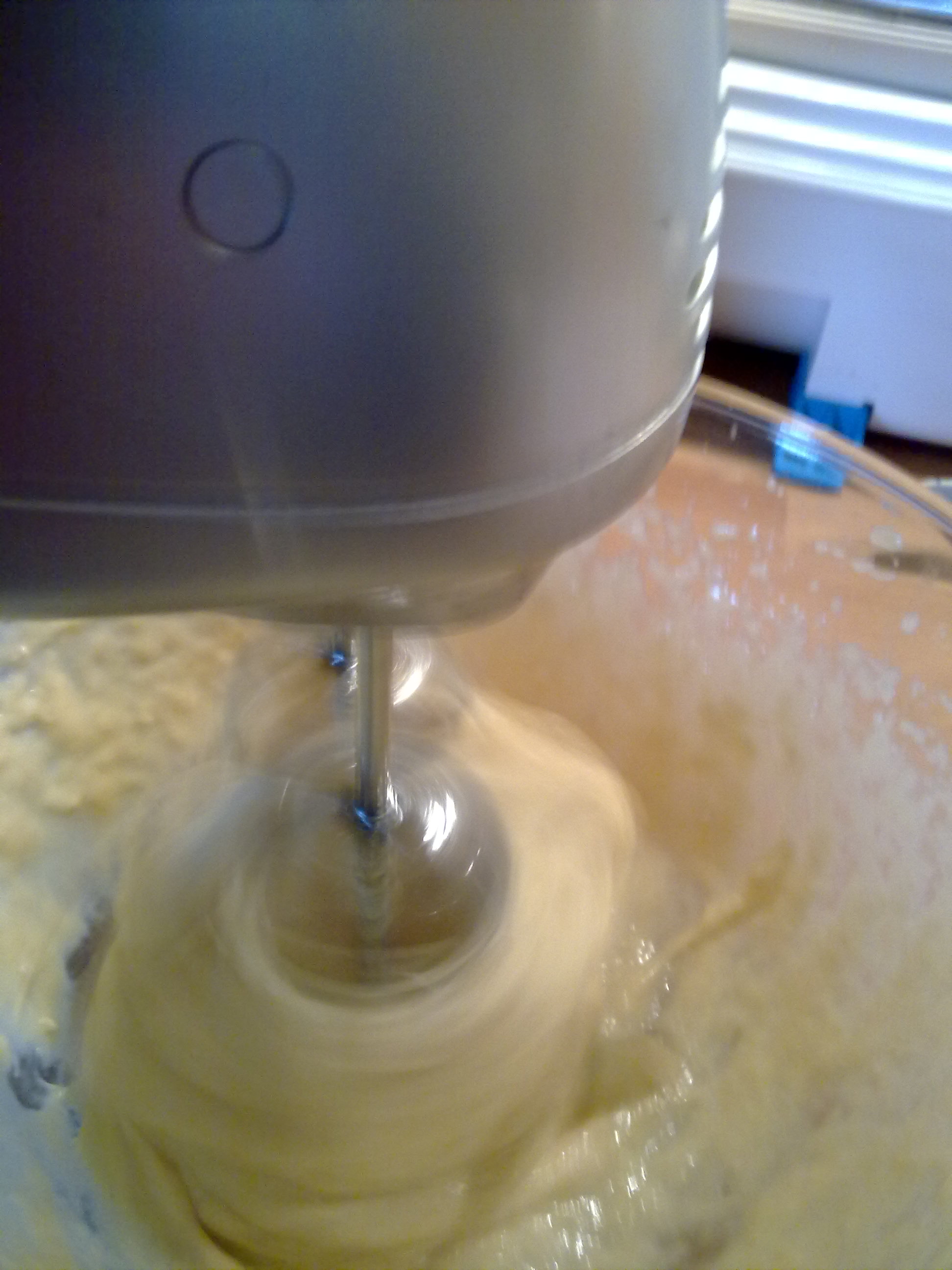
  • With an electric mixer on low speed, gradually add the warm liquid to the flour/yeast mixture, beating until well blended. Increase mixer speed to medium and beat 2 minutes. Add the eggs and ½ cup flour and beat for 2 more minutes.
  • Using a wooden spoon, stir in enough of the remaining flour to make a dough that holds together. Turn out onto a floured surface (use any of the remaining flour) and knead the dough for 8 to 10 minutes until the dough is soft, smooth, sexy and elastic, keeping the work surface floured, adding extra flour as needed.
  • Place the dough in a lightly oiled bowl. Cover the bowl with plastic wrap and a kitchen towel and let rise in a warm place until double in bulk (probably about 45 – 60 minutes). The rising time will depend on the type of yeast used and the temperature of the room


Beating the dough

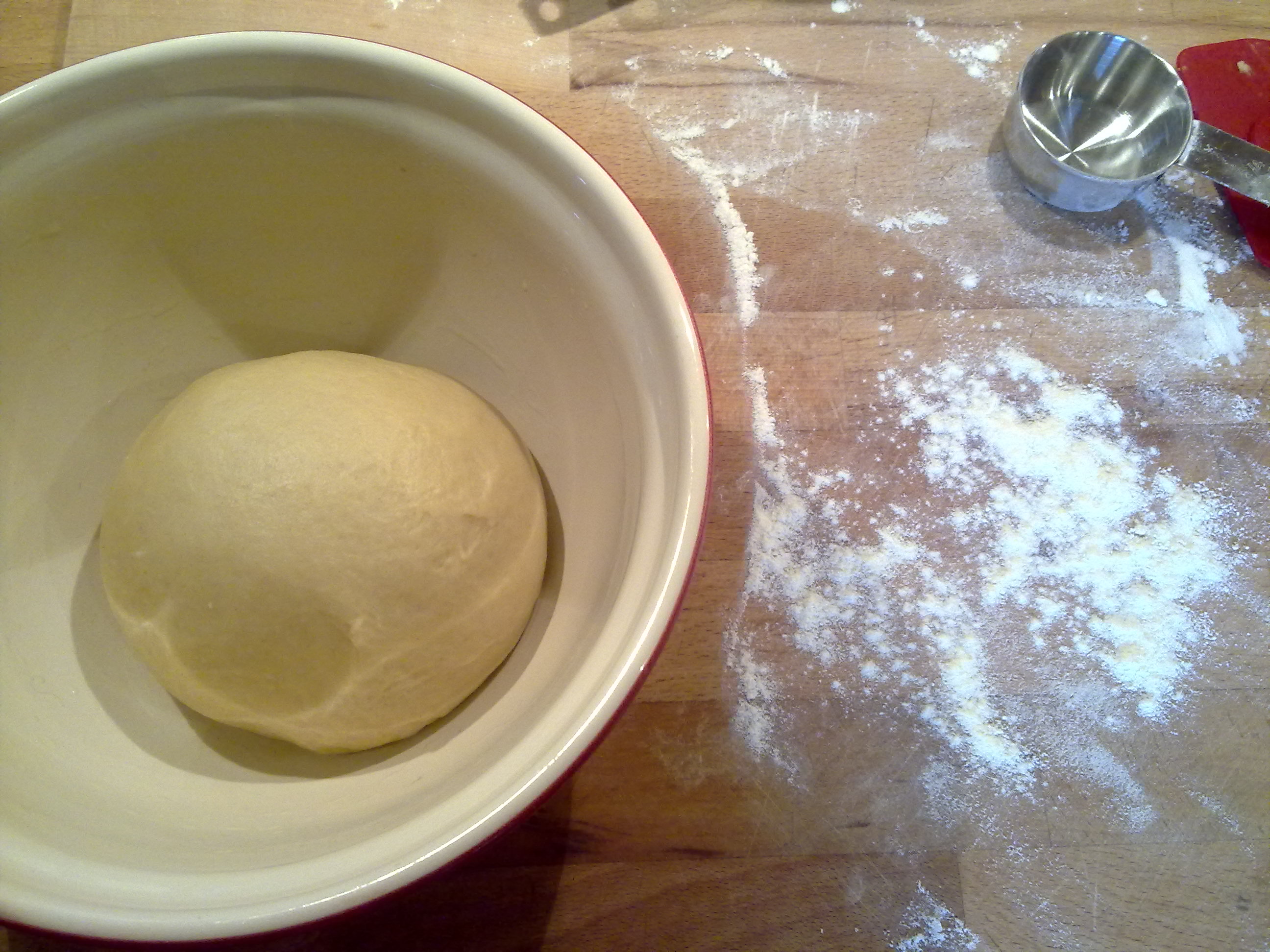
The lovely smooth, silky dough, before it's started rising

Prepare your filling:

  • In a small bowl, combine the cinnamon and sugar for the filling. Chop your chocolate and nuts, and keep them in separate bowls.

Once the dough has doubled, make the meringue:

  • Beat the egg whites with the salt, first on low speed for 30 seconds, then increase to high and continue beating until foamy and opaque.
  • Add the vanilla then start adding the sugar, a tablespoon at a time as you beat, until very stiff, glossy peaks form.

Assemble the Coffee Cakes:

  • Line a baking sheet with parchment paper.
  • Punch down the dough and divide in half. On a lightly floured surface, roll out the dough into a 20 x 10-inch (about 51 x 25 ½ cm) rectangle.
  • Spread the meringue evenly over the rectangle up to about 1/2-inch (3/4 cm) from the edges.
  • Sprinkle the filling evenly over the meringue.
  • Now, roll up the dough jellyroll style, from the long side. Pinch the seam closed to seal.
  • Very carefully transfer the filled log to one of the lined cookie sheets, seam side down. Bring the ends of the log around and seal the ends together, forming a ring, tucking one end into the other and pinching to seal.
  • Using kitchen scissors or a sharp knife (although scissors are easier), make cuts along the outside edge at 1-inch (2 ½ cm) intervals. Make them as shallow or as deep as desired but don’t be afraid to cut deep into the ring.
  • Cover the cakes with plastic wrap and allow them to rise again for 45 to 60 minutes.
  • Preheat the oven to 350°F (180°C).
  • Brush the top of the cake with the egg wash.
  • Bake in the preheated oven for 25 to 30 minutes until risen and golden brown. The dough should sound hollow when tapped.
  • Remove from the oven and slide the parchment paper off the baking sheet onto the table. Very gently loosen the cake from the paper with a large spatula and carefully slide the cake onto a cooling rack.
  • Allow to cool.
  • Just before serving, dust the top of the cake with icing sugar and cocoa powder if using chocolate in the filling. I forgot to do this and it didn’t seem to mar the enjoyment of the cake.

These cakes are best eaten fresh, the same day or the next day, although I quite liked it as it got slightly chewier after a day or two.  But ok, best on the day it’s made.  Warm with ice cream.  Oh yes!

For the other version you will need 10 strands saffron for the dough.  (Saffron might be hard to find and it’s expensive, so you can substitute with ½ – 1 teaspoon of ground cardamom or ground nutmeg.)

Ria’s version filling:
1 cup (130 g / 5 oz.) chopped cashew nuts
2 Tablespoons (30 g / 1 oz.) granulated sugar
½ teaspoon garam masala (You can make it at home – recipe below – or buy from any Asian/Indian grocery store)
1 cup (170g / 6 oz.) semisweet chocolate chips ( I used Ghirardelli)


**Garam (means “hot”) masala (means “mixture”) is a blend of ground spices and is used in most Indian savory dishes. It is used in limited quantities while cooking vegetables, meats & eggs. There is no “one” recipe for it as every household has a recipe of their own. Below, I am going to share the recipe which I follow.

4 or 5 sticks (25 g) Cinnamon Sticks (break a stick and open the scroll)
3 ½ tablespoons (25 g / less than an ounce) Cloves, whole
100 g. (3.5 oz.) Fennel seeds
4 tablespoons (25 g / less than an ounce) Cumin seeds
1 ½ tablespoons (10 g / less than half an ounce) Peppercorns
25 g (less than half an ounce) Green Cardamom pods

In a small pan on medium heat, roast each spice individually (it hardly takes a minute) until you get a nice aroma. Make sure you stir it throughout so that it doesn’t burn. As soon as each spice is roasted, transfer it to a bowl to cool slightly. Once they are all roasted, grind into a fine powder by using a coffee grinder, or pestle & mortar. Store in an airtight container and use as needed.


Cheese scones

19 Mar

I’m moving flat soon.  And as a result I’m staying in a lot, with the intention of clutterbusting.  The other evening the most sensible thing to do seemed to be to clutter bust a kitchen cupboard by using ingredients to bake something, and then get my colleagues to eat it.

So, cheese scones were the chosen baked goods (I have a colleague who can’t eat sugar, so has missed out on many treats in recent months; and I owed him big time for a missed deadline).

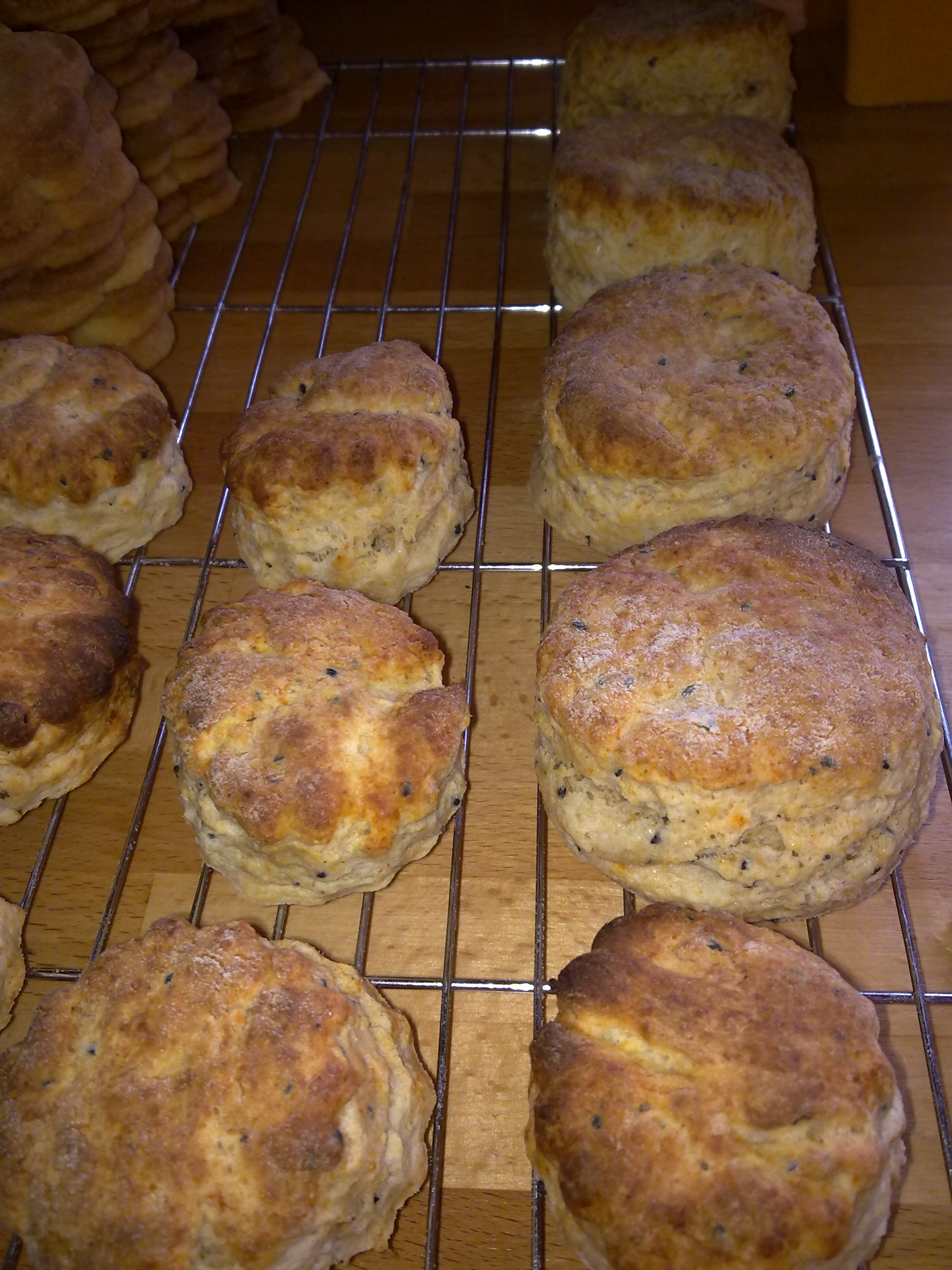
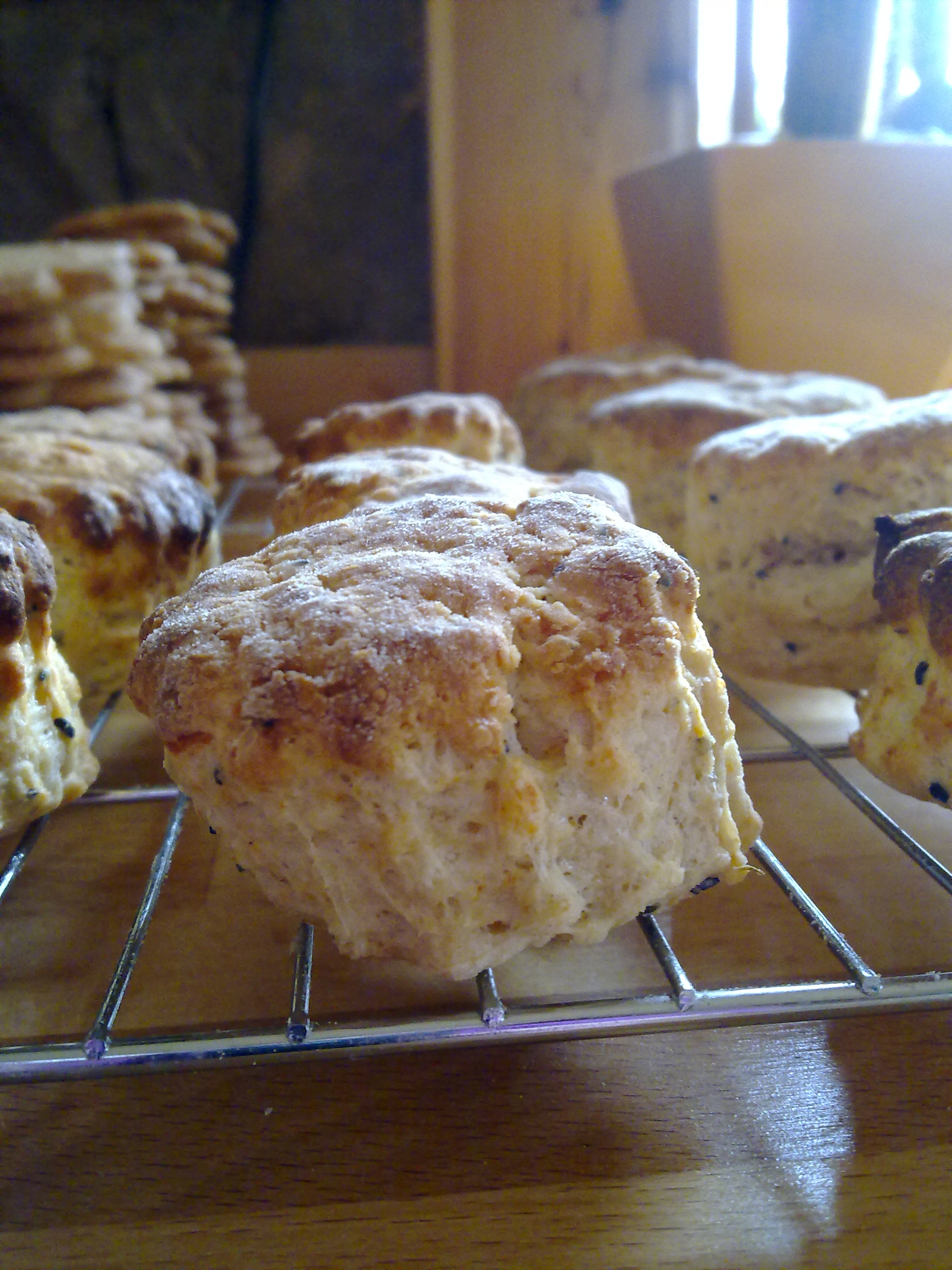
Cheese scones are so easy to make.  In fact all scones are so easy to make.  I should make them more often. These scones were made with a chillie cheddar, so had added spiciness, which is always good.  They were delicious straight out of the oven spread with butter, or the next day heated for 30s in the microwave to re-heat and then spread with butter. Yum.

Spicy cheese scones

140g SR flour

140g wholemeal flour (or plain)

1tsp baking powder

50g butter, straight from the fridge, cut into wee pieces

85g strong cheddar, grated

1 egg

2TBsp natural yoghurt

4 TBsp milk

Heat oven to 190C (fan) or Gas 5.

  1. Mix the flour, baking powder and a pinch of salt in alarge mixing bowl.
  2. Cut in the butter, in wee chunks, and rub in with your fingertips till it resembles breadcrumbs. You could probably use a food processor, or one of those clever pastry maker things, the shape of a horse’s stirrup.
  3. Add any herbs or spices at this stage – sage might be nice; or cayenne, or dried chilli if you like it hot or nigella seeds are quite scrummy.
  4. Stir in about 1/2 of the cheese and then make a well in the centre.
  5. Whisk the remaining ingredients together and pour into the well.
  6. Use a knife to bring all the mixture together to make a soft, but not sticky, dough. Add more milk if the dough is too dry.
  7. Turn onto a floured surface, and either press or roll out to about 2cm thick. Do not overwork, or it will get very tough.
  8. Cut with a knife, or use a cutter. Re-roll the trimmings to use all the dough.
  9. Place on a non-stick baking sheet, and sprinkle each scone with more cheese.
  10. Bake for 10 – 12 minutes until golden
  11. Cool on a wire rack. Or eat immediately.  With butter

Don’t you remember? Scones are the grub that makes the butter go.  Or something.

In case you’re interested, I have another go-to cheese scone recipe. It’s an even quicker recipe with a really good hack for incorporating the butter. Check it out and see which appeals most – they are both super-tasty.

Scone dough

Fresh out of the oven

Perfectly risen cheese scone


Tattie scones

13 Mar


Tattie scones in the pan

So, as I mentioned, we were expecting G’s kids for supper on Friday evening.  On Friday they contated G to say that supper would be too late for their kids so they’d come for lunch instead on Saturday.  What is it with them that they think they can just dictate when they will come?  I suspect it’s all tied up with the fact he left them when they were relatively young; and they think they have rights over him, and that he owes them in some way. And from the other side, he does feel guilty and wants to develop a better relationship with them.  Ah well.  I prefer entertaining over lunch anyway, espeically when bairns are involved.


Anyway, I made a typical Wolffe-lunch with soup for starters, and then followed by a table groaning with tasty salady things: the beetroot and goats cheese tart, beetroot and blood orange salad, egg mayonnaise with capers, spicy prawn marie rose, green salad, teeny tomatoes.. and a cheese board with plumbrillo and quince jelly.  All deliciously tasty, although perhaps we needed another carbohydrate with the main dishes.

Anyway, as a result of the cancellation, we had a large pot of potatoes, peeled and ready to boil. I boiled them up yesterday and we had some of them mashed with some brown stew and champed neeps and carrots. The remainder were destined for tattie scones.

Tattie Scones

500g mashed potatoes

125g plain flour

2 TBsp olive oil

Method

  1. Sift the mashed potatoes, or put them through a ricer.  If you’re working with freshly mashed potatoes, you probably won’t need to do this.
  2. If the potatoes are leftovers, and cold, then chuck them in a microwave for about a minute to warm them up again – this will make them much easier to work with
  3. Add the flour and olive oil into the bowl and bring together – start with a spoon, but then work with your hands. It should create a slightly sticky soft and pliable dough.
  4. Take a chunk of the dough and roll it out to slightly less than 5mm thick, in a big circle. Cut the circle into quarters, and prick the quarters all over.
  5. Pop the 4 quarters into a dry non-stick fry pan over a medium heat and cook on either side till they have the distinctive brown blotches all over them. You’ll need a fish slice at this stage, or it will end in tears.
  6. Place on a  wire rack to cool.
  7. Repeat the rolling, cutting, pricking, cooking process with all the mixture.

This is a slightly time consuming recipe, once it gets to the rolling and cooking stage. Apart from that it is easiness itself.  And so satisfying to make your own tattie scones.

This made 4 (or was it 5?) rounds of tattie scones – plenty for tea for you and half a dozen guests.  If you have biscuits too.  I never did put up that lemon kisses recipe did I?


Slather butter all over and eat.


I’m half way through making a scumptious other thing now – with yeast.  I can’t say any more about it as it’s this months daring kitchen challenge, and I can’t reveal it till the end of the month.  It’s looking good so far though.

And this evening I’m planning on making my first Jamie Oliver 30 minute meal – a salmon dish. I’m omitting the pudding, so it surely has to be possible? We’ll see.

Making room in the freezer

6 Mar

The Captain’s daughters are coming for supper on Friday.  They are bringing their babies with them, aged nearly two and nearly one.  I get on well with them, which is good, and they like my home cooking which is also good.

I usually get back here from work at about 7.30pm, which to me is too late to start cooking anything elaborate, or some evenings anything at all.  G is good at judging this moment, and last Friday suggested we went down to our local hotel/bistro for a bite to eat.  We both had fish and chips (reliably tasty) followed by a platter of cheese and biscuits (not worth it) and washed down with a perfectly acceptable sauvignon blanc.  A taxi took us home and we walked down through the woods, and along by the river to pick up the car the next morning – a lovely way to start the day (followed by a trip to the farmers market, the royal mail depot and the post office).

But back to next Friday.  The daughters.  I decided it would be easiest to make a big stew and put it in the freezer – G can take it out on Thursday night and leave it in the fridge, and then re-heat it on Friday before picking me up from the station.

Except that really there wasn’t room for even a scoop of ice cream in the freezer. So, out came the bags of frozen damsons picked from the tree last autumn. And they are now bubbling away on the stove, filling the house with that deliciously autumnal plummy aroma.  I made plumbrillo for the first time in the autumn, and loved it.  In fact I loved it so much I gave it all away.  So now I’m making some to keep – some will stay in the valley, the rest will go back to the city, and will jazz up my lunches, no doubt accompanied by cheese from Mellis the Cheesemonger.  Yum.

So, the brown stew.  The name isn’t particularly appetising is it?  But it’s what G calls it, rolling the R in brrrrrown to render the word almost unrecognisable.

I started off at our local butchers and bought 1.5kg of shoulder steak.

Put about a cupful of plain flour into a large bowl, and season with lots of pepper and some salt.  And any herbs you might like.

Cut any excess fat or gristly bits off the steak and cut into bitesize pieces.  Bitesize can really be whatever you like, but I like them big enough to bite, but small enough that a piece can go in your mouth whole. Remember though that they will shrink a bit on cooking.

Throw the pieces of meat into the bowl of flour, and mix around every so often to make sure all the pieces are individually coated.

Fry the meat, a little at a time, in a butter/oil mix in a large pan.  Each batch should only just cover the base of the pan, anymore and it won’t fry properly. Fry until brown on one side and then flip them all over individually. Yes, this is time-consuming, but worth it.  When each batch is cooked (it doesn’t need to be cooked through, just nicely brown on each side) put them in a bowl while you get on with the next lot.

The pan you use should be a big casserole that can hold the whole stew and go in the oven quite happily.

When you’ve done all the meat add a couple of chopped onions to the pan, a wee bit more butter/oil if you need it and a teaspoonful or so of sugar.  Gently fry the onions over a medium heat for about 10 minutes, till they’re nicely caramelised.  While they are frying prepare some other things to put in the stew: chop up some carrot and turnip; finely chop a clove or two of garlic; cut up some mushrooms or peppers if you want, but keep them in nice big chunks or they will disappear in the stew. If you like it spicy, feel free to chop a chilli or two.

Once the onions are caramelised add the garlic, followed quickly by the other veg. Saute for a wee minute or two.  Or five.

Add a couple of tablespoons of worcestershire sauce and the same of tomato puree.  Throw in any herbs or spices you want – I like to throw in a bit of spicy dry harissa I have in a jar and always a bay leaf or two. I think I bought the harissa online a year or so ago, and it packs a great punch, and a wonderful heat at the end of each mouthful of stew.

But I digress.

You now need to chuck the meat back in, and add enough beef stock to just cover the whole stew and give the whole thing a good stir.  Bring back to a slow simmer, and put in the oven for at least a couple of hours simmering away.

And that’s it.

If possible, make it the day before so the flavours can meld and develop. Give it a taste and add more salt and pepper if needed.

Eat with mashed potatoes, and savoy cabbage.

My first Daring Bakers Challenge

3 Mar

I’ve recently discovered more food-related blogs than is good for me.  I like to browse them, see what other people are cooking around the world and pick up inspiration.

And then I discovered the Daring Kitchen.  This is a blog with a difference – each month we are all challenged to make a particular recipe.  This month was my first Daring Bakers Challenge, and I’ve actually done it!  I’m so excited.

The February 2011 Daring Bakers’ challenge was hosted by Mallory from A Sofa in the Kitchen. She chose to challenge everyone to make Panna Cotta from a Giada De Laurentiis recipe and Nestle Florentine Cookies.

I had a practice run of the Panna Cotta last weekend at the valley, a delicious vanilla panna cotta, with a coffee gelee.  And then separately I practiced the florentines, here in Bruntsfield. They were lovely, but hadn’t spread properly and it felt the recipe should have had some bicarbonate of soda to make them work.  Never mind, my colleagues loved them.

So, the final version is a chocolate panna cotta, with orange gelee; accompanied by orange florentines. It all looks pretty tasty, and if you like bitter chocolate and orange together then you’ll love this.

I slightly adapted the recipes. And hope the next challenge is slightly less fattening.  I suspect I hope in vain.

Chocolate Panna Cotta

Recipe adapted from Bon Appetit

Ingredients:
1 cup (240 ml) whole milk
1 tablespoon (15 ml) (7 gm) (¼ oz) unflavored powdered gelatin
2 cups (480 ml) whipping cream (30+% butterfat)
½ cup (115 gm) (4 oz) sugar
¾ cup (145 gm)(5 oz) bittersweet or semisweet chocolate
½ teaspoon (2½ ml) vanilla extract

Directions:

  1. Pour milk into a small bowl, sprinkle gelatin over the top, set aside for 2-5 minutes.
  2. Place a medium saucepan over medium heat, stir in cream, sugar and vanilla. Bring to a low boil.
  3. Add chocolate and whisk until melted. Whisk the milk/gelatin mixture into chocolate cream mixture. Whisk until gelatin has dissolved.
  4. Transfer to ramekins, or nice glasses for serving.
  5. Cover and chill at least 8 hours, or overnight

Nestle Florentine Cookies

Recipe from the cookbook “Nestle Classic Recipes”
Ingredients:

2/3 cup (160 ml) (150 gm) (5.3 oz) unsalted butter

2 cups (480 ml) (160 gm) (5 2/3 oz) quick oats
1 cup (240 ml) (230 gm) (8 oz) granulated sugar
2/3 cup (160 ml) (95 gm) (3⅓ oz) plain (all purpose) flour
1/4 cup (60 ml) golden syrup
1/4 cup (60 ml) whole milk
1 tsp (5 ml) vanilla extract
pinch of salt
1½ cups (360 ml) (250 gm) (9 oz) dark or milk chocolate

Directions:

Preheat oven to moderately hot 375°F (190°C) (gas mark 5). Prepare your baking sheet with silpat or parchment paper.
1. Warm the butter, sugar and syrup in a medium saucepan.  Stir together to form a gloopy thick syrup, then remove from the heat.
2. To the melted butter mixture add oats, flour, milk, vanilla, and salt. I also added 1 tsp bicarb of soda.  And replaced the vanilla with the grated zest of two oranges.  Mix well. Drop a tablespoon full, three inches (75 mm) apart, onto your prepared baking sheet. Flatten slightly with the back of your tablespoon, or use a spatula. I didn’t bother flattening the mixture and they managed to spread themselves out nicely enough.
3. Bake in preheated oven for 5 minutes, until cookies are golden brown. Cool on the baking sheets.
4. While the cookies are cooling melt your chocolate until smooth either in the microwave (1 1/2 minutes), or stovetop (in a double boiler, or a bowl that fits atop a saucepan filled with a bit of water, being sure the water doesn’t touch the bottom of the bowl).
5. Peel the cookies from the silpat or parchment and place face down on a wire rack set over a sheet of wax/parchment paper (to keep counters clean).
6. Spread a tablespoon of chocolate on the bottom/flat side of your cookie, sandwiching another (flat end) cookie atop the chocolate.
This recipe will make about 2 1/2 – 3 dozen sandwiched Florentine cookies. You can also choose not to sandwich yours, in which case, drizzle the tops with chocolate (over your wax paper).