Tag Archives: recipe

Pork with apple and sage

8 Dec

Some things are just meant to go together: scallops and black pudding, hot buttered toast and marmite, candlelight and a jacuzzi bath. And pork and apples.  And sage.

So, this evening, while Hurricane Bawbag is was doing its worst out there I was cooking up a storm in my wee kitchen, creating another delicious low-carb supper: pork with apple and sage, with savoy cabbage.

Pork with apple and sage

a knob of butter

a glug of olive oil

2 pork loin steaks, about 1″ thick

1 apple (I used a British cox as I am a bit of a fascist about eating our homegrown orchard fruit in this country – and cox’s are so tasty)

about 100ml dry cider

2-3 TBsps creme fraiche

a few sage leaves finely chopped

  1. Melt the butter with the olive oil over a medium heat, till the butter is foaming, but not burning
  2. Place the pork in the pan, and season with salt and pepper
  3. Cook for 2-3 minutes on each side
  4. While the pork is cooking, peel the apple and cut in half.  Remove the core, by cutting a V shape with a sharp knife
  5. Cut the apple halfs into slices about 1/4″ thick and add them to the pan, squidging them in between the pork loins
  6. Cook for another 5 minutes or so, turning the apples over once or twice, till they are soft, and slightly caramelised at the edges
  7. Now chuck in the cider, sage and the creme fraiche and stir it around
  8. Turn up the heat and let it bubble away
  9. Ideally you want the sauce to reduce a bit so you haven’t got too much of it, and it’s not too thin.. if it’s all too wet, you might want to remove the pork for a bit, so it doesn’t dry out too much, but you still get the sauce reduced

This was delicious served with lightly boiled savoy cabbage.  It could comfortably have garlic and onions added, but really it doesn’t need them – the sharp sweetness of the apple, combined with creaminess is a perfect accompaniment to the pork.

If you want this to be more low fat, use half fat creme fraiche (and less of it), and don’t bother with the butter.  And remove all fat from the pork loin.  But really?  Why would you?  I lost 2lbs this week – from eating good filling protein rich meals, with lots of greens, but no carbs.  And believe me, this is much more fun than going low fat!

Slowly does it….

6 Dec

So, a few weeks ago I purchased a slow cooker. I’d never really thought of buying one before, and had no desire to own one.  But someone at work was talking about theirs and how brilliant it is to come home in the evening to a tasty stew or casserole, ready when you walk in the door.

So, I weighed it up:

Pros

  1. Delicious hot food ready when I get home from work
  2. I love stews and casseroles
  3. It fits in with low carb lifestyle – easy way to eat meat
  4. It will add variety to my current diet during the week, which currently relies on speedy meals when I get in
  5. I’ll be able to cook tasty meals with cheaper cuts of meat
  6. I can freeze what I don’t eat straight away (or chuck it in the fridge for the next day)
  7. It’s a new challenge
  8. It might encourage me to be more organised about meals, therefore less likely to impulse buy bad food

Cons

  1. Will I worry all day that I’ve left a hot plate on in the flat and it will burn down?
  2. What if I’ve set it on in the morning, but end up not getting home till really late?
  3. I’ll never have time in the morning to get it going
  4. If I do have time, I’ll end up oh so hungry before lunchtime
  5. I’ll never be organised enough to be in on consecutive nights, one to buy meat, the next to eat it
  6. I don’t have room for it in the teeny tiny kitchen

So.  The cons seemed to be mostly things I could overcome quite easily. So I bought one.  Cheap, on amazon. I won’t bother giving you a linky thing there – I’m sure you can find one there for yourself if you want it.

But anyway.. I’ve not used the slow cooker too often, mainly because the con number 5 is very real.  It’s relatively rare that I’m in my flat two nights in a row. And I’m never here at weekends. So, clearly I have to spend less time going out and more staying in and saving money eating tasty cheap stews and casseroles.

Yesterday evening I bought some stewing steak, from the local supermarket, ready diced.

And this morning I made a gingered beef stew in the slow cooker.  It probably took me about 15 minutes before I went to work. OK, maybe 20 minutes tops, but really no longer.  And I was still in work early.

Gingered beef stew

My slow cooker instructions tell me I need to turn the machine on to high for 20 minutes before I put the ingredients in.  So, before I went in for my shower, I turned the cooker on to high and took the beef out of the fridge.  I also assembled all the other ingredients. Then when I was dressed I chopped, stirred and threw the whole thing together.

olive oil

440g diced stewing steak

1 onion, cut in chunks

a knob of butter

about 1TBsp flour

a big squidge of tomato puree

balsamic vinegar – a big splash, maybe about 1-2 TBsps

1 large tsp muscovado sugar

about 1″ fresh ginger, chopped finely

2 bay leaves

tin of chopped tomatoes

beef stock cube

  1. Splash some olive oil into a big frying pan, and once it’s hot add the beef to brown it
  2. Remove the beef from the pan and set aside
  3. Put the butter in the pan, with the onion, cut into large chunks.  Reduce the heat to gently cook the onion (it should take 5-10 mins to get soft and translucent)
  4. Throw in the flour, and stir around, then add the all the other ingredients, except the tin of tomatoes.
  5. Add a good splash of water from the kettle, and stir well to create a thick sauce
  6. Now add the tin of tomatoes
  7. Now put the beef into the slow cooker, and then add the sauce on top
  8. Turn the heat down to slow, or whatever.

Go to work.  Come home and eat with savoy cabbage. Or cauliflower. Or broccoli. Or I guess you could have potatoes or linguine if you wanted the carbs.

The great thing about this is that it can be dressed up with more flavours – garlic, herbs, chilli pepper – if you have time.  But just as it is it’s a pretty tasty dish.


Nibbles

4 Dec
20180103_121854.jpg

Super easy cheesy sesame biscuits

Are we counting down to Christmas yet?  I am.  In my house, that means practising various recipes to make sure they are up to scratch as Christmas gifts.  And today is nibbles testing.

First off were some cheesy sesame biscuits, which aren’t yet in the oven (they’re doing that resting in the fridge thing, so beloved of pastry-type goods). They were ridiculously easy, and have persuaded me of the value of my food processor.  I’ve owned the food processor for bloody years.  It usually lives on a shelf, just out of reach, under the stairs.  I last used it when I attempted one of Jamie Oliver’s 30 minute meals.  He likes to use a lot of gadgets and I knew if I wanted to be in with a chance of having two courses served up within 45 minutes the food processor would be needed. I actually would have needed two, but that’s another story. It was delicious!

But back to the cheesy sesame biscuits.  They are from my new favourite cook book: Ham, Pickles & Jam by Thane Prince.  It’s a glory of a book – full of reminders of (mostly lost) traditional kitchen skills, like preserving with salt (gravad lax and preserved lemons in this section) and drying (oven-dried tomatoes and beef jerky here).  Sadly most of the drying recipes require a dehydrator, so I may take a while before I get to testing that section.

Oh my, now that I’ve brought the recipe out again to type it up, I see I’ve omitted a key ingredient in the biscuits (how can I do this when there are only 5 ingredients?).  Read on and you’ll see.  And you’ll see my adaptation too.

Cheesy Sesame biscuits

  • 4oz SR flour, or use plain flour and 1 tsp baking powder.  Gluten-free is evidently best, so that is what I have used
  • 3oz butter
  • 3oz blue cheese ( I used a distinctly average dolcelatte from tesco’s but would like to try this with some oozingly yummy gorgonzola next time)
  • 3TBsp parmesan, grated
  • 2-3 TBsp sesame seeds
  1. Place all ingredients except the sesame seeds in the bowl of your food processor and whiz, using short bursts of power, till it combines to make a dough (I forgot to add the parmesan, thinking it was going to be part of the sesame coating at the end… ooopsie)
  2. Wrap the dough in clingfilm and chill for an hour
  3. Preheat the oven to 220C / 425F / GM7 and grease or line a baking sheet
  4. Remove the dough from the fridge and roll cherry-sized pieces of dough into balls
  5. Roll the balls in sesame seeds (or for me, the mix of sesame seeds and parmesan) and place on the greased baking sheet.  Make an indentation in the centre of each ball with your thumb, or a teaspoon
  6. Bake for 7-10 minutes until golden brown.  Cool on a wire rack
  7. Perfect with an aperitif!!!  A nice wee sherry I think.

So… I clearly failed that recipe, but I suspect they will be tasty all the same.

Edited February 2018 to add:

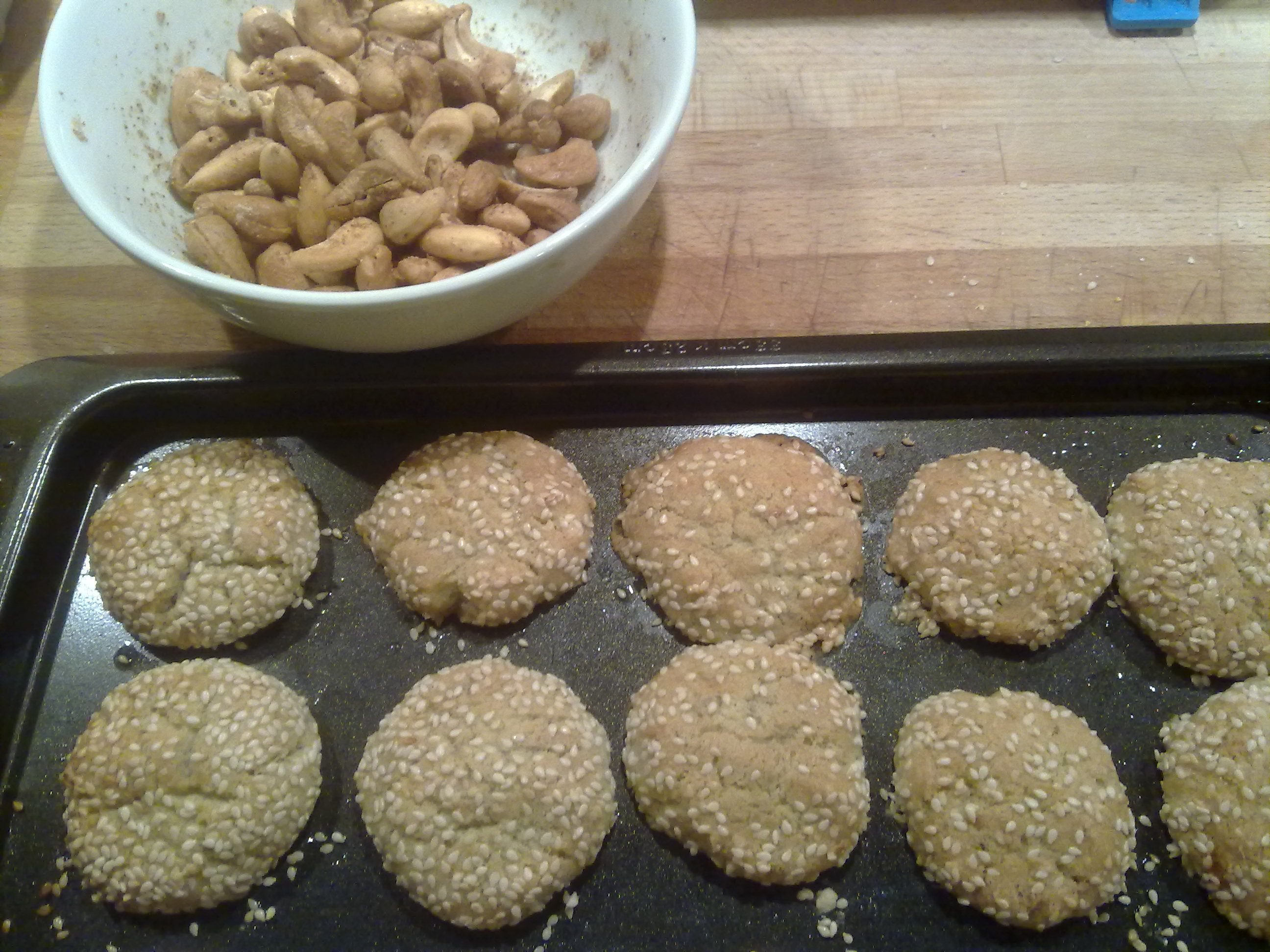
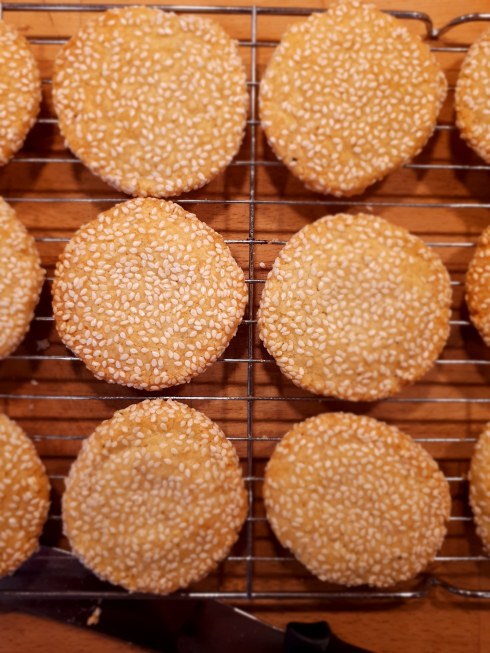
Instead of rolling these into individual balls, roll the whole lot of dough into one big sausage (stage 2) and leave in the fridge for a while. When you take it out, slice it up. Pour a whole lot of sesame seeds onto a plate and press each slice into the sesame seeds to cover them. Place them seed side up onto a greased baking sheet and bake for 6-7 mins as above. They looks pretty special done this way (see pic above). 

While the dough has been in the fridge (and I’ve made our Christmas cake, and lunch) I also made some spicy nuts.  Also from Thane Prince, but to be honest I went a bit off-piste with this recipe too, which I think is the whole point of this one.  But, if you want to make your own roasted spicy nuts, here you go:

Roasted spicy nuts

  • 250g nuts (I used a mixture of cashews and blanched almonds)
  • some olive oil
  • 1 tsp raw egg white (not sure this is entirely necessary)
  • 1 TBsp salt flakes – use the best quality salt you can find
  • 1 tsp cumin seeds, roasted and finely ground

Preheat oven to 150C / 300F / GM2

  1. Drizzle some oil on a baking sheet
  2. Place the nuts on a single layer on the baking sheet
  3. Roast in the preheated oven for about 30 minutes, till a pale golden brown
  4. While they are in the oven, use a teeny tiny whisk and try to whisk up the wee bit of egg white, really just to break it down a bit
  5. And use a pestle and mortar to grind the salt and mix with the cumin. I went off-recipe and just threw some cayenne pepper in with the salt once I’d ground it a bit with the pestle and mortar
  6. As soon as the nuts are out of the oven, turn them in the egg white, which is meant to turn them glossy.  I didn’t notice any glossiness, but it doesn’t seem to have done any harm, and I had a spare egg white from the biscuits I made yesterday, so that was ok.
  7. Once you’ve tossed your nuts in the egg white, throw the salt and spice mix over them and toss some more.  The flavours will dry on as the nuts cool
  8. Keep in an airtight container, unless you are eating immediately with drinkies.  More sherry I think!

I suspect that both of these will end up as Christmas gifts. Further copies of the book might too, if books are allowed in our homemade Christmas again this year.

Next weekend I’m baking a ham. Any suggested recipes or just general ideas for what to do gratefully received (and brutally altered to fit whatever I have in the cupboard and what mood I’m in).

later…

OK… I baked the cheesy sesame biscuits and they are just scrumptious! They are light and crumbly, and have a great blue cheesy flavour, with that typical ‘back’ flavour that comes with a strong blue cheese.  Make them!  they are delicious,  and would be even nicer with a wee glass of something to accompany them.  Pictures will follow.

A few days later… and here is a promised picture.  OK, I know I promised pictures, but you’re just getting one for just now.

Nummy nibbles

Nutty biscuits

20 Nov

Ginger nutty goodness

When I was wee my two favourite things to bake were peanut butter cookies and tollhouse cookies.  One of these days I’ll dig out the old recipes, if I can find them – the tollhouse cookies recipe I’m pretty sure was from my Aunt Joyce, a brilliant cook and a seriously good baker.  One of my happiest childhood memories is sitting on the bench at her enormous kitchen table while she made pancakes (drop scones to non-Scots) on the rayburn beside us.  It seemed to take her only minutes from having independent ingredients to  these perfect warm pillows of baked goodness, spread with homemade raspberry jam.  Yum.

Yesterday I saw a Jamie Oliver recipe for Nutty Ginger Biscuits, and realised it was a pimped up version of my old peanut butter cookies.  So, I made them this morning.  They are indeed a more sophisticated biscuit than mine ever were, but then it was the 70s when I was baking them, less sophisticated times, especially for rural 12 year olds.

This recipe makes a light crumbly biscuit, not a chewy cookie.  The clementine zest definitely adds a touch of class, and next time I make them I will add some ginger to the dough as well as the nubbin of the crystallised ginger on top.

The recipe comes from Jamie Oliver’s magazine and I’ll be making his Jerky Hocks later, with two enormous ham hocks.  If it works, I’ll share.  I’ve slightly adapted the cookie recipe here, so if you want the original you need to buy his lovely magazine.

Nutty Ginger Biscuits

250g unsalted butter, softened.

140g sugar (I used a mixture of half and half caster and light muscovado)

1 egg yolk (I’ll make meringues later with the white)

2 TBsp crunchy peanut butter (I added 3)

Grated zest of 2 clementines

300g plain flour

2-3 balls of stem ginger from a jar

A few TBsp of desiccated coconut

Preheat oven to 180C / GM4. Line a couple of baking trays with greaseproof paper.

  1. If the room temperature of your kitchen is as cold a mine, soften your butter.  My mum will do this by leaving it near the rayburn for a while.  But she doesn’t bake any more, so it’s unlikely to happen.  I cut mine into big chunks, put it in the large bowl and zizzed it in the microwave for 40s at half power.  Don’t even attempt this recipe with hard butter
  2. Add the sugar to the butter and beat until light and creamy
  3. Add the egg yolk, clementine zest and peanut butter.  Jamie added some vanilla essence here too, but I forgot and they still tasted yummy
  4. Beat again till combined
  5. Sift in the flour, and mix all together with a large metal spoon.  or wooden would do I suppose.  But don’t use electric beaters – you are just combining at this stage, not attempting to beat more air into it (which I suspect would be self-defeating).
  6. Now, take dessertspoonful size nubbins of dough and evenly space them on the baking sheets.  Squish them down a little, so they are sort of cookie shaped.
  7. Put a wee bit of ginger into the top of each biscuit, and sprinkle with desiccated coconut.
  8. Bake for 9-12 minutes, till golden brown
  9. Let sit on the baking tray for a minute before transferring them to a wire rack to cool.

Freezing biscuit dough.  Have you ever done it? I can’t say I have.  But Jamie says that these freeze well – just freeze them once they are on sheets of greaseproof paper in their rough cookie shapes.  Once frozen, they could probably be stored in a bag, or tub.  To cook from frozen, bake at 180C / GM4 for 10-15 mins till golden. Now, how brilliant would that be?  Must try harder not to bake them all at once next time.

Sausages, mushrooms, chestnuts… lovely autumnal flavours

19 Nov

I love Nigel Slater.  I don’t think that’s too strong an emotion.  He’s a proper cook, and he writes beautifully.  I love good food and good writing, so what is there not to love about him?

I first came across him many many years ago – in the early 90s, with his series of books: Real Fast Food, The 30-minute Cook, and Real Cooking.  See, Nigel was doing this 30 minute mullarkey long before Jamie got on that band wagon.  Mind you, he never professed to help you make a whole meal in 30 minutes, usually just one fabulously tasty course, although often in less than the 30 minutes allotted, so you’d have time to rustle up a second course if you fancied it.

Anyway, Nigel, oh Nigel.  I try to love you on telly too, but I just don’t.  There’s something about your relationship with food (which we know all about, thanks to your excellent memoir, Toast) which is just ever so slightly creepy.  So, if you don’t mind, I’ll probably stick to reading your books and articles in magazines from now on.

However, had I not seen you on TV the other night, I wouldn’t have discovered this gem of a recipe.  It’s a perfect Autumn supper.  Or a Winter supper too probably, but I’m in denial about Winter yet.  I know the clocks have gone back, but I’m still clinging to Autumn for a few weeks yet.  So, Autumnal suppers it will be.

This is what we’re having again tonight.  Adapted of course, because I doubt I have precisely all the right ingredients to hand, although I know I have mushrooms, sausages and chestnuts, so I’m pretty much sorted.

So, thanks Nigel.  And the BBC.

This is supper for 2 people.  Or starters for 4.

Autumn sausage supper

4 large mushrooms

1oz butter

1 Tbsp olive oil

A couple of good sprigs of thyme, with the leaves picked off them

1-2 Tbsp madeira or sherry, or stock

1 medium onion, or a couple of shallots

4 tasty, herby sausages, Lincolnshire or similar will be good

A sprig of rosemary

4oz fresh breadcrumbs

4oz chestnuts, chopped

Pre-heat oven to 180C / 350F / GM4

  1. Remove the stalks from the mushrooms, and place the mushrooms in a large oven dish.
  2. Place a wee knob of butter in each one and then drizzle them with some olive oil
  3. Sprinkle the thyme leaves into the mushrooms and then glug some madeira all over them
  4. Pop the mushrooms in the oven for 20 minutes.
  5. Meanwhile, the sun is probably over the yard arm by now, so you should pour yourself a glass of wine while you do the rest
  6. Roughly chop the onions and sweat in a frying pan with a little butter until golden
  7. Remove the sausage skin and break the meat into chunks and put in the pan with the onions
  8. Throw in the rosemary (either a whole sprig, or chopped up a bit) and add the breadcrumbs and allow to cook through slightly
  9. Add the chopped chestnuts and mix all together
  10. Now, if this has worked out, your 20 minutes for the mushrooms should be pretty much up, if not, put your feet up for a minute or two and have a glug of that wine. Or prepare some savoy cabbage to have as a side
  11. When the mushrooms have had about 20 mins, take them out and heap generous mounds of sausagey stuffing over the top of each mushroom, and all around, either in yummy heaps, or shape into slightly more cheffy balls
  12. Return the dish to the oven for a further half hour.  The stuffing should become crisp and golden
  13. Serve with savoy cabbage, or brussels sprouts (if you can bear them).  I’m going to try a juniper brussels sprouts recipe tonight, in a bid to make the hateful veg acceptable.  The man loves them.

Light Christmas cake

19 Nov

I don’t like Christmas cake.  I don’t like mince pies either.  Or any of those heavy dried fruit baked goods.  Well, I’ve not tried them all, so there might be some exceptions, but as a rule I’m not fond of a heavy fruit cake, or any of its close relations.

But a couple of years ago I discovered a distant cousin and fell in love.  It’s more like a stollen, but without the marzipan.  Or the yeast.  Anyway, it’s a light fruit cake, made with apricots, cherries, figs and lots of nuts.  And it keeps for long enough that you can make it in advance of Christmas and it’s still tasty at Hogmanay.

I’d be making it today, but my man has decided to do a deep clean in the kitchen.  And really, I don’t think it’s worth putting our relationship through the strain there would be if I attempted to make Christmas cake while he deep cleaned around me.  It’s going to be tricky enough tonight, to cook supper like a wee secret mouse, except not leaving a trail of pee and poo behind me like a mouse would.  You did know that mice are incontinent didn’t you?  They just pee wherever they go.  But I digress.

I expect you’re wanting to know the recipe for the cake I will be making some day soon in the super clean kitchen?  Here you go.

Originally published in BBC Good Food Magazine December 2008, an Angela Nilsen recipe.

Lovely Christmas Cake

  • 140g / 5oz soft dried apricots, roughly chopped
  • 100ml / 3 1/2 fl oz apricot or regular brandy
  • 140g / 5oz soft dried figs, roughly chopped
  • 250g / 9oz raisins (I’ll use sultanas)
  • 85g / 3oz glace cherries, quartered
  • 50g / 2oz each of almonds, cashews and brazil nuts – roughly chopped
  • finely grated zest of 1 lemon
  • 200g / 8oz plain flour
  • 1/2 tsp baking powder
  • 1 1/2 tsp mixed spice
  • 50g / 2oz ground almonds
  • 200g / 8oz butter, softened
  • 200g /8oz light muscovado sugar
  • 4 eggs

Pre-heat oven to 160C / 140F / GM3

  1. Soak the apricots in the brandy, while you prepare other bits and pieces
  2. Butter and line a deep 20cm round cake tin
  3. Mix together the figs, raisins, cherries, nuts and lemon zest
  4. Combine the flour, baking powder, mixed spice and ground almonds in another bowl
  5. Beat the butter and sugar until creamy in a large bowl (everything else will be added to this one) – prob about 2 mins or so with electric beaters
  6. Add the eggs to the butter-sugar mixture one at a time and beat well after each addition
  7. Gently fold half the flour mixture into the butter mixture.  Then fold the other half, followed by the fruits and nuts, followed by the apricots and brandy.
  8. Spoon the mixture into the tin, smooth the top and make a small dip in the centre.
  9. Bake for 30 mins, then lower the temperature to 150C / GM2 and bake for another 1hour 45 mins.  If it starts to brown too quickly, lay a piece of foil over the top for the last 30 mins – you don’t want it to burn on top.
  10. The cake is done when a skewer stuck all the way in, in the middle of the cake, comes out clean.
  11. Leave the cake in the tin to cool then remove the lining paper and rap well in cling film and foil till ready to decorate.  You could probably skewer it and add more brandy, but I’m not sure it’s entirely necessary and just means that some parents won’t let their kids eat it.

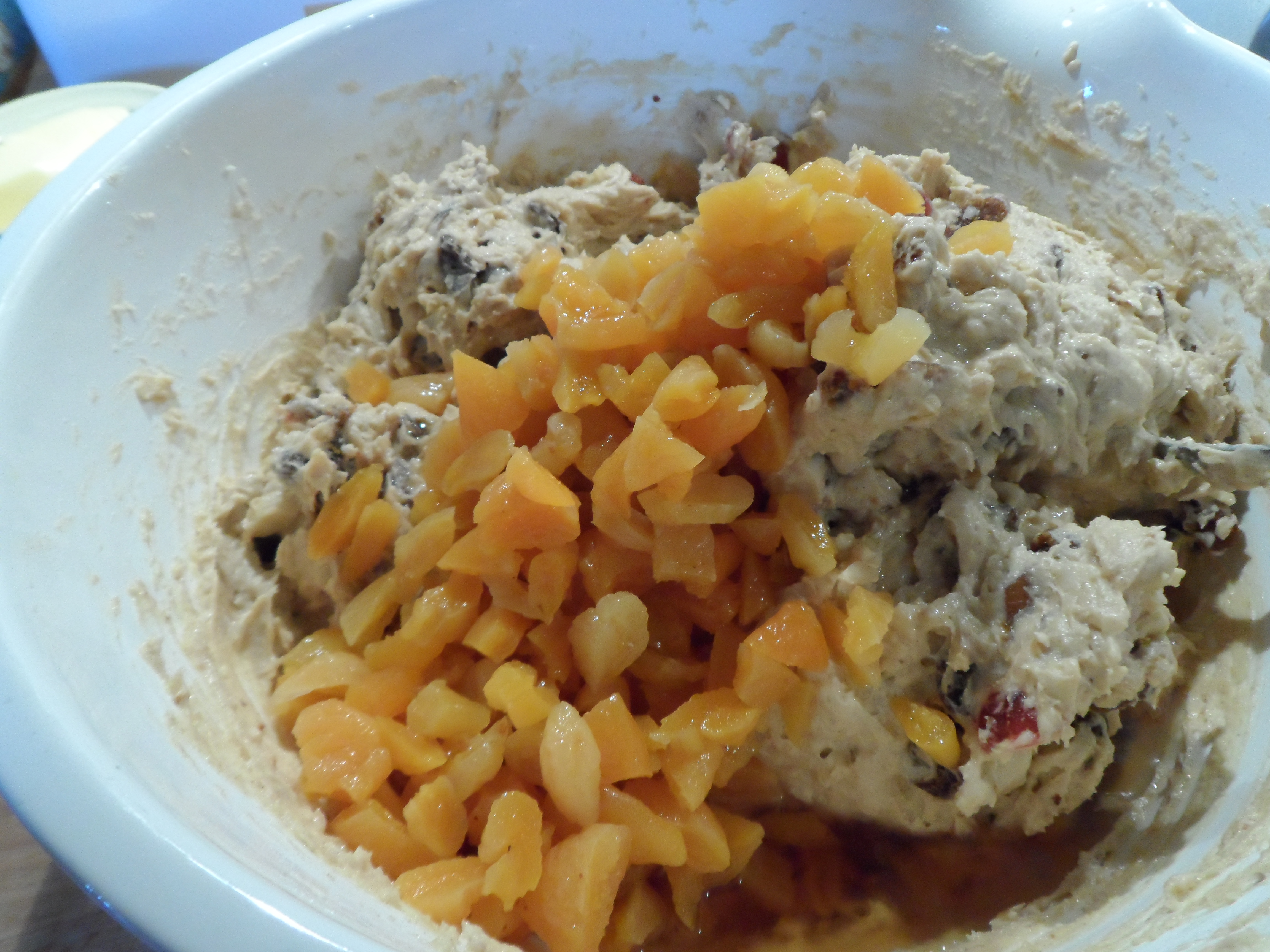
apricots soaking up the brandy goodness

dried fruit and nuts for light Christmas cake

Stir the brandied apricots into the cake mixture

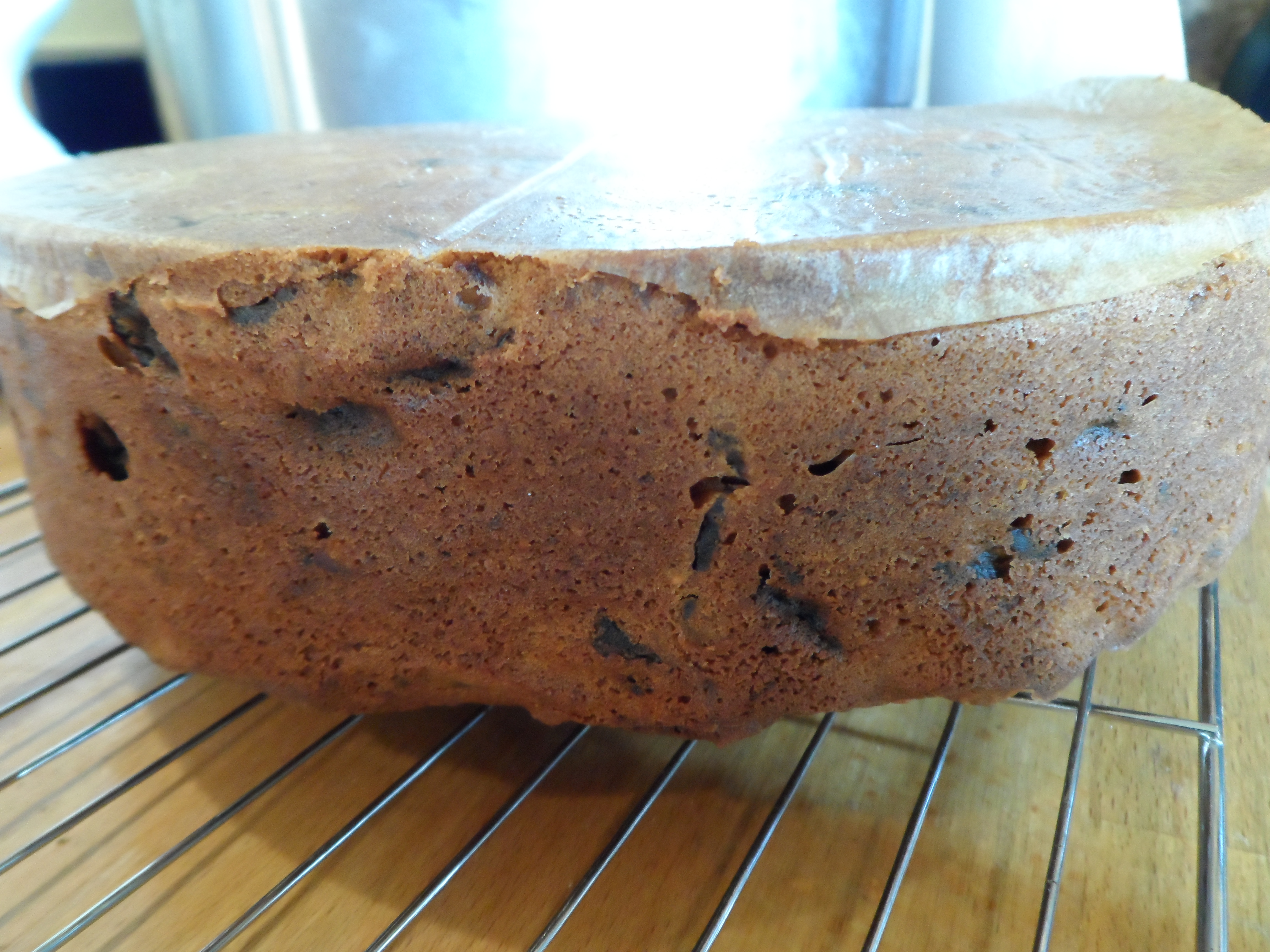
Light Christmas cake cooling on a wire rack

There you have it.  Christmas cake.  All ready for decorating. Or not if you’re my Dad, which I very much suspect you are not.

If you want to see other recipes you’ll find them all listed here.

Christmas cheer (in November)

13 Nov

I’ve started.

I didn’t mean to.  I prefer to wait till 20 December for my Christmas preparations, as is traditional in my family.  But there are some things that need time to reach perfection.  And anyway, I enjoy pottering about in the kitchen.

So yesterday I bought some fresh cranberries and a bottle of vodka.  Last time I made cranberry vodka it was far too sweet, but was a perfect late night (after too much wine) shot.  So I’m trying it again.  And plum brandy (if only because I have brandy in the cupboard and our plum harvest in the freezer).

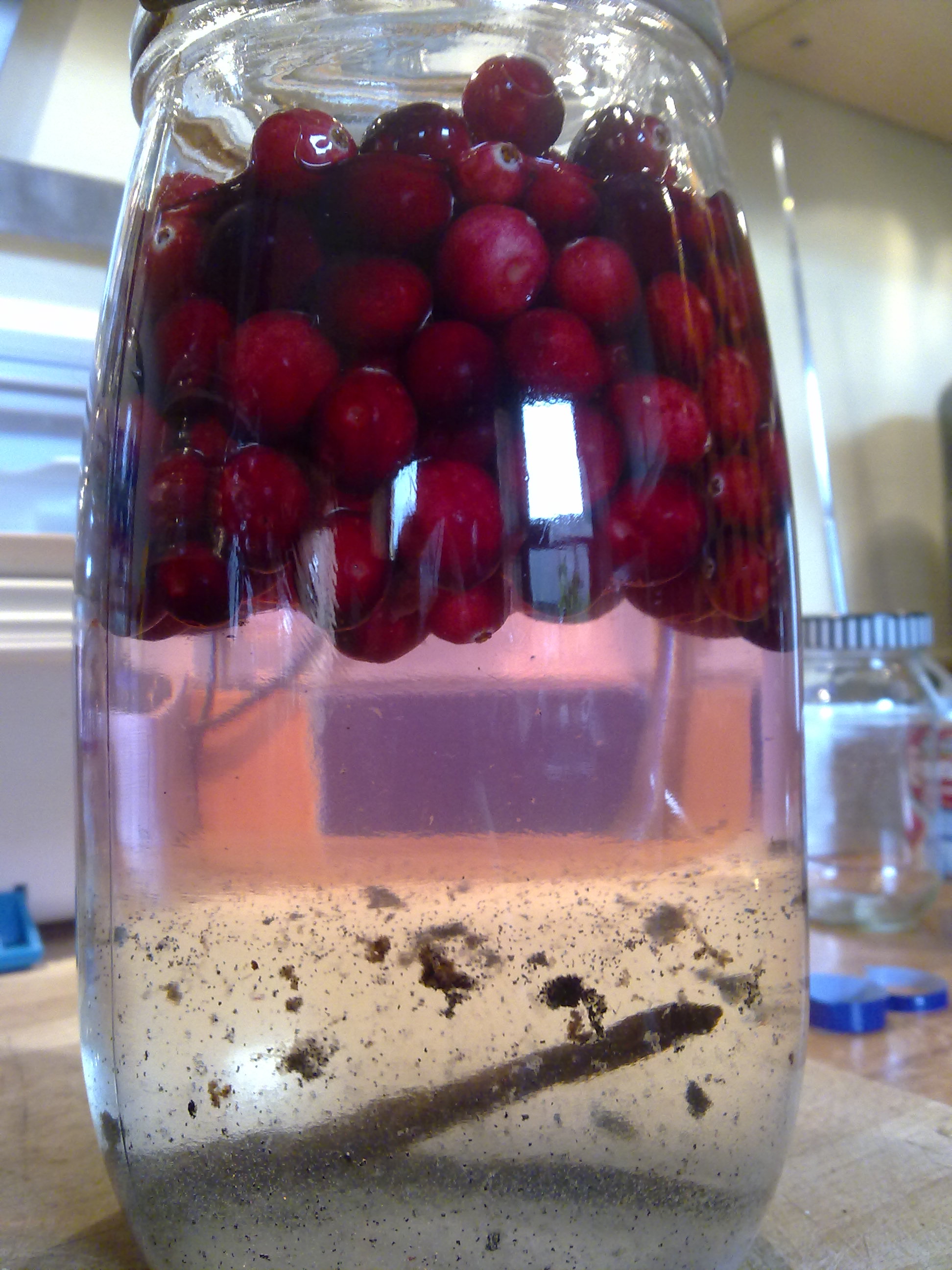
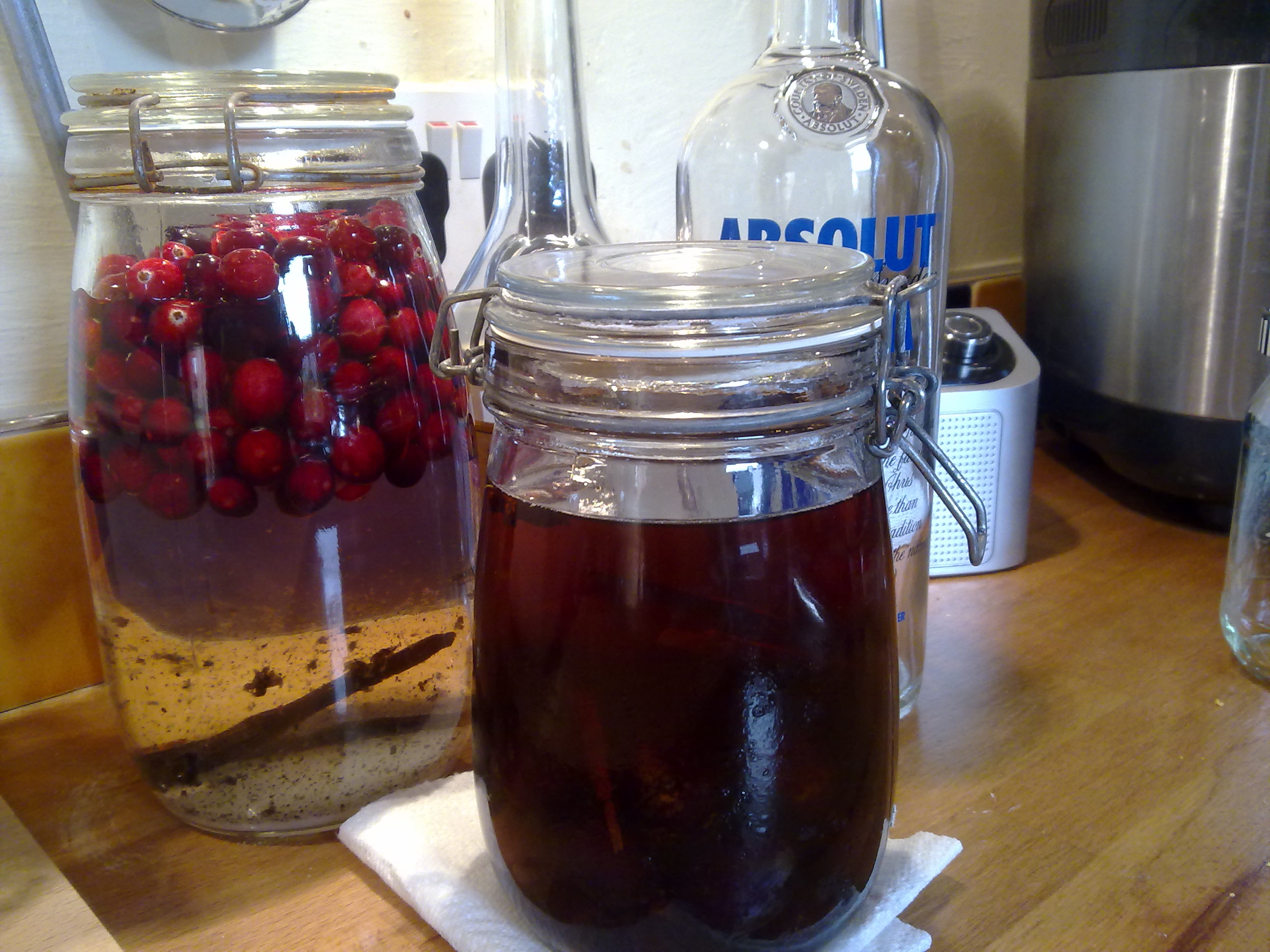
The cranberry vanilla vodka starts with layers of sugary syrup, and lighter alcohol

Cranberry Vanilla Vodka

250g cranberries

1/2 vanilla pod

160g caster sugar

1l vodka

You’ll need a kilner jar, larger than a 1l one.  I think mine is probably 1.5l, but not entirely sure.  Hey, it won’t really matter if your jar is too small, you just won’t be able to fit all the vodka in (so use slightly less fruit and sugar too).

  1. Here’s the slightly laborious bit, although I find it meditatively soothing.  Prick each of the cranberries with a fork, and pop them in the jar.
  2. After you’ve added a cranberry layer, spoon in some of the sugar, then layer with more pricked cranberries and more sugar.  Keep going till you’ve put in all the cranberries and sugar. And I know the pricking seems ridiculous, but really, if you don’t do it the flavour won’t leach out into the vodka so much, and you’ll end up with a disappointing drink, having saved yourself a mere 15 minutes sitting down listening to the radio.
  3. Now using a sharp knife split the vanilla pod lengthwise, and scrape out the seeds into the jar.  Throw the empty pods in too, they still have lots of seeds and flavour left in there.
  4. Pour the vodka in on top of the fruit layers, seal the lid and give it a shoogle.
  5. Leave somewhere out of the way, but easy to hand – so it’s not in your way, but you can give it a wee shoogle every day for the next 3 weeks.
  6. Taste it.  If you’d like it sweeter, then make up some basic sugar syrup, with caster sugar and water, and add it to the jar.  If you like it as is, then bottle it up and put a pretty label on it.
  7. Drink.

Plum brandy

Follow the basic method for Cranberry Vanilla Vodka.  I only had a 1l jar, so I layered plums and soft brown sugar till the jar was about half full.  Then I added a star anise and about 1″ cinnamon stick, followed by some brandy.  We’ll see how it turns out… I suspect I’ll wish I’d put more star anise in it.


Jars of alcoholic tastiness


Next weekend I will probably turn my hand to a Stollen.  I’ve never made one before, but much prefer stollen to heavy fruitcake.  Mind you, I do have a recipe for a Christmas Cake which lasts like a normal cake, but is made of nice light fruit, like apricots instead of all that horrid stuff you usually find in a fruitcake.   

Citrussy meaty goodness

10 Nov

I’d got into a bit of a cooking rut.  Or perhaps a meat rut.  I’d buy mince (for meatballs, chilli or bolognese sauce), and chicken (almost infinite possibilities) and beef (stew of some description, more recently in my new slow cooker).

So I realised that if you keep buying the same things, you’ll keep making similar things.  And I bought some pork loin steaks.  Is that even what they are called?  I’m low carbing (love how I’ve turned that into a verb, I low carb, you low carb, we low carb… we all become diet bores!).  And then I had a quick flick through a recent copy of delicious magazine (why do I so that when I already own so many cook books?) for inspiration.  This was utterly delicious and quite unlike anything I would have normally made.

Pork with orange and thyme

The zest and juice of 1 orange

a few sprigs of fresh thyme

2 pork loin steaks

1TBsp muscovado sugar

  1. Splash some oil into a frying pan over a medium heat
  2. Add the orange zest, and the thyme.  You can throw in the whole sprigs if you want, or just the leaves
  3. Fry for about 3 minutes, till the zest is crispy, then take the zest and thyme out of the pan and set aside
  4. Season the pork with salt and pepper and add to the pan.  Cook for 3 minutes each side, or until browned and cooked through
  5. Remove pork from pan and set aside
  6. Deglaze the pan with the orange juice, and add the sugar.  Simmer until well reduced.
  7. Add everything back into the pan again and warm through.
  8. Serve with savoy cabbage.
OK, you could serve it with lots of other things, but I’m still low carbing so it was just perfect with a big mound of bright green savoy cabbage.

It sounds more complicated than it is with all the taking out of the pan and setting aside – just make sure you have a wooden chopping board to rest the meat on (or a warm plate) and you’ll be fine.


Melting moments

30 Oct

So, this is a recipe I used to make years ago, when I was a teenager.  The original recipe is from Rosemary Wadey’s Cakes and Cake Decorating which I think I bought with either school prize money, or a Christmas book token when I was about 14 years old.  It has some of my favourite biscuit recipes: Grantham Gingers, Oat Crisps, Viennese Biscuits and the easiest of all: 1-2-3 biscuits.  But perhaps my favourite was Melting Moments – they are easy to make, look as though you might have bought them and taste scrumptiously delicious.

And they can be adapted. The basic recipe is for vanilla biscuits, rolled in scrunchy cornflakes before they are cooked, and with a nub of glace cherry on top.  When I made them recently I realised we only had chocolate weetabix in the cupboard, no plain cornflakes.  So, I made chocolate melting moments, rolled in scrunchy chocolate weetabix, still with a nub of glace cherry on top.

Chocolate cookies

Anyway, here we go:

Melting Moments

6oz butter (or half and half, butter and lard – oh yes, this recipe is so old that it uses lard.  But in reality, lard can create a shorter texture for biscuits). Soften the butter before you start cooking (so you might want to leave it out in the kitchen for a while before you start)

5oz caster sugar

1 egg, beaten

10oz self raising flour, sifted

1 tsp vanilla essence

about 2oz cornflakes, crushed (use a small plastic bag and scrunch them)

8 glace cherries, quartered

Pre-heat oven to 180C / 350F / GM4. Grease 2 baking sheets

  1. Beat the butter until soft, then add the sugar and cream until light and fluffy.  This is the most important step in this recipe – if the butter and sugar isn’t creamed properly the mixture won’t be light enough
  2. Beat in the egg and vanilla essence
  3. Work in the flour to give a fairly stiff dough
  4. Take dessertspoonfuls of mixture and roll them into balls
  5. Roll each ball in crushed cornflakes and place fairly well apart on the baking sheet
  6. Flatten the balls of mixture slightly and press a piece of cherry into the centre of each ball
  7. Bake for 15 – 20 mins or till golden brown.
  8. Cool on a wire rack and store in an airtight container.
Alternate versions:
Replace 1-2 oz of flour with 1-2oz of cocoa powder and about 1/2 tsp baking powder.
You can also replace some of the flour with custard powder to give a smoother and creamier biscuit.  Again, just swap some of the flour for custard powder, and add a wee bit of baking powder.
I think they would be nice with a wee bit of chopped ginger (you know, the stuff out of the jar) in them.  But then I love gingery things.  You would probably want to replace the glace cherry with a nubbin of ginger too.  Yum.

The most delicious blackcurrant recipe ever

9 Oct

Earlier this year we had a glut of blackcurrants.  I picked them on a Sunday in the sunshine, cutting whole branches from the bushes and then sitting in the sun on the terrace picking off the juicy black fruit.  Over 9lbs of fruit, all topped and tailed (not that they needed any topping, or was it tailing) and stored in plastic tubs in the freezer till I had more time to turn them into loveliness.

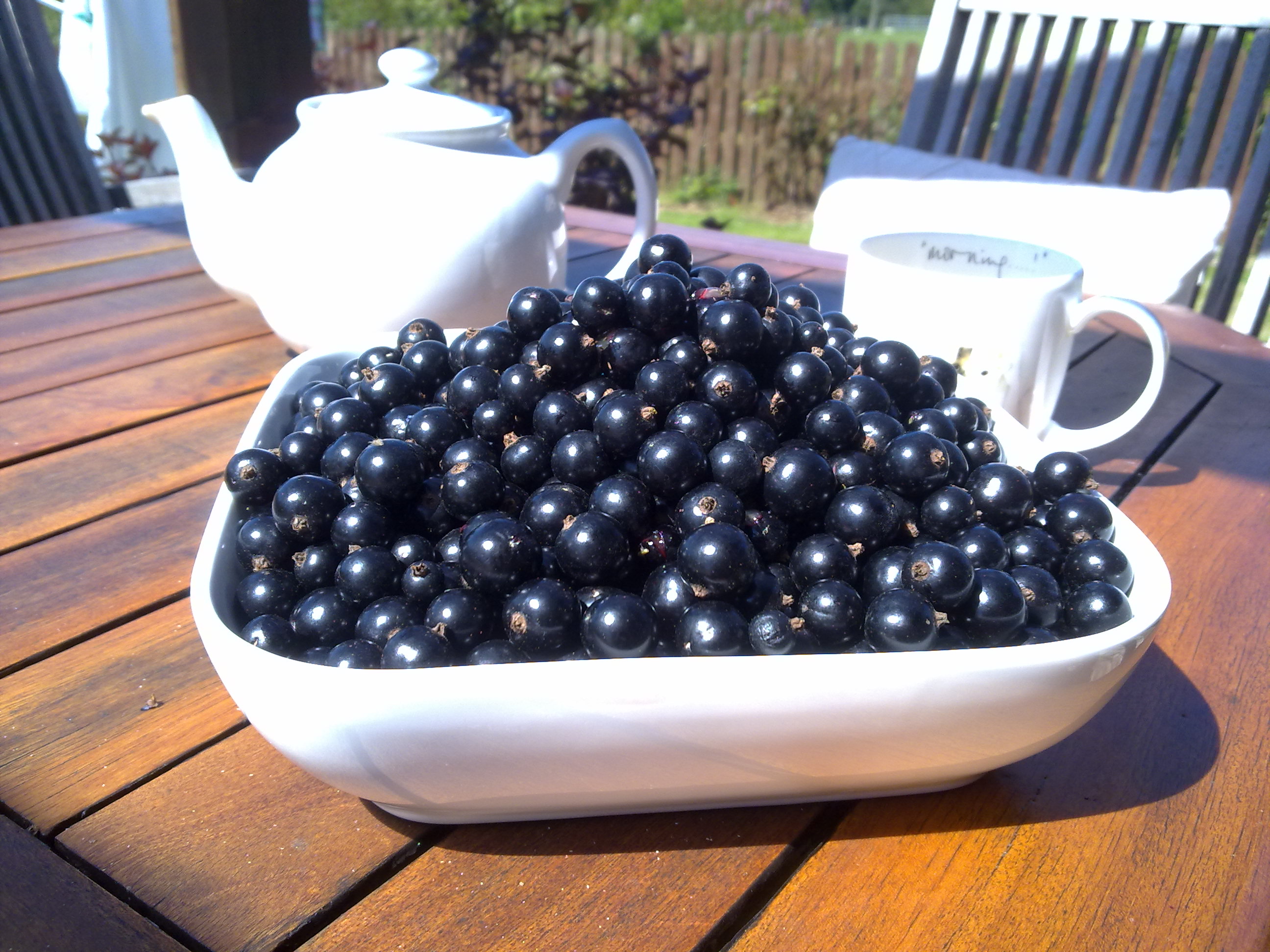
Blackcurrant harvest

This weekend was the time.  And the loveliness was Blackcurrant Ripple Icecream.  Why have I never made this before?  It’s amazing and oh so simple.  Thanks to Xanthe Clay and the BBC Good Food website for this deliciousness.  I’ve slightly altered the recipe, but literally only slightly.  You can find the original and a gorgeous picture here http://www.bbcgoodfood.com/recipes/11802/blackcurrant-ripple-ice-cream

Blackcurrant ripple icecream

200g blackcurrants (if frozen, leave them out for a while to defrost)

50ml apple juice

100g golden caster sugar

600ml double cream

large tin condensed milk

2 tsp vanilla extract

  1. Put the currants and the apple juice in a large heavy-bottomed pan and gently heat
  2. Simmer for about 5 minutes and then add the sugar
  3. Heat gently again and bring back to a simmer, stirring all the while to ensure the sugar all dissolves
  4. Simmer for a further 4-5 minutes, till it gets beautifully syrupy.  Don’t be too precious about the timings here, but you don’t want to reduce this right down, just make a lovely rich sauce for the ripple
  5. Now, take it off the heat and let it cool for a while.  A long while – it needs to be properly cool.
  6. Rub the sauce through a sieve to get rid of all the pips
  7. Now, leave that to one side while you make the icecream
  8. Pour the cream into a big bowl and whisk up to soft peaks
  9. Add the condensed milk and vanilla and whisk again to soft peaks
  10. That’s pretty much it.
  11. Find a freezer proof tub to put the ice cream in.  Pour the creamy ice cream in, then the sauce… swirl it a wee bit with a palette knife, or big spoon.  Try to get into the corners, but don’t mix too much – you’re looking for a rippled, or marbled, effect not a homogeneous mixture.
  12. Freeze.. for at least a couple of hours, but preferably longer.  It will probably need to come out of the freezer for a while before you serve it as it’s quite a solid ice cream, so take it out when you start your main course.

Enjoy.  Delicious with langues du chat biscuits, or similar.  Oh, did I mention I also made the most scrumptious langues du chat this weekend? The Great British Bake Off has been inspiring me!

As an alternative, make up the ice cream mixture and fold in either shop bought or homemade lemon curd.  I don’t know why you’d buy it, it’s simple to make and so much tastier when it’s not packed full of preservatives (and when was it ever going to last 6 months in our house anyway?).  But as I was saying, this ice cream is just delicious as a lemon ripple instead of blackcurrant ripple.  Try it.  Next I’m thinking of a butterscotch ripple, but suspect it will be too sweet – you need the sharpness of the lemons or blackcurrants to cut through the soft sweetness of the condensed milk in the ice cream.

Or, if you want to make Blackcurrant Cordial, or an alcoholic Blackcurrant Liqueur, then take a look at how I do it here.