Archive | Homebaked goods RSS feed for this section

Traybake-tastic

15 Nov

I do love a traybake. You may have noticed that I have more recipes for chocolate brownies on this blog than perhaps is strictly necessary. But I haven’t really indulged my love of a traybake with other recipes. That is about to change. You can look forward to such joys as the Malteser Traybake, various variations on a flapjack and a frangipane bakewell style thing. But for today you have the utter delight that is Sue Lawrence’s Lemony Fridge Cake. Checking her book I see that she calls it Lemon Fudge Cake. Whatever you call it, its a great and super easy recipe; and the perfect go-to recipe if you have a spare packet of digestives and a can of condensed milk in the cupboard, and a lemon or two to use up.

For those who don’t know Sue Lawrence, do yourself a favour and seek her out, or at least her writing. Her books are very readable – both well researched and well-written. And I’ve tried many of her recipes over the years and not one has ever failed. That’s some good cookery writing. This recipe is taken from her Book of Baking (although for some reason I’ve re-written the instructions).

If you’re looking for instant results, this isn’t the recipe for you – but it needs no actual baking, and is simplicity itself.

Lemony Fudge Cake

  • 150g / 5 1/2 oz / 1 1/2 sticks unsalted butter
  • 200g / 7 oz condensed milk (half a regular can)
  • 400g / 14 oz digestive biscuits
  • 100g / 3 1/2 oz / 2/3 cup desiccated coconut
  • 300g / 10 1/2 oz / 2 1/3 cups icing sugar
  • juice of 1 large juicy lemon
  1. Line a 23cm x 33cm / 9 x 13in Swiss roll tin
  2. If you have a microwave, put the butter in a large bowl and melt it in the microwave. If you don’t do it in a large pan over a gentle heat
  3. While the butter is melting, smash the digestives till they are mostly breadcrumb-like. A few larger lumps are fine. I do this by putting the biscuits into a high-sided bowl and bashing it with the rounded end of a basic rolling pin.
  4. Pour the condensed milk in with the melted butter and mix them together.
  5. Add the crushed biscuits and coconut and mix well together
  6. Pour into the prepared tin and press down. Chill in a fridge for a couple of hours
  7. Mix the sifted icing sugar with the lemon juice and carefully spread this over the biscuit base. Use a palette knife to spread it so it covers the whole base. Chill again.
  8. Cut into bars. You should be able to get 24 bars in total.

If you want to see other recipes you’ll find them all listed here.


Buttery butteries

26 Oct

I was away on business for 10 days, and when I got back the Captain had re-discovered butteries. They weren’t quite as he remembered them, not as flaky. Or buttery I suspect. But then they had been bought from one of the cheaper supermarkets, you know one of the ones with an i, an l and a d in its name.

We pondered how they might be made, and I thought it would probably involve a yeast dough, and some butter and/or lard and a lot of folding and rolling. And it turns out I was right. So, making butteries is the perfect Sunday activity. There’s not much to do, but you have to do it in short bursts of activity over a long period of time. To put it another way, you can read your Sunday papers, and every three quarters of an hour or so you have to go into the kitchen for 5 minutes. Easy peasy.

But not really a recommended activity if you are trying to stick to a low carb diet.

Butteries

  • 500g strong white flour
  • 1Tbsp sugar (I used golden caster, because it’s what’s in the cupboard)
  • 1 TBsp salt
  • 1 1/2 tsp dried yeast
  • 400ml tepid water
  • 250g butter, at room temperature
  • 125g lard, at room temperature

Yup, you read that right, there is 375g of fat to the 500g of flour. This is NOT a healthy product.

  1. First of all, make the yeasted dough, by mixing the first 5 ingredients in a bowl, and then kneading the soft dough for about 10 minutes. It’s a squishy, wet dough, so I kneaded it with both hands, pulling the dough upwards from the work surface and then slapping it back down again. You’re aiming to stretch the dough, helping the gluten do its funky thing.
  2. Once you’ve done your 10 minute dough-y workout, pop the dough into a lightly greased bowl, cover it with some clingfilm, or a hotel showercap if you have one, and leave it in a warm place to prove for about an hour – you want it to double in size.
  3. While the dough is doing its doubling thing, you need to get back into the kitchen and pop the lard and butter into a bowl. If your kitchen is freezy cold, then chuck it into the microwave for a minute or two at 30% power to soften it, otherwise the next stage will be nearly impossible.
  4. Using electric beaters, beat the butter and lard together till it’s combined and soft and feels a bit like Mr Whippy ice cream.
  5. The next stage is to combine the buttery mixture and the dough – but you want to create layers, so you’re not going to just whack it all in together, you need to roll and spread and fold and chill. And repeat. But let me explain in better detail.
  6. Take the dough out of the bowl and give it a very quick knead, just to bring it all together in a soft doughy ball. Place it on a floured surface and roll it, as best you can, into a rectangle. You’ll find it keeps springing back and it’s tricky to get a rectangle of much size, but try as best you can. Then spread about a third of the buttery mix onto two thirds of the rectangle
  7. Fold the unbutterd third of the dough over onto the middle third, and then fold the buttered third over on top. Press the short edges together lightly, wrap the dough in greaseproof paper and pop it into the fridge.
  8. Go read the papers for about 45 minutes
  9. Take the dough out of the fridge, and pop it back on a floured surface. Use a rolling pin and press it sequentially along the block of dough, in one direction and then the other. (this is so that you don’t end up smooshing all the butter towards one end of the block) Then roll it lightly in the traditional manner to create a rectangle again. Spread it with the second third of the buttery mix again; again just covering two thirds of the rectangle. Fold in the same way as before. Squish the edges together again and, yes, you guessed it, wrap it in greaseproof and pop it in the fridge.
  10. Read more of the paper.
  11. Do more of the pressing, rolling, spreading, folding routine.
  12. There, have you done with all the butter?
  13. Feel free to cool in the fridge again, especially if your kitchen is toasty warm.
  14. Roll out the dough, and cut into 16 pieces. Roll each individual piece out a wee bit
  15. Leave the uncooked butteries in a warm place for about 45 minutes, and read the paper again
  16. Turn your oven on to 200C or GM6
  17. Put your butteries in the oven for around 15 – 20 minutes, until they are golden brown and cooked through
  18. Cool on a wire rack, with some kitchen paper on it, to absorb some of the excessive buttery goodness.

If you’re lucky, your butteries won’t be sitting in a pool of fat when you take them out of the oven. I wasn’t so lucky, but that’s why I’m telling you to pinch the edges after each fold. I didn’t do that. Also, I hadn’t spread the first layer thinly enough. But anyway, despite not having brilliant lamination and having lots of butter melting out of the butteries, they are quite scrumptious.  And very easy, just time consuming, to make.

Caraway biscuits

13 Oct

Yesterday I made my own sort of a borscht. A beetroot soup, lightly flavoured with caraway seeds. It reminded me how much I love not only beetroots, but also caraway and this morning I woke with a hankering to make caraway biscuits.

Caraway seeds

Caraway seeds

You can learn a lot when you have a short obsession on a particular flavour. I imagine my childhood self leafing through recipe books (and failing to find anything I wanted, so making something up myself) and perhaps moving on to the Encyclopaedia Britannica and then getting so distracted with whatever else was on the same page, or something else related that it suggested I look at that the biscuits never got made. It’s all so much easier now, with a laptop and a warm fire. And even Radio 2 on in the background (I give up on Radio 4 after GQT on a Sunday). I also now have the sort of library of cookbooks and thanks to the wonder that is Eat Your Books I know that in my books there are 53 recipes which use caraway seeds, including poppy and caraway crackers and caraway vodka, both of which I will be trying soon.

You could find out everything you never wanted to know about caraway with a few quick searches too, but since I’ve done it already, I’ll share some of my findings with you.

Caraway is good for flatulence. When I say it’s good for flatulence I mean that it is reputedly good for the relief of severe flatulence. Anne Boleyn knew this and secured her place in Henry VIII’s heart by feeding him caraway comfits. That didn’t turn out so well in the end though, so don’t feel obliged to feed caraway to stinky partners.

Caraway seeds aren’t actually seeds; they are fruits.

Caraway is perhaps a flavour most associated with northern Europe, with southern Germany and Austria and with Scandinavia. The German word for caraway is Kummel, which I know better as a drink. German rye bread is heavily flavoured with caraway.

Many countries don’t have their own word for caraway, and simply call it ‘German cumin’, so if you see reference to caraway in any Middle Eastern or Asian cookbooks it is quite likely that it is an error in translation and its cumin that is needed.

So, that’s the educational bit over. Now you want the biscuits don’t you?

Caraway seed biscuits

Caraway seed biscuits

Then biscuits you shall have, but before I get to the recipe I should tell you another snippet of information: Caraway Biscuits are also known as Goosnargh Cakes. Goosnargh (pronounced Gooznar) is a small town in Lancashire, almost subsumed into Preston now where they have a tradition of making these caraway shortcake biscuits. They also feed caraway seeds to chickens and ducks to produce the Goosnargh Chicken and the Goosnargh Duck.

But the biscuits. There are a few versions online, but basically the Goosnargh Cake or caraway biscuits is a buttery shortcake biscuit with caraway and coriander seeds. Use a basic 3:2:1 recipe (3 parts flour, to 2 parts butter, to 1 part sugar) and you’ll be fine.

Goosnargh Cake

Pre-heat oven to GM5. Prepare a baking tray – either by buttering it and sprinkling it with flour, or by lining it with greaseproof paper. 

  • 8oz softened butter
  • 4oz caster sugar
  • 12oz plain flour
  • 2 TBsp caraway seeds
  • 1 1/2 tsp coriander seeds
  1. Cream together the butter and sugar, till fluffy
  2. Grind the caraway and coriander seeds in a pestle and mortar
  3. Sift together the flour and the ground seeds
  4. Fold the spiced flour into the creamed butter and sugar and bring together to form a stiff dough
  5. Roll out the dough to about 1/2 cm thickness and cut into rounds. Place on baking tray
  6. Pop into the fridge for at least 30 minutes
  7. Sprinkle with caster sugar
  8. Bake in the middle of the oven for 15-20 minutes – you don’t want them to turn colour much at all, although a light golden brown will be fine
  9. Move to a wire rack to cool, but sprinkle with a mix of caster sugar and caraway seeds while they are still hot.

Lovely with a cup of Earl Grey tea.

Goosnargh Cakes

Goosnargh Cakes

Aside

Another chocolatey cakey thingie

6 Oct

Inspiration comes from many places.

Today it came from a special offer at my local supermarket: they were selling off nearly out-of-date buttermilk so I popped a carton into my trolley. I’d thought they would become scones, or perhaps muffins.

And several years ago that is probably exactly what would have happened. But thanks to the fabulous eatyourbooks website I can type in an ingredient and find all the recipes in all my cookbooks which use that ingredient. Yes, isn’t that amazing? Isn’t technology just genius.

So then it became a toss-up between Chocolate Spice Gingerbread, from Green & Black’s Chocolate Recipes Unwrapped or Sticky Chocolate Loaf from Ottolenghi. In the end the Chocolate Spice Gingerbread won, if only because I found that cookbook first. That gingerbread is ridiculously easy to make, and there was enough buttermilk left over to make Darina Allan’s White Soda Scones too. Now, how easy are they? Just flour, salt, bicarb of soda and some buttermilk all mixed lightly together and then cut out into scone shapes. They puff up beautifully, but have more of a bready texture than a light scone texture, which is fine once you know that’s what to expect.

The chocolate gingerbread led me to another recipe which had to be tried: Lemon Drizzle Choc Chunk Cake, combining the sharpness of the lemon with the depth of bitter dark chocolate. Possibly a bit like those Thorntons lemon chocolates which I absolutely love.  I think it’ll work. We’ll find out in about an hour.

And, having bought a couple of punnets of damsons again yesterday I’d intended to make Damson Cheese. And then came across Sweet Pickled Damsons. I love the combination of sweet and sharp, so the pickling vinegar has been spiced and is now cooling down; the damsons have been picked over to make sure all the goopy ones are discarded and we’ll finish them off and pop them in jars later.

Would it be rude not to give you the chocolate spiced gingerbread recipe? I think so. It smells divine, and I suspect will keep well, if given the chance, which seems unlikely.

Chocolate Spiced Gingerbread

Adapted from Green & Black’s Chocolate Recipes Unwrapped, which was a Christmas gift from my brother and his family Christmas 2006 (according to the inscription inside, I don’t have that good a memory!).

Grease and line a deep 7″ square cake tin. Or a round one. I used a bigger round one, so ended up with a shallower cake shaped gingerbread. Just as tasty though.

Preheat your oven to 160C / 325F / GM3.

  • 125g / 4oz unsalted butter
  • 100g dark chocolate, broken into pieces (feel free to use a chilli chocolate, or Maya Gold with orange – I just used plain)
  • 75g / 3oz dark muscovado sugar
  • 4 TBsp treacle
  • 150ml / 1/4 pint buttermilk
  • 125g / 4oz ready-to-eat prunes
  • 175g / 6oz plain flour
  • 1 tsp bicarb of soda
  • 2 tsp ground ginger
  • 1 tsp ground cinnamon
  • 1 large egg, lightly beaten
  1. Cut the butter into chunks and pop it into a heavy based pan.
  2. Add the chocolate, sugar, treacle and buttermilk
  3. Heat gently until the ingredients have melted and then set aside to cool slightly
  4. Snip the prunes into small pieces – scissors are the easiest way to do this
  5. Sift the flour, bicarb of soda, ginger and cinnamon into a large bowl (this is the bowl you will use to make the batter, so make sure it’s big enough to take all the ingredients)
  6. Pour the chocolate mixture into the bowl and beat thoroughly with a wooden spoon
  7. Add the beaten egg, and beat again
  8. Fold in the prunes
  9. Pour the mixture into the prepared tin and level the surface of the mixture
  10. Bake for around 50 minutes
  11. Remove from the oven and leave to cook in the tin for about 10 minutes, then turn out onto a wire rack to cool completely
  12. Wrap in greaseproof paper and keep in an airtight tin.

It’ll be even better tomorrow. Or even the next day, and unlike many cakes will keep for a week if you haven’t eaten it all.

This would be perfect for a bonfire party. Or with hot chocolate in front of the fire after a vigorous, rigorous walk, kicking Autumn leaves.

I suspect it can take some messing about with the flavours too – perhaps add a wee hint of ground cloves, or star anise or cardamom? And why not some nuggets of crystallised ginger for a wee extra kick? If you were being fancy you could probably cut it into wee bite-sized pieces and drizzle lemon icing on them for sweet canapes or as part of an afternoon tea.

Talking of drizzling lemon, I’m off to make that lemon drizzle cake with chocolate chunks in it now.

Thanks Mr Hollywood

21 Apr

I made bread today.

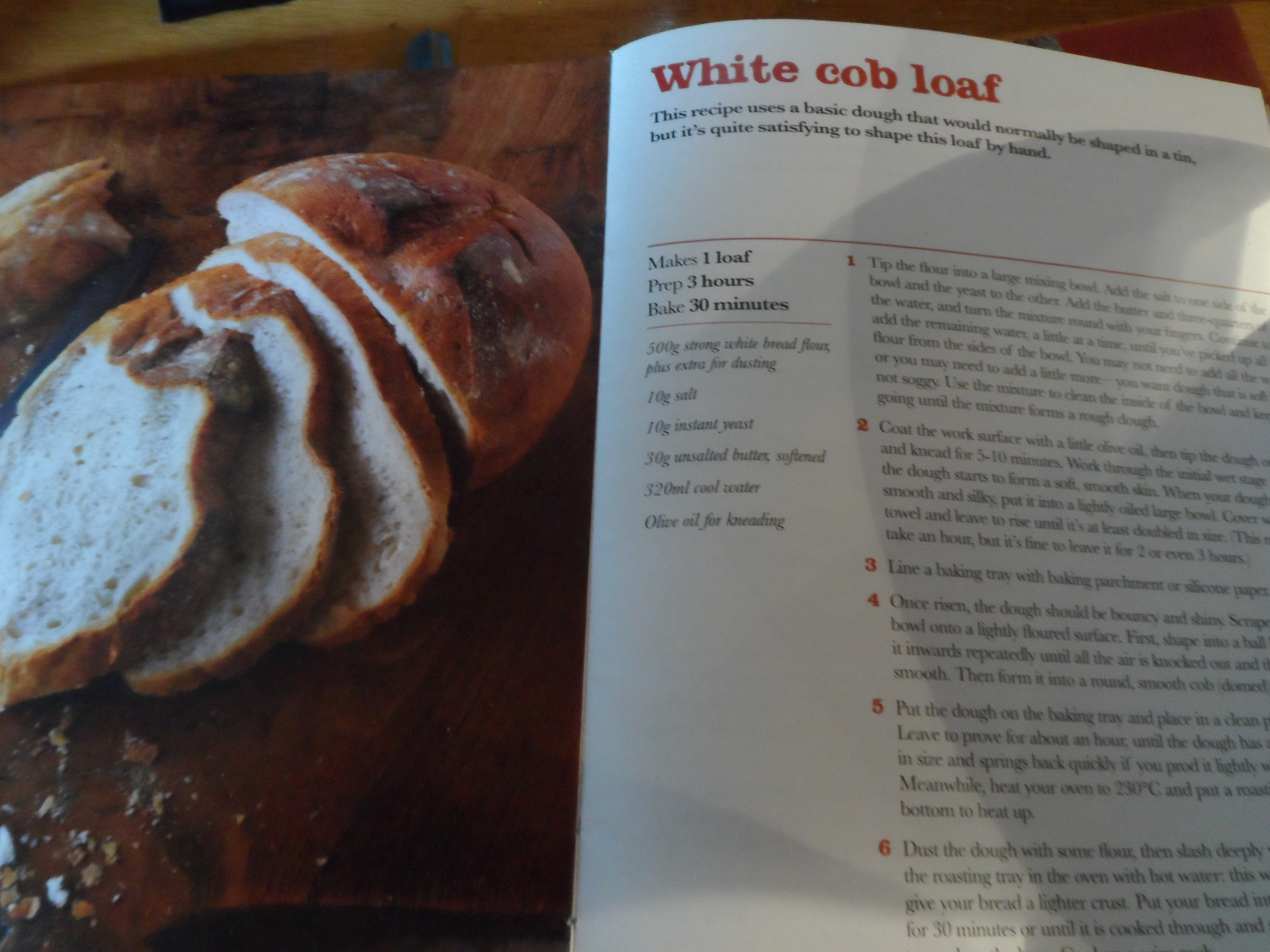
White cob loaf

White cob loaf

I make bread 2 or 3 times a week, but it’s usually in a breadmaker. I’m pretty good at making bread maker bread into something very tasty. The trick is (as ever) to start with the best ingredients. And when your ingredients are just flour, oil and water (ok and some yeast, milk powder, sugar and salt) you want to make sure you have the best flour you can find.

Stoneground flour with added seeds is my flour of choice, from Bacheldre Mill. I know, it seems ridiculous to buy flour from Wales, and cause it to be shipped up to the Clyde Valley. But it’s delicious. And I don’t necessarily like to promote amazon, but you can subscribe to Bacheldre Mill flour on amazon and get it automatically delivered to you as often as you want, and for about the same price as you’d pay at your local supermarket for an inferior mass-produced product.

One of the things I discovered early on is that you need about 20% more water than you expect when you are using stoneground flour. I don’t know why. You just do. Trust me on this.

Anyway, as I said, today I made bread. By hand, not in the breadmaker. And not a sourdough. I’ll come back to sourdough, perhaps in the summer, but for now I’m afraid I’ve killed my starter, so more sourdough will just have to wait till I can be bothered nurturing a jar of gloop again.

This morning I was inspired by that lovely Mr Hollywood. You know, him with the gorgeous twinkly blue eyes, and the assertive kneading hands. And the knowledge, held within his hands as much as his brain, on how to bake. As someone who has loved baking all my life, I appreciate what that lovely Mr Hollywood has to offer. OK, as a warm blooded woman I appreciate what that Mr Hollywood has to offer!

My mother sent me the free Hollywood Bakes booklets she’d got in the weekend Telegraph, and it seemed sensible to start at the beginning, with a white cob loaf. But I’m not very good at following recipes to the letter, and I don’t have weighing scales which enable me to weigh 10g of yeast, so my white cob loaf is I guess a Valley Variation of Mr Hollywood’s recipe.

But it works.

It works brilliantly.

I will be making this bread again. And again. So should you.

White cob loaf

  • 500g strong white flour, preferably stoneground
  • 2tsp instant yeast, plus a wee bit more
  • 1 lge tsp Maldon sea salt
  • about 30g softened butter
  • 350ml tepid water
  1. Tip the flour into a very large mixing bowl. If you have one of those really big wide mixing bowls, that is what you should use
  2. Add the salt to one side of the bowl and the yeast to the other
  3. Add the butter and 3/4 water in the middle and start mixing it around with your fingers, using them like a paddle
  4. You’re aiming to incorporate all of the flour into the doughy mixture around your fingers – you may need to add all of the water, but perhaps not, depending on your flour. Or the where the moon is in its cycle. Or the equinox. Or if you live next door to a witch. Bread is fickle like that.
  5. When the dough has come together and is soft (not too stiff, and not too soggy, although soggy is better than stiff in this instance) clean the inside of the bowl with the dough.
  6. Coat your work surface with a little olive oil (or whatever unflavoured oil) and tip the dough onto it.
  7. Knead for around 5-10 minutes until the dough seems to form a soft smooth skin, and it all feels softer and silky to the touch
  8. Oil a large bowl and place the dough in there, cover with cling film. Or a shower cap if you’ve been away in a hotel recently and have taken the free shower cap with you
  9. Leave to rise in a warm place, if you have one.
  10. Wait
  11. Go and do other things
  12. Do some more
  13. Once it has doubled in size you can get going again.
  14. Line a baking tray with parchment, or butter it with a leftover butter paper
  15. Scrape the dough out of the bowl onto a lightly floured surface and shape it into a ball by repeatedly folding it inwards with your hand. Once all the air is knocked out of it and the dough is smooth, form it into a round, smooth cob (dome) shape
  16. Put the dough on the prepared baking sheet and leave to prove for about an hour. If you can, cover it, but you don’t want anything that will touch the surface of the dough or it might rip the skin off the dough when you remove it
  17. When it’s nearly ready, pre-heat your oven to 450F / 230C / GM8.
  18. Once the dough has doubled in size again test to see if it springs back quickly if you prod it gently with a finger. If it does, you’re ready. If not, leave it a bit longer. Or cry.
  19. Fill a roasting tray half full with water and place it in the bottom of your hot hot hot oven
  20. Dust the dough with some flour and the slash its top deeply with a knife. Don’t be scared, just do it.
  21. Pop your bread in the oven and bake for 30 mins, or until it’s cooked through and sounds hollow when tapped on the base.
  22. Cool on a wire rack

Eat with unsalted butter. Or cheese and pickle. Or ham. Or really with anything you want. It will be delicious.

Mr Hollywood's white cob loaf

Mr Hollywood’s white cob loaf

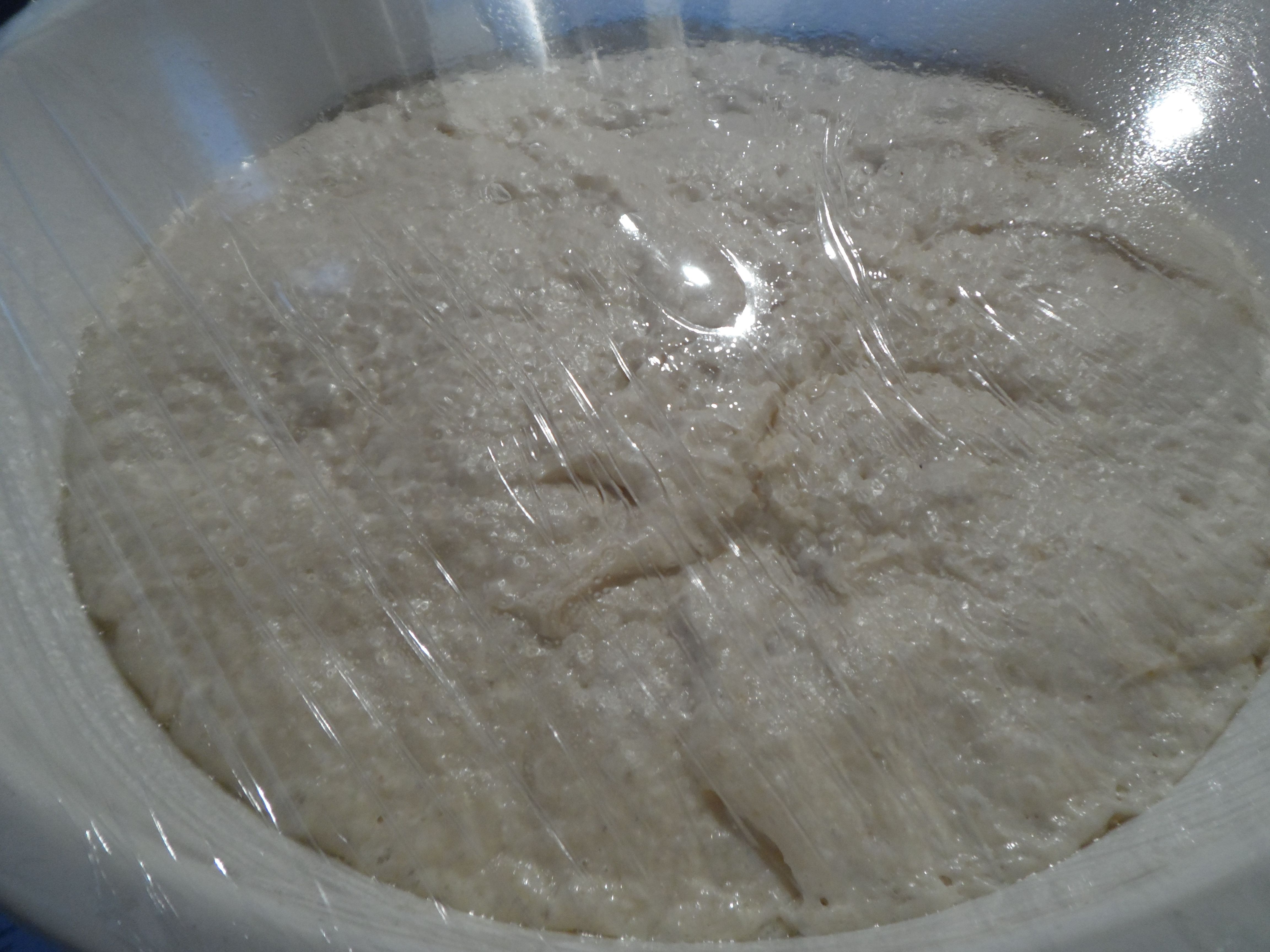
The dough, ready to rise for a few hours

The dough, ready to rise for a few hours

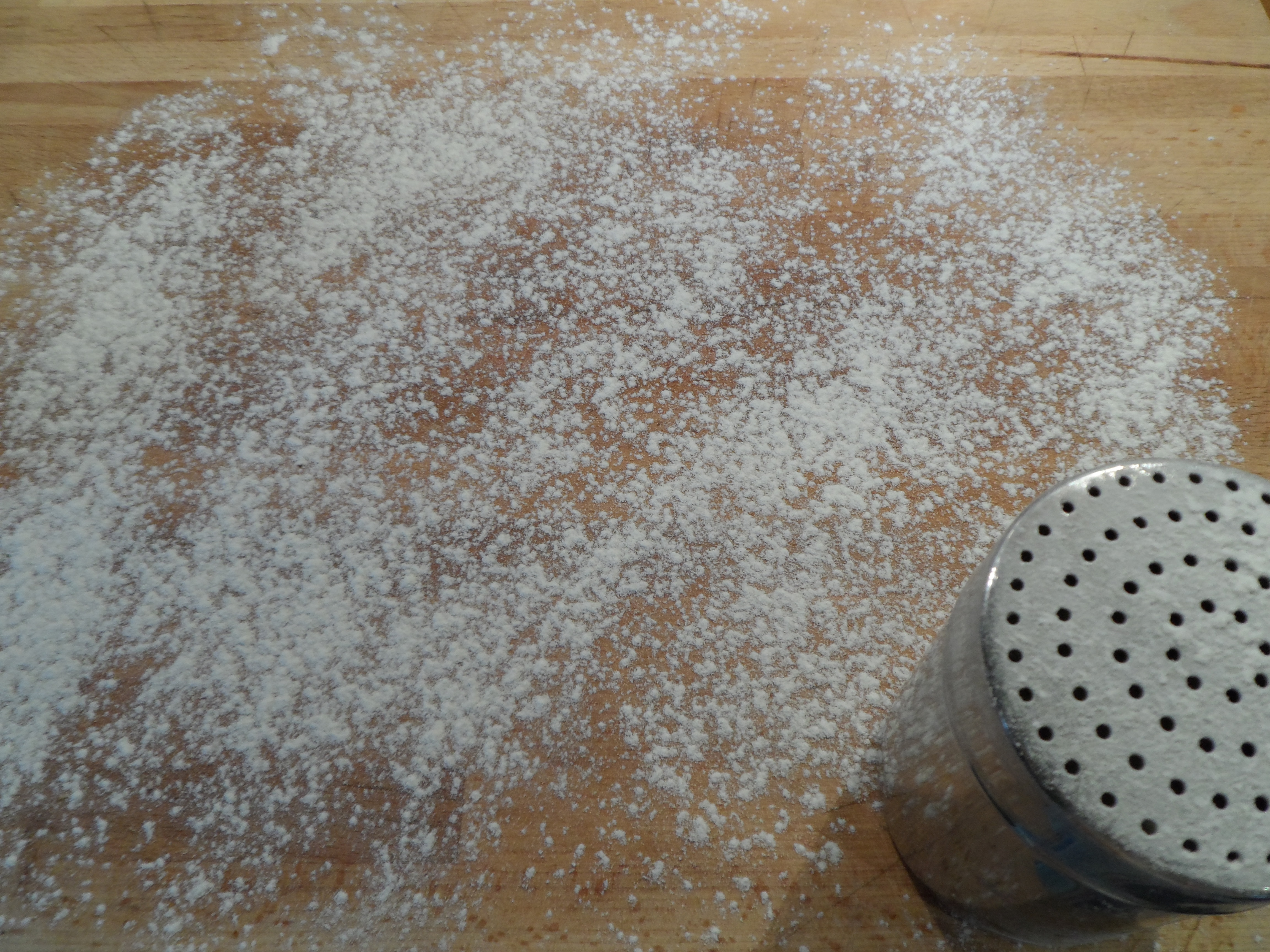
A lightly floured surface, ready for the dough

A lightly floured surface, ready for the dough

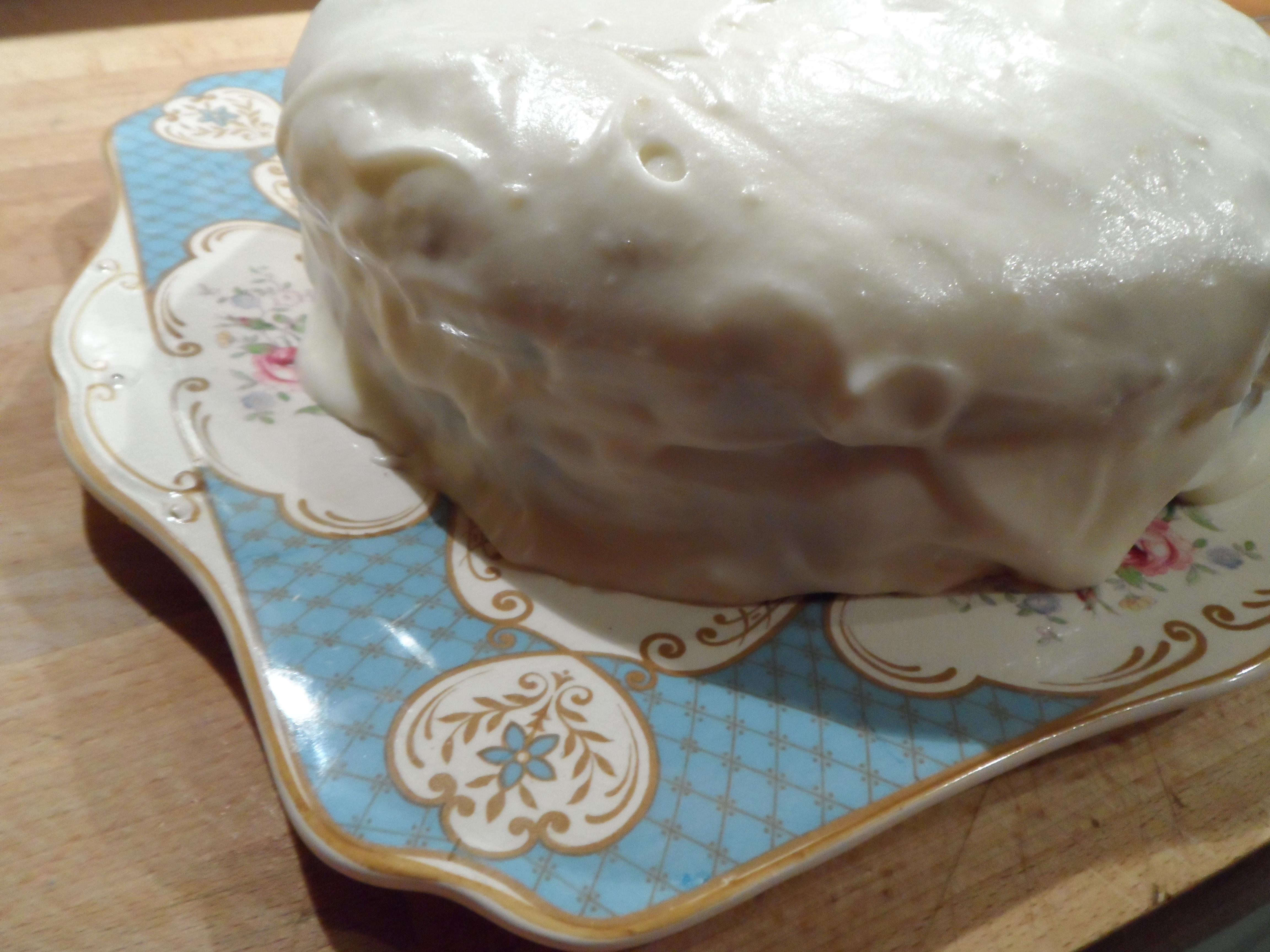
A perfect pillow of dough

A perfect pillow of dough

After 30mins in a hot hot hot oven it should look a bit like this

After 30mins in a hot hot hot oven it should look a bit like this


Apple spice muffins

10 Mar

I woke at 6.30 this morning. The Captain was awake and had brought me a cup of Earl Grey. Generally on a Sunday I don’t drink Earl Grey at 6.30am, but the thought was kind.

It was a dull spring day, nothing special.

I didn’t drink the tea, but fell back into a deep sleep till after 9am, when the quality of the light in the room had changed dramatically – there was an inch of snow on the ground and it was still falling.

Spring flowers poking through the snow

Spring flowers poking through the snow

An hour later, after a breakfast of local bacon in a home-made roll, it had cleared up enough for me to venture outside. The plan today was to sort out the greenhouse – perfect snowy weather activity you’d think. Except that the trouble with clearing a greenhouse is that you need somewhere to clear it to, and that somewhere is down the bottom of the garden. And by this time it was blowing a blizzard again.

So, what’s a girl to do but revert to type, retreat indoors and bake?

We had some spare apples and I have some of the loveliest cinnamon ever, which I suspect won’t be so lovely for evermore. Apple spice muffins were the answer.

Apple spice muffins

Prepare muffin tins and preheat oven to 400F / 375C / GM6.

  • 2oz porridge oats
  • 7oz plain flour
  • 3tsp baking powder
  • a pinch of salt
  • 1.5 tsp cinnamon
  • a shake each of ground cloves and ground ginger
  • 3oz caster sugar
  • 1 egg
  • a large apple, peeled, cored and chopped finely
  • 6fl oz milk
  • 2fl oz veg oil

And for the topping

  • 3TBsp soft brown sugar
  • 2oz walnuts, chopped
  1. Mix the topping ingredients together and put to one side
  2. Mix together the porridge oats, flour, baking powder, spices and salt
  3. In another bowl whisk  together the egg, milk and oil and then add the chopped apple
  4. Pour all the wet mixture into the dry and stir it till it’s all just combined
  5. Spoon into the prepared muffin tin (that probably means muffin cases in a muffin tin).
  6. Sprinkle a spoonful of topping on each muffin.
  7. Bake for about 20-25 minutes, until the tops are light brown and the muffins spring back when you gently press them.
  8. Cool for a wee minute, then EAT.
Dry ingredients in a bowl

Dry ingredients in a bowl

Add an egg, without the feather

Add an egg, without the feather

Remember to sprinkle the scrumbly topping on your muffins

Remember to sprinkle the scrumbly topping on your muffins

They're ready when they are golden brown - so about 1 minute before these ones came out slightly burnt!

They’re ready when they are golden brown – so about 1 minute before these ones came out slightly burnt!

Spiced cake (with added parsnips!)

5 Jan

I got it into my head that I wanted to make a parsnip cake.

I could blame that cute James on the Great British Bake Off which is re-running daytimes this week, and I might just have caught some of it yesterday. And the day before.

Or I could blame the Captain for declaring it his favourite vegetable.

But actually, when I’m making something as tasty as a spicy parsnip cake, why am I looking to blame anyone at all? The combination of warming winter spices with the sweet moistness of the parsnip is an absolute winner. Or it would be if I hadn’t thrown in too many parsnips in a moment of madness, ensuring that the resulting cake would be on the heavy side, instead of light and moist. Ah well, I’ll know for next time. And I’ve done it, so you don’t have to.

Tea-time!

Tea-time!

Spiced parsnip cake

Preheat oven to 180C /350F / GM4

Grease and line 2 sandwich cake tins

  • 1 1/2 cups plain flour
  • 1 cup muscovado sugar
  • 1 TBsp ground ginger
  • 2 tsp baking powder
  • 2 tsp ground cinnamon
  • pinch of salt
  • 3/4 tsp ground nutmeg
  • 3/4 tsp ground allspice
  • 3/4 tsp ground cloves
  • 3 large eggs
  • 1/2 cup vegetable oil
  • 1/2 cup whole milk
  • 1 tsp vanilla extract
  • 2 balls of ginger from a jar of stem ginger in syrup – chopped up small
  • 2 cups grated parsnips (about 2 large)
  • 1/2 cup walnuts, toasted, chopped
  • 4 oz cream cheese
  • 2 TBsp butter, softened
  • 2 TBsp syrup from jar of stem ginger in syrup
  • 2 tsp grated fresh ginger
  • 3 cups icing sugar
  1. Mix together flour, sugar, spices, baking powder and salt in a large bowl – I use a whisk to combine them all instead of bothering to sift them in.  However – this means you may end up with pockets of sugariness in the finished cake, as it’s tricky to break down all the muscovado if you don’t sift it. And this bowl is going to have EVERYTHING in it soon, so make sure it’s big enough
  2. In a separate bowl, whisk together the eggs, oil, milk and vanilla extract
  3. Pour the eggy mixture into the dry ingredients and stir until combined
  4. Add the stem ginger, parsnips and chopped walnuts and mix together
  5. Transfer to cake tins
  6. Bake for about 30 minutes, until a skewer inserted into the centre comes out clean – but watch, it might be quicker in your oven
  7. Cook cakes on a wire rack
  8. For the icing, beat together the cheese and butter, with the syrup, till smooth. Add the grated ginger and the icing sugar  (you should sift the icing sugar on this occasion, or you’ll get lumpy icing, which is a beast to make smooth). Beat till smooth.
  9. Sandwich the cakes together and spread the goopy icing all over the top too
Cooling the cakes on a wire rack

Cooling the cakes on a wire rack

This cake is utterly perfect with a cup of Earl Grey tea. It also makes a pretty marvellous pudding, especially if you’ve had something quite light like soup for your main course. Because of the rich icing, it needs no ice cream or anything with it, but if it were made as a single large cake (perhaps in a loaf tin?) with no icing, it would be lovely with a vanilla ice cream, or a scoop of creme fraiche for pudding.

Christmas leftovers (but no turkey)

2 Jan

It’s that time of year when you’re probably still living out of the fridge and store cupboard, still eating up bits of food you bought thinking you’d need it over the festive period. Or perhaps you haven’t over-shopped this year and you are now eating delicious meals started from scratch, made with fresh vegetables and real meat (ie not leftover roast turkey, or cold ham). If so, well done.

But have you still got things lurking in the fridge which you’ve had enough of? Maybe you’ve had enough of Stilton? Or brussels sprouts? If so, I have a couple of recipes for you which might help: Stilton Nibbly Biscuits (gluten free!) and creamy sprouts.

Let me explain first of all about the sprouts. I never thought I would grow to enjoy a sprout, but they are the Captain’s second favourite vegetable! Yes, seriously, they are. His favourite is parsnips, and I think this afternoon I’m going to find a recipe for a parsnip cake just to use up the last of the bag of parsnips I have in the fridge. But, back to the sprouts. I’ve done all manner of things with sprouts to try to enjoy them: added juniper berries, lardons, chestnuts, lots of butter… but all to no avail. Until now. I used what I had in the fridge (as you do at this time of year) and found my perfect Brussels Sprouts recipe. It’s not for the faint hearted, and should be eaten BEFORE you start your diet. But it is delicious with roast pork, or a pork chop, or I can imagine it working really well with sausages and black pudding and some creamy mash.

And then I mentioned Stilton didn’t I? One of my favourite cookbooks over the last year or so is by Thane Prince: Ham, Pickles and Jam. It consistently gives me interesting and useful recipes. One that I keep returning to is for cheesy nibbly biscuits. All you need is about 30 minutes, and food processor and some leftover cheese. OK, and some butter and flour too (preferably gluten free).  I originally wrote about this recipe here, back in 2011.

Over the months I’ve modified the recipe – these days I generally make it with stilton and pretty much always omit the parmesan. Also, when the dough is made I roll it into a great big sausage, and then just slice off pieces to bake them, instead of all that faff with making cherry size pieces and then squishing them flat before rolling them in sesame seeds. The sesame seeds are important though – they add an extra nutty flavour to the biscuit. And I’ve only ever made them with gluten free flour – I love the light crispness you get with this mix.

So, that’s your stilton sorted. Now for the brussels sprouts.

Creamy Brussels Sprouts

Prepare your brussels sprouts by cutting off the wee end, and removing the outer leaf or two if necessary. Then slice the sprouts – you’ll get about 4 or 5 slices out of each sprout, depending on their size. You don’t need to be a perfectionist with this, all you’re doing is cutting down the size of each sprout so they cook through more quickly and evenly.

Put the sliced sprouts into a wide flat pan and throw in some stock (or if you’re me, some water and a stock cube). You don’t need much stock – the idea is that the sprouts will cook in it, but it will boil away. I use about 200ml when cooking enough sprouts for two people.

Now, put a lid on the pan and boil up the sprouts. Remove the lid and stir them around a bit, to make sure all the sprouts are in the water. Put the lid on again if you think you should, but if it’s a tight fitting lid, you might want to leave a slight gap to let some steam out.

Ideally, the sprouts should be just about cooked at the point when the water is just about boiled away.

Throw in about 1/2 tsp freshly ground nutmeg and a good turn or two of black pepper. Stir. Add a seriously big glug or two of double cream and stir again.

Leave quietly bubbling away while you serve the rest of your food up, and by the time you’ve plated everything else up the sprouts will be ready.

Delicious with roast pork and all the other trimmings, or as I’ve just discovered with Lucas Hollweg’s Beef Casserole with Cinnamon and Prunes. Exquisite!


Perfect and easy cheese scones

2 Dec

You know how it is, you’ve got some nubs of cheese left in the fridge and you think they’d be better cooked than eaten on a cracker.

But you want your cheesy snack NOW.

Mimolette cheese scones

Mimolette cheese scones

Well, this is the recipe for you – from start to finish it probably only takes about half an hour.

Ready?

Off we go.

Spicy cheese scones

Preheat oven to 200C / GM6. Prepare a baking sheet

  • 200g SR flour
  • 1/2 tsp baking powder
  • 1/2 tsp salt
  • 1/2 tsp sugar
  • a good shake of celery salt
  • a good shake of cayenne pepper
  • a good shake of smoked paprika
  • about 40g unsalted butter, straight from the fridge, grated on a coarse grater
  • 100g mature cheddar-type cheese (I used mimolette) either grated or cut into wee chunks
  • 3tsp crunchy mustard
  • 100ml milk
  1. Sift all dry ingredients into a large mixing bowl
  2. Stir in the butter and cheese
  3. Add milk and mustard and mix together with a fork
  4. Bring together with your hands and knead REALLY lightly on a floured board. If the dough is really solid, add more milk – it should come together, but feel quite light and spongey (not hard and solid)
  5. Pat down to about 2cm thickness
  6. Either use a cutter to make about 8-9 scones, or cut into rough scone shapes with a knife
  7. Bake for 12-15mins until golden brown

Grating the butter means you don’t need to do anything other than mix it in to the dry mixture – no working it till it turns into breadcrumbs. To be honest I didn’t weigh the butter, I just grated about 1/6 packet of butter (mark the pack of butter half way down, then divide the half into 3 .. don’t actually cut through it, just mark with a knife then grate to this point).

You could make these into wee baby scones and they’d be delish with a wee sherry at Christmas. Or Bonfire Night

Christmas muffins (The Cranberry Years)

2 Dec

I love Christmas food.

Cranberry clementine muffins

Cranberry clementine muffins

Well, I love my sort of Christmas food – which is almost anything apart from traditional Christmas cake. I love warm and mellow Christmas spices; chestnuts thrown into all manner of leftover dishes just because you have them; turkey; glazed ham; mulled wine; spiced cider; and cranberries. I really love baking with fresh cranberries.

And I know it’s only just December, but I was in the wonderful Whole Foods Market in Giffnock again this weekend and they had ENORMOUS fresh juicy cranberries. I had to have them.

And I had to make muffins with them. I combined them with clementine zest and orange juice, for flavour. And a muffin batter which included extra bran and porridge oats to make them pretend they are somewhere further along that health spectrum than you might imagine. But then lots of melted butter to make sure they are still tastiness itself.

And now you can make them too. If you start now, they’ll be ready within an hour. Unless you have to go out and pick your own cranberries.

Cranberry & clementine muffins

Preheat oven to 375F / 200C / GM5-6. Prepare muffin tins, lining them with muffin cases. Makes about 12 regular muffins . 

  • 8oz plain flour
  • 1oz bran
  • 1oz porridge oats
  • 3 tsp baking powder
  • a pinch of salt
  • 3oz dark brown or muscovado sugar
  • 1 large egg
  • 6oz fresh cranberries (you could use blueberries, or other berries of your choice)
  • grated zest of 5 clementines
  • 7fl oz clementine or orange juice
  • 3oz melted butter (or 3fl oz veg oil)
  1. Mix together in a large bowl: flour, bran, porridge oats, baking powder and salt
  2. In a separate bowl beat together: sugar, egg, zest, juice and melted butter
  3. Pour liquid ingredients into the dry ones and stir until just combined, adding the berries towards the end. The batter can have lumps but there should be no pockets of dry flour
  4. Spoon into muffin cases (about 3/4 full should work, and produce nice full muffins)
  5. Bake for 20-25 minutes until tops are golden brown and the muffins spring back when you poke them gently