Archive | Vegetarian RSS feed for this section

Spiced cake (with added parsnips!)

5 Jan

I got it into my head that I wanted to make a parsnip cake.

I could blame that cute James on the Great British Bake Off which is re-running daytimes this week, and I might just have caught some of it yesterday. And the day before.

Or I could blame the Captain for declaring it his favourite vegetable.

But actually, when I’m making something as tasty as a spicy parsnip cake, why am I looking to blame anyone at all? The combination of warming winter spices with the sweet moistness of the parsnip is an absolute winner. Or it would be if I hadn’t thrown in too many parsnips in a moment of madness, ensuring that the resulting cake would be on the heavy side, instead of light and moist. Ah well, I’ll know for next time. And I’ve done it, so you don’t have to.
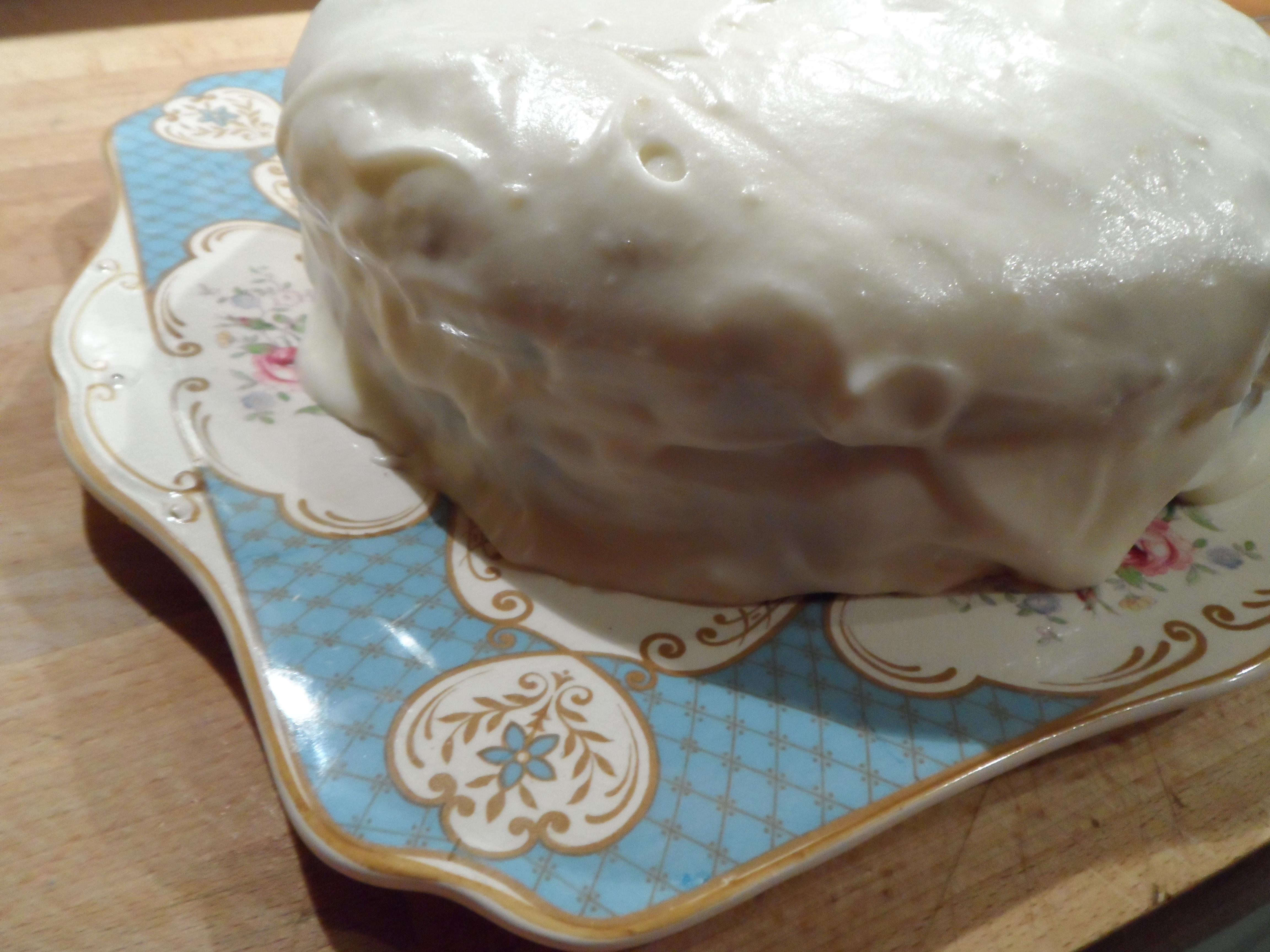
Tea-time!

Tea-time!

Spiced parsnip cake

Preheat oven to 180C /350F / GM4

Grease and line 2 sandwich cake tins

  • 1 1/2 cups plain flour
  • 1 cup muscovado sugar
  • 1 TBsp ground ginger
  • 2 tsp baking powder
  • 2 tsp ground cinnamon
  • pinch of salt
  • 3/4 tsp ground nutmeg
  • 3/4 tsp ground allspice
  • 3/4 tsp ground cloves
  • 3 large eggs
  • 1/2 cup vegetable oil
  • 1/2 cup whole milk
  • 1 tsp vanilla extract
  • 2 balls of ginger from a jar of stem ginger in syrup – chopped up small
  • 2 cups grated parsnips (about 2 large)
  • 1/2 cup walnuts, toasted, chopped
  • 4 oz cream cheese
  • 2 TBsp butter, softened
  • 2 TBsp syrup from jar of stem ginger in syrup
  • 2 tsp grated fresh ginger
  • 3 cups icing sugar
  1. Mix together flour, sugar, spices, baking powder and salt in a large bowl – I use a whisk to combine them all instead of bothering to sift them in.  However – this means you may end up with pockets of sugariness in the finished cake, as it’s tricky to break down all the muscovado if you don’t sift it. And this bowl is going to have EVERYTHING in it soon, so make sure it’s big enough
  2. In a separate bowl, whisk together the eggs, oil, milk and vanilla extract
  3. Pour the eggy mixture into the dry ingredients and stir until combined
  4. Add the stem ginger, parsnips and chopped walnuts and mix together
  5. Transfer to cake tins
  6. Bake for about 30 minutes, until a skewer inserted into the centre comes out clean – but watch, it might be quicker in your oven
  7. Cook cakes on a wire rack
  8. For the icing, beat together the cheese and butter, with the syrup, till smooth. Add the grated ginger and the icing sugar  (you should sift the icing sugar on this occasion, or you’ll get lumpy icing, which is a beast to make smooth). Beat till smooth.
  9. Sandwich the cakes together and spread the goopy icing all over the top too
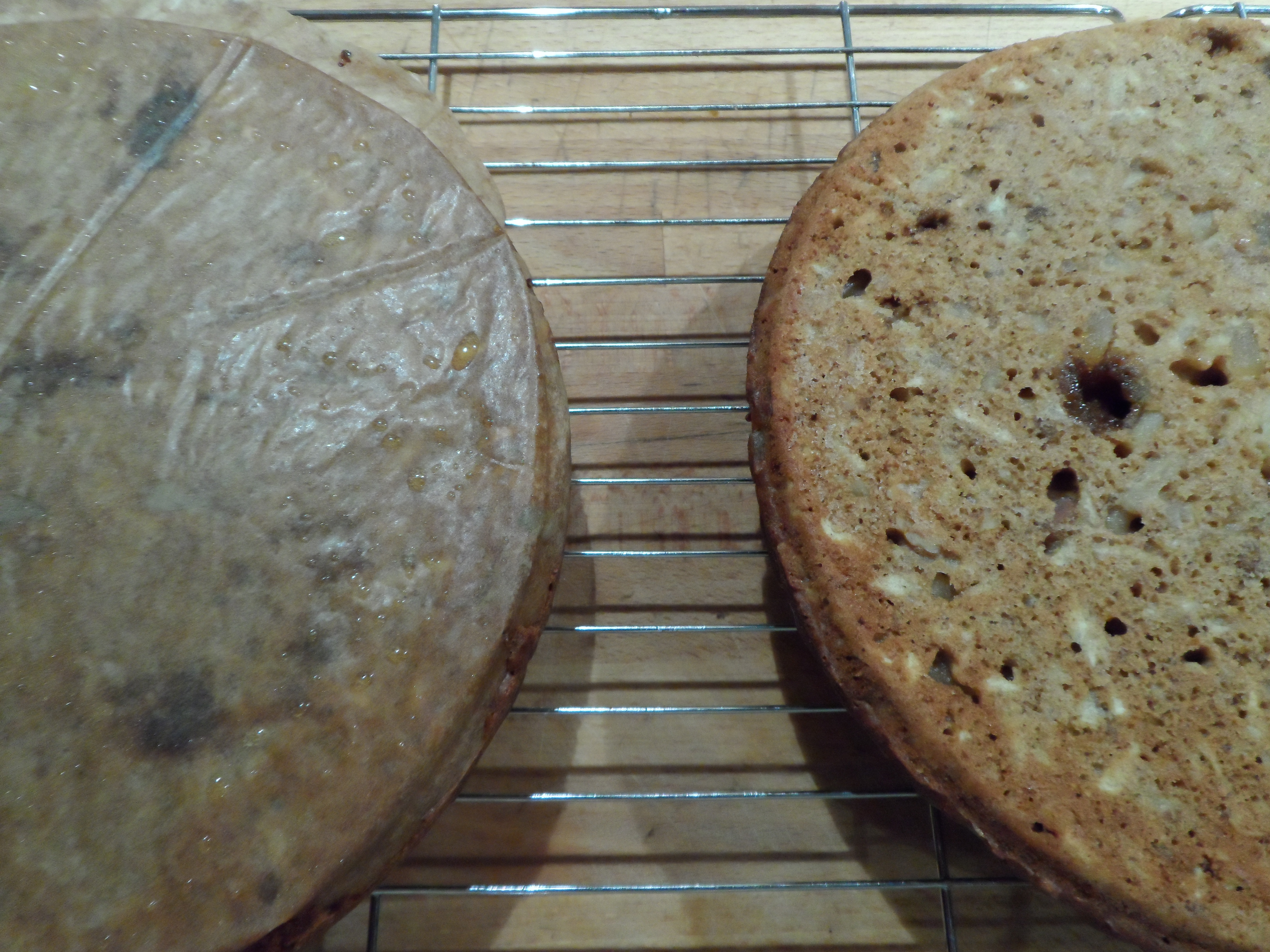
Cooling the cakes on a wire rack

Cooling the cakes on a wire rack

This cake is utterly perfect with a cup of Earl Grey tea. It also makes a pretty marvellous pudding, especially if you’ve had something quite light like soup for your main course. Because of the rich icing, it needs no ice cream or anything with it, but if it were made as a single large cake (perhaps in a loaf tin?) with no icing, it would be lovely with a vanilla ice cream, or a scoop of creme fraiche for pudding.

Christmas leftovers (but no turkey)

2 Jan

It’s that time of year when you’re probably still living out of the fridge and store cupboard, still eating up bits of food you bought thinking you’d need it over the festive period. Or perhaps you haven’t over-shopped this year and you are now eating delicious meals started from scratch, made with fresh vegetables and real meat (ie not leftover roast turkey, or cold ham). If so, well done.

But have you still got things lurking in the fridge which you’ve had enough of? Maybe you’ve had enough of Stilton? Or brussels sprouts? If so, I have a couple of recipes for you which might help: Stilton Nibbly Biscuits (gluten free!) and creamy sprouts.

Let me explain first of all about the sprouts. I never thought I would grow to enjoy a sprout, but they are the Captain’s second favourite vegetable! Yes, seriously, they are. His favourite is parsnips, and I think this afternoon I’m going to find a recipe for a parsnip cake just to use up the last of the bag of parsnips I have in the fridge. But, back to the sprouts. I’ve done all manner of things with sprouts to try to enjoy them: added juniper berries, lardons, chestnuts, lots of butter… but all to no avail. Until now. I used what I had in the fridge (as you do at this time of year) and found my perfect Brussels Sprouts recipe. It’s not for the faint hearted, and should be eaten BEFORE you start your diet. But it is delicious with roast pork, or a pork chop, or I can imagine it working really well with sausages and black pudding and some creamy mash.

And then I mentioned Stilton didn’t I? One of my favourite cookbooks over the last year or so is by Thane Prince: Ham, Pickles and Jam. It consistently gives me interesting and useful recipes. One that I keep returning to is for cheesy nibbly biscuits. All you need is about 30 minutes, and food processor and some leftover cheese. OK, and some butter and flour too (preferably gluten free).  I originally wrote about this recipe here, back in 2011.

Over the months I’ve modified the recipe – these days I generally make it with stilton and pretty much always omit the parmesan. Also, when the dough is made I roll it into a great big sausage, and then just slice off pieces to bake them, instead of all that faff with making cherry size pieces and then squishing them flat before rolling them in sesame seeds. The sesame seeds are important though – they add an extra nutty flavour to the biscuit. And I’ve only ever made them with gluten free flour – I love the light crispness you get with this mix.

So, that’s your stilton sorted. Now for the brussels sprouts.

Creamy Brussels Sprouts

Prepare your brussels sprouts by cutting off the wee end, and removing the outer leaf or two if necessary. Then slice the sprouts – you’ll get about 4 or 5 slices out of each sprout, depending on their size. You don’t need to be a perfectionist with this, all you’re doing is cutting down the size of each sprout so they cook through more quickly and evenly.

Put the sliced sprouts into a wide flat pan and throw in some stock (or if you’re me, some water and a stock cube). You don’t need much stock – the idea is that the sprouts will cook in it, but it will boil away. I use about 200ml when cooking enough sprouts for two people.

Now, put a lid on the pan and boil up the sprouts. Remove the lid and stir them around a bit, to make sure all the sprouts are in the water. Put the lid on again if you think you should, but if it’s a tight fitting lid, you might want to leave a slight gap to let some steam out.

Ideally, the sprouts should be just about cooked at the point when the water is just about boiled away.

Throw in about 1/2 tsp freshly ground nutmeg and a good turn or two of black pepper. Stir. Add a seriously big glug or two of double cream and stir again.

Leave quietly bubbling away while you serve the rest of your food up, and by the time you’ve plated everything else up the sprouts will be ready.

Delicious with roast pork and all the other trimmings, or as I’ve just discovered with Lucas Hollweg’s Beef Casserole with Cinnamon and Prunes. Exquisite!


Perfect and easy cheese scones

2 Dec

You know how it is, you’ve got some nubs of cheese left in the fridge and you think they’d be better cooked than eaten on a cracker.

But you want your cheesy snack NOW.

Mimolette cheese scones

Mimolette cheese scones

Well, this is the recipe for you – from start to finish it probably only takes about half an hour.

Ready?

Off we go.

Spicy cheese scones

Preheat oven to 200C / GM6. Prepare a baking sheet

  • 200g SR flour
  • 1/2 tsp baking powder
  • 1/2 tsp salt
  • 1/2 tsp sugar
  • a good shake of celery salt
  • a good shake of cayenne pepper
  • a good shake of smoked paprika
  • about 40g unsalted butter, straight from the fridge, grated on a coarse grater
  • 100g mature cheddar-type cheese (I used mimolette) either grated or cut into wee chunks
  • 3tsp crunchy mustard
  • 100ml milk
  1. Sift all dry ingredients into a large mixing bowl
  2. Stir in the butter and cheese
  3. Add milk and mustard and mix together with a fork
  4. Bring together with your hands and knead REALLY lightly on a floured board. If the dough is really solid, add more milk – it should come together, but feel quite light and spongey (not hard and solid)
  5. Pat down to about 2cm thickness
  6. Either use a cutter to make about 8-9 scones, or cut into rough scone shapes with a knife
  7. Bake for 12-15mins until golden brown

Grating the butter means you don’t need to do anything other than mix it in to the dry mixture – no working it till it turns into breadcrumbs. To be honest I didn’t weigh the butter, I just grated about 1/6 packet of butter (mark the pack of butter half way down, then divide the half into 3 .. don’t actually cut through it, just mark with a knife then grate to this point).

You could make these into wee baby scones and they’d be delish with a wee sherry at Christmas. Or Bonfire Night

The first sourdough loaf from my own starter

13 Oct

I did it!

I made a starter out of nothing but flour and water.

And I added some more flour and water and a wee sprinkling of salt.

Flour, water and salt

And I threw it about a bit (‘air-kneading’) for about 5 minutes.

And I left it a while.

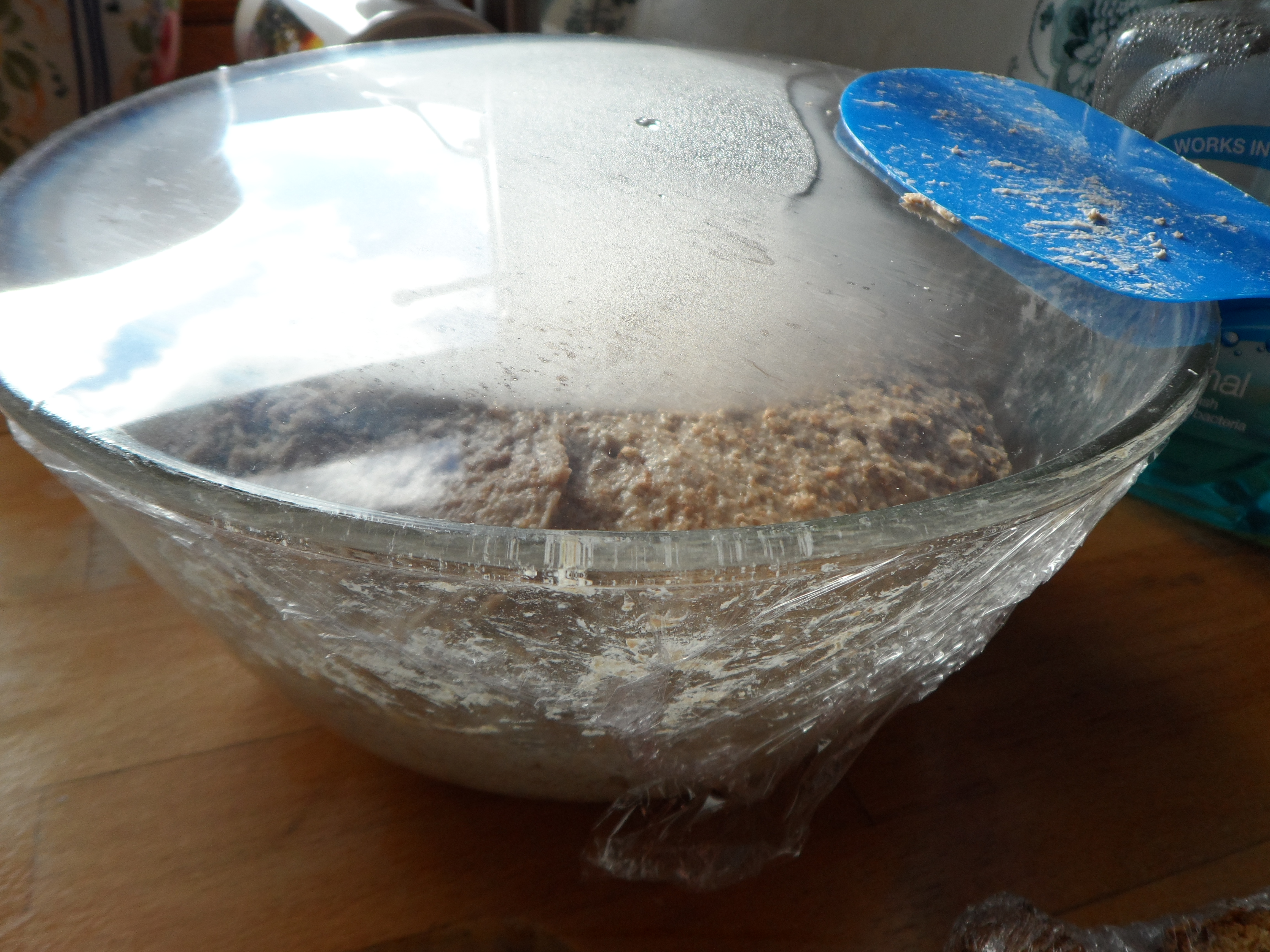
sourdough resting

And I folded it.

And I left it a while (see pic above)

And I shaped it into two loaves.

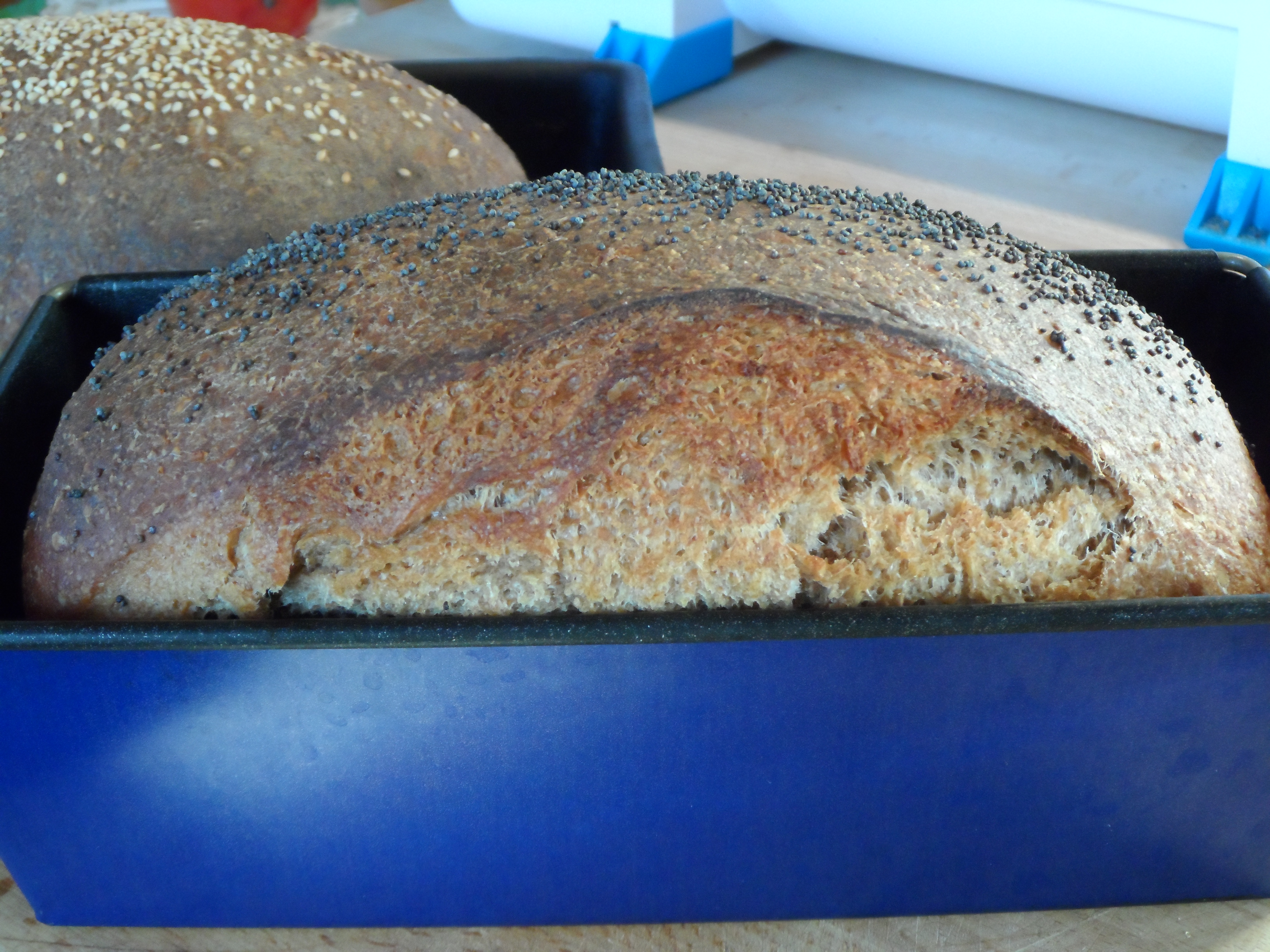
sourdough loaves – one freeform, one in a tin

And I left it a while.

And then I popped it in a really hot oven.

And then we had bread!

sourdough loaf just out of the oven

No bought yeast, no bread machine, no sugar, no oil, no dried milk powder, just flour and water and a wee sprink of Maldon sea salt. Amazing!

freshly baked sourdough loaves – perfect with unsalted butter

Vegetable broth (and croutons if you want them)

21 Sep

It’s clearly the beginning of the soup season. The days are cooler, and the evenings are outright cold. Yesterday it rained and rained and rained all day. Today it’s still cold, but it’s gloriously sunny and I’ve already got two loads of laundry merrily blowing on the whirligig line.

It’s not just nature that is going through a period of change. My life is also changing. Quite dramatically really.

A couple of weeks ago I moved house. I had been living in two places: a lovely wee colonies flat in Leith, in Edinburgh, through the week and in the Clyde Valley with my boyfriend, the Captain, at weekends. Each Friday after work I would travel west to the Valley and the each Monday morning I would travel back east to the Capital. At one level I had the best of both worlds: the city life (and all the benefits of living in a truly wonderful capital city) through the week and then the joy of having a relatively big garden and being surrounded by fields at the weekend.

But in all honesty it was no longer my dream. My dream was to live in one place, and to know that I would have the right accessories to go with whatever clothes I put on in the morning. All too often that perfect necklace was in the other house.

So just after this year’s festival was over I packed all my worldly belongings into boxes and moved out west. And here I am. Sitting in the garden room, looking out onto the garden and across the Clyde Valley. The clouds are just beginning to blow in, and the trees are starting to lose their lush green. Autumn is definitely in the air. So it’s most definitely the season for warming soups.

After yesterday’s smooth carrot soup, I wanted something chunkier today. And I had a hankering for pearl barley. This the perfect soup for using up whatever veg need to be used. Today it was turnip, carrot, potato and leeks. Oh and savoy cabbage, which didn’t really NEED to be used, but I wanted it.

Anyways, here goes, another simple recipe to see you through the Autumn and Winter.

Vegetable broth with croutons

Vegetable broth

  • A splash of oil, or a smudge of butter
  • A couple of leeks, washed of dirt, then sliced finely
  • A carrot, peeled and cut into small chunks
  • A medium potato, peeled and cut into the same size(ish) chunks
  • Turnip, peeled and cut into the same size chunks – I used a piece about the same size as the potato, maybe slightly larger
  • A handful of pearl barley
  • 1 1/2 stock cubes (veg, lamb or beef work well)
  • A few big outside leaves of savoy cabbage, the central spine removed and sliced finely
  • Parsley
  1. Put the oil/butter in the bottom of a large heavy based pan over a medium/low heat
  2. Put a kettle of water on to boil at this stage
  3. Add the leeks, the carrot, the potato, the turnip. Just add them as you chop them up, they don’t all need to go in at once
  4. Sweat the veg for a few minutes, stirring to stop them from sticking/burning
  5. Add the pearl barley and stir
  6. Add a good few grinds of black pepper and the stock cubes and a wee bit of water, just to wet the pan, and cook for a further minute or two
  7. Add the kettleful of water, stir, and bring back to the boil
  8. Simmer for about an hour, till the whole thing is looking thick and gloopy and the barley is soft
  9. Add the savoy cabbage and cook for a further 5 minutes or so
  10. Serve with a sprinkling of chopped parsley. It doesn’t need croutons, but I couldn’t resist them.

If you have any bay leaves throw one or two in while it’s simmering, and if you have celery in the fridge, then cut some up and add it all in with the other veg. Somehow, I never seem to have any celery around though.

Croutons

  • Whatever’s left of an old loaf of bread
  • Olive oil
  • Celery salt
  • Black pepper
  • Herbs and Spices (I have a harissa style spice mix, with chilli, garlic, coriander and who knows what else)
  1. Cut the bread into thick slices. Then cut each slice into long batons. Then cut each baton into chunks. They don’t need to be precisely the same size, but it’s best if they are similar sized chunks
  2. In a big bowl, pour some oil around the sides of the bowl so it dribbles down into the bottom of the bowl. You don’t need a lot, but enough that the inside of the bowl is coated in a thin film of oil
  3. Now sprinkle in your chosen flavours – I grind lots of black pepper, then a sprinkle or two of celery salt, followed by a good skoosh or the harissa spice mix
  4. Now through in the bread chunks and gently mix it all around. A
    good squidgy spatula is the best implement for this. What you’re trying to do is to give all the bits of bread a chance of absorbing a wee bit of the flavoured oil. The chunks should not all look soaked in oil, although some of them might. But really, you’re trying to make this with as little oil as you need
  5. Pour the coated bread into a baking tray and pop in a very low oven
  6. I leave it for about 45 mins in an oven at gas mark 2. But this is not a precise recipe – check on the croutons and take them out when they are ready – they will have taken on a slightly golden colour and will be slightly crispy (they crisp up a bit more as they cool down).
  7. Sprinkle in your bowl of soup, or serve them in a pretty bowl so people can help themselves. If you have any left keep them in an airtight tub for a few days.

Please don’t use good fresh bread for these – the bread will be much nicer just served in chunks with the soup. But if you have the heel of a loaf left, just take 5 minutes to make these and then you’ll have them ready for next time you have soup (which surely won’t be long away).

Carrot soup

20 Sep

I say ‘carrot soup’ but really this could be any root veg soup. But seriously this is the easiest thing in the world to make. If you can cut with a knife you can make this soup.

Pimped up carrot soup

Before you start I should fess up. It’s not strictly a carrot soup, as I add some lentils to it – to give it a bit of body and also add some protein. If you want to omit the lentils do, and it will be ready much quicker too. But I’d be tempted to throw in a wee sprinkle of flour and mix it in before adding the water, to thicken it slightly.

Carrot soup

  • 1 large onion, chopped as best you can
  • about 6 medium/large carrots, peeled and chopped into chunks
  • a dash of oil
  • 1tsp or so ground coriander
  • about 1/3 cup red lentils
  • 1 Knorr chicken stock cube
  1. Using a heavy bottomed pan, splash the oil into the bottom of the pan and ‘sweat’ the onion and carrots over a gentle heat.
  2. At this point you should put a kettle full of water on to boil
  3. Add the coriander, the lentils and the stock cube and continue to cook for a few minutes, stirring well to prevent it burning or sticking to the bottom of the pan
  4. Pour the kettleful of water into the pan, and bring to a simmering boil
  5. Simmer for about 45 minutes
  6. Pour into a liquidiser and zizz it up till it’s beautifully smooth
  7. Serve – feel free to glamorise it with some yoghurt and/or a sprinkle of parsley. Or croutons. I’ll tell you about my croutons another day.

There are lots of ways to play about with the recipe – grate some orange zest and squeeze some orange juice into it; add some harissa paste; add other root veg – parsnips and turnip would work well.

And of course you can use this same basic principle, of sweating veg then adding liquid to make all manner of other soups – swap out the onion and carrot for leeks and potatoes, or keep the onions and use butternut squash instead of carrots.

Sourdough

20 Sep

So, I start my sourdough starter today. I’m expecting good things from this – I have an exceptional guide: Sourdough by Yoke Mardewi and I have the right products (OK, so that’s just wholewheat rye flour and water) so what could possibly go wrong?

There will be photographic evidence as I go along, so keep coming back to see how it goes.


Beetroot and orange salad

10 Jul

I mentioned this treat the other day, in my post about my Scottish tapas style meal.

When I was wee the only beetroots I’d ever come across were in a jar, and covered in vinegar. Some were even crinkle cut (presumably to make sure they soaked up as much of that vinegar as possible). Now I’m sure there’s a place for pickled beetroot, but those overwhelmingly sharp wee purple nuggins gave me quite the wrong impression of what beetroot is all about.

And so I didn’t try beetroot again for years. In fact probably not until I was in my 40s, when I was tricked into buying some fresh beetroot by the sheer exuberance and joy in the bounty of a farm shop one day. Into the wicker basket went locally grown carrots, courgettes, tomatoes, strawberries and cauliflower. Pears were placed on top, so as not to bruise them. And a bunch of herbs (this was in the days when I didn’t have my own established herb patch). And then there they were – bunches of beetroot, grubby with soil and with their tops on, looking as though they had just been plucked from the garden minutes before (I now know that if you leave the tops on beetroots for any length of time, they start to suck out the nutrients from the roots, and while the tops are wilting, they are also depleting the goodness from the bulbs).

There are so many things to do with beetroot, from the frankly outrageously delicious chocolate beetroot cake (think pimped up carrot cake) to simply roasted with a blob of sour cream. Or make a quick tart with goats cheese and beetroot grated into a horseradish creme fraiche on whatever pastry you have to hand, filo, puff or shortcrust. The earthy flavour marries well with horseradish or with balsamic vinegar and beetroot is of course the ideal companion to game or smoked fish, It’s a strong vegetable and not just in colour.

But one of my simple beetroot salads just combines it with shallots, oranges, balsamic vinegar and dill. And lots of black pepper… but then I’m a bit of a pepper addict. The dark purple and bright orange of this salad will make you smile even before you’ve popped it in your mouth.

If you’re starting with raw fresh beetroot, this isn’t the salad to start making ten minutes before you sit down to lunch. However, for speed and convenience, you can make this with pre-cooked vacuum packed beetroot – get the stuff that doesn’t have any vinegar in it though. It won’t be quite as nice, but still pretty good.

Beetroot and orange salad

  • a bunch of fresh beetroot bulbs – their size is immaterial, and you can just vary the quantity of everything else to match how much beetroot you have
  • shallots – probably one medium shallot for every 2 medium beetroot
  • oranges – one whole large orange for every 2 medium beetroot
  • fresh dill – about 1TBsp of chopped up dill for every medium beetroot
  • balsamic vinegar – a good old glug of it
  • olive oil – not much, in fact it doesn’t really need it at all
  • freshly ground black pepper
  • Maldon sea salt
  1. Cook your beetroot. You might already have a preferred method, but if you don’t then I would recommend you cut off the leafy tops about 0.5cm above the root, then wrap the roots all together in kitchen foil and pop them in a medium oven until they are done. If they are small and you don’t have many of them they’ll take less than an hour, but if you have anything bigger then teeny weeny roots then you’re looking at a couple of hours in the oven to ensure they are cooked. To check they are cooked, unwrap them (carefully) and insert the tip of a sharp knife into the largest one – if it meets no resistance it is cooked. The alternative is to boil them in a big pan of water.
  2. Once the beetroot is cooked let it cool for a while so they are cool enough to handle. With a wee bit of pressure, the skin will slough off and you are left with wee naked purple balls of beetrooty tastiness. 
  3. Chop the beetroot into wee cubes and put in a bowl
  4. Add segments of orange – you don’t want any pith or skin on the segments so take a large orange and a very sharp wee knife and slice off the top and the bottom of the orange. Sit the orange on its bottom, and slice off the pith and skin in big slices all the way round the orange, cutting sections off at a time, from top to bottom – you’ll get the hang of it. Once you have a wee naked orange, hold it over the bowl with the beetroot, so you catch the juicy drips. Using the knife, cut out a segment – you need to cut alongside the natural segment ‘skin’ so you get perfect wee skin free segments of orange. Again, you’ll get the hang of it, but perhaps not on the first orange. Once you’ve released all the segments into the bowl, squeeze the remainders of the orange to capture all the juice in the bowl. 
  5. Now finely chop your shallot and add it to the bowl
  6. And finely chop the dill and mix it in too
  7. Glug in some balsamic vinegar, and wee splash of olive oil, and season with salt and pepper
  8. Taste to see if it needs more balsamic or pepper
Serve, preferably with some sourdough bread, to mop up those juices and smoked trout. And lots of other wee bowls of tasty things to pick and choose from.

Quick and tasty soda bread

10 Jun

Yesterday we went to Galloway, to Mum and Dad’s. We had a lovely lunch (as ever) and pootled about a bit in the garden, had a cup of tea and then came back again, via Kilnford Farm Shop just outside Dumfries which I’ve been meaning to visit for ages.  It’s a lovely shop, with a large range of interesting local products a nice deli counter and the most superb butchers, with a great selection of meats with the lowest carbon footprint you can imagine. And, it’s not just nostalgia, but I do love Galloway Beef. And I liked that fact that there was a blackboard at the front door telling us that there was a Beltie Galloway calf in the field next door if we wanted to go see what our meat used to be. It didn’t say the bit about the meat, but the message is pretty clear to me, and I like that.

Anyway, I managed to come away having purchased only sensible things: some new potatoes, a couple of plain beefburgers, a couple of tomato and olive beefburgers and a peri peri chicken breast fillet. Oh, and some olives. And now, 30 hours later, we’ve eaten the lot. Nom nom nom.

However, all of this is just a digression. The main reason for mentioning I was at home in Galloway at all is to say that my brother was there, and he’d contributed his homemade spelt bread to the lunch. So, we got talking about making bread: bread machine bread, hand-made bread, sourdough bread and SODA BREAD. Mum has a great soda bread recipe from her big sister who lives in Ireland. It involves measuring things in saucers.

But I didn’t get her recipe from Mum yesterday. I just forgot really.

But when I got home I had an urge to make soda bread. So this morning I looked up Darina Allen’s Forgotten Skills cookery book (oh, it’s just one of the most glorious cook books, ever… and I have a large collection of cookbooks, so this is praise indeed). She, of course, has many soda bread recipes, and I settled for her Beginner’s Brown Soda Bread. It’s scrumptious and quite the easiest thing in the world. Go make some, you’ll be eating it in no time. And then making a second batch to share with friends.

I slightly adapted the recipe, as I didn’t have quite enough buttermilk, so I made up the remaining volume with a mixture of plain yoghurt, milk and lemon juice. I also used slightly more white flour, and less brown.

Beginner’s Brown Soda Bread

  • 14oz stone ground wholemeal flour
  • 3oz plain white flour
  • 1tsp salt
  • 1 tsp bicarb of soda
  • 1 egg
  • 1 TBsp sunflower oil (I used rapeseed)
  • 1 tsp honey, or treacle, or soft brown sugar (I used heather honey)
  • 3/4 pint buttermilk, or soured milk
  • sunflower or sesame seeds (optional)

Prepare a loaf tin 9″ x 5″ x 2″ and preheat oven to 200C / 400F / GM6.

  1. Put all ingredients into a large bowl, and mix well.
  2. Whisk the egg, adding to it the oil, honey and buttermilk.
  3. Make a well in the centre of the dry ingredients and pour in all the liquid.
  4. Mix well, adding more buttermilk if necessary – the mixture should be soft and slightly sloppy.
  5. Pour into the prepared tin, and sprinkle with sunflower seeds if you’re in the mood for them.
  6. Bake for about an hour or until the bread is nice and crusty and sounds hollow when tapped on its bottom.
  7. Leave to cool on a wire rack.

This basic brown bread can be pimped up with the addition of a mixture of seeds, such as: 1TBsp each of sunflower seeds, sesame seeds, pumpkin seeds and kibbled wheat. Just add these to the dry ingredients, and a similar mixture should be sprinkled over the top before baking.

So, there you have it. The easiest bread in the world.

But of course now I want to try her White Soda Bread recipe.

White Soda Bread

  • 1lb white flour
  • 1tsp salt
  • 1 tsp bicarb of soda
  • 12 – 14fl oz sour milk or buttermilk

Preheat oven to 230C / 450F / GM8

  1. Sift the dry ingredients into a large wide bowl
  2. Make a well in the centre
  3. Pour most of the buttermilk in at once and use your hand to mix in the flour from the sides of the bowl, adding more milk if necessary
  4. The dough should be softish and not too wet and sticky
  5. When it all comes together, turn it out onto a well floured work surface
  6. Wash and dry your hands so the dough is easier to handle – while you’re at it, put water in the bowl so it’s easier to wash later
  7. Tidy up the dough and flip it over gently, then pat it into a round about 1″ deep
  8. Cut a deep cross in it and then prick it slightly with the tip of a knife in each of the quadrants (according to Irish folklore this lets the fairies out, but it also enables it to cook all the way through better).
  9. Bake for 15 mins then turn the oven down to 200C / 400F / GM6 for 30 minutes or until cooked.

This same mixture can be cut into scones and cooked for 20 mins. Dip the tops in sesame seeds or cheese before you cook them, or a mixture of seeds and grains.

Or pimp up the original bread recipe by adding chopped herbs, or olives, or sundried tomatoes – about 2 TBsps would be about right. Or 3oz raisins, or 1-2 tsp curry powder, or a couple of TBsps of caraways seeds, or fennel, or really whatever you’re in the mood for. Or have in your cupboard.

So, off you go, and make some bread now, you really have no excuse.

Rhubarb chutney

8 Jun

So, it’s been a bit of a rubbish year for the rhubarb harvest this year I’ve heard. Something to do with late frosts, which decimated some of my early sowings too.

However, I saw some British rhubarb in the shop the other day and couldn’t resist. But since I’m trying to eat less pudding and G doesn’t really like rhubarb anyway, it clearly wasn’t a well thought through purchase. I thought about a rhubarb tart, rhubarb crumble, a rhubarb cake, or just stewed rhubarb. Surely we would call that a compote these days? I love the astringent sharpness you get with rhubarb … perhaps the answer was to just stew some with some honey and vanilla and then have it with plain yoghurt. I’m a bit addicted to plain yoghurt (preferably greek style, fat free) and think I might have to try my hand again at making my own yoghurt. Mum used to do it when I was wee, but I suspect that it was helped by the fact we always had the rayburn on, so it had a good warm place to ferment. Ah well, that will be next week’s mission.

Anyway, after all that deliberating, I decided that rhubarb chutney was today’s cooking challenge. Not much of a challenge really, chutney is an easy peasy thing to make. The tricky bit is getting the mix of spices and flavours right – so only make a wee bit the first time you make a recipe, so you can try it for flavour and then tweak the next batch.

Rhubarb chutney

  • 1 onion, chopped finely
  • 1cm ginger, chopped finely
  • 150g soft brown sugar
  • 50g caster sugar
  • 100ml white wine vinegar, or elderflower vinegar if you have any
  • 1/2 tsp Maldon sea salt
  • 1″ cinnamon stick
  • a couple of star anise
  • 500g rhubarb, chopped into fairly thin slices
  1. Put the star anise and cinnamon stick into a spice cage if you have one. Alternatively, put them in a wee square of muslin tied up with string. Or you could just chuck the whole spices into the pan, if you don’t mind having bits in your final product.
  2. Place all the ingredients, except the rhubarb in a heavy duty pan and bring to the boil. Boil on a rolling boil for 5 minutes.
  3. Add the rhubarb to the pan and bring to the boil again. Turn down, and simmer for about 15 minutes when the chutney should be slightly thickened.
  4. Pour into sterilised jars while still hot. Use a 500ml jar, or a 340ml jar plus one of those wee pesto jars. But make sure they have been properly sterilised before you pour the chutney in, or it won’t keep properly.
  5. Remember to label the jar – I’d say it should keep for 12 months, but should be eaten within 8 weeks of opening and kept in a fridge, or other cool place once opened.

My verdict is that it is slightly too sweet on first tasting, but the flavours will develop and it will taste better in a week or two. I hope.

As ever it will be delicious with a good farmhouse cheddar but will probably also be good with cold pork, or with mackerel.